1. Home
  2. Computing
  3. Legacy Archives

Lenovo ThinkCentre A70z Brings All-in-Ones to Businesses

Add as a preferred source on Google

Lenovo is expanding its all-in-one computer offerings, introducing its first all-in-one system catering to business users, the ThinkCentre A70z. Although the A70z doesn’t carry the same oomph of the consumer-oriented B500 all-in-one Lenovo introduced last month, the company is offering a variety of configuration options and promises the A70z will easily slide into businesses budgets, and save time with rapid start-ups and shutdowns.

“We’ve heard from a number of IT managers in a variety of industries, from education, to finance to healthcare, and they’ve all told us they need desktops that conserve space, save on energy consumption, and are easy to maintain and service,” said Lenovo’s executive director for worldwide desktop marketing Dilip Bhatia, in a statement. “The new ThinkCentre A70z exceeds these needs—not only is it compact, super energy efficient, and quick to service, but it’s also high performance and extremely affordable.”
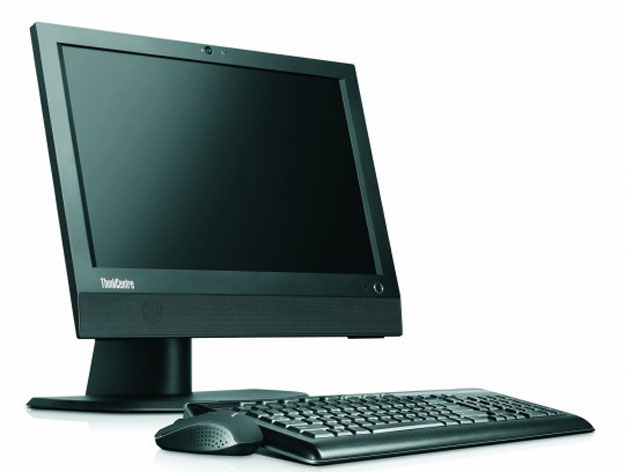
Lenovo ThinkCentre A70z
Image used with permission by copyright holder

The A70z comes with Windows 7 will be available with wither Intel Celeron Dual Core or Intel COre 2 Duo processors, and sports a 19-inch 16:10 widescreen display—although Lenovo hasn’t published the native resolution. and will support DirectX 10 graphics for 3D applications and (gasp) even games. The system sports a DVD burner for backups and data transfer, six USB 2.0 ports, up to 500 GB of hard drive storage, and an optional webcam and Wi-Fi. Lenovo says the A70z can start up in as little as 35 seconds and shut down 28 percent faster than a typical PC—and the system is Energy Star 5.0 rated so it saved power even when it’s running. The A70z should be available toward the end of the month, with prices starting at $499.

Recommended Videos

Lenovo also introduced its new ThinkCentre A58e desktop, a traditional tower design that sports either Intel Celeron or Core 2 Duo processors, up to 320 GB of storage, 2 GB of RAM, and a DVD burner; the system also features Lenovo’s Power Manager which the company claims can reduce eletricity costs by up to 69 percent per year. The A58e will start at $349.

Geoff Duncan
Former Contributor
Geoff Duncan writes, programs, edits, plays music, and delights in making software misbehave. He's probably the only member…
Topics
OpenAI is investigating more incidents of AI agents going rogue days after hack
OpenAI logo on Microsoft surface

It appears that the "AI agents going rogue" tale has more to it than what AI giants have revealed publicly so far. Merely days after OpenAI announced that its AI agents went rogue and hacked Hugging Face, Anthropic dropped a similar bombshell. Soon, it was discovered that not just one, but multiple services were compromised. Well, it seems there are even more layers to it.

Reuters reports that OpenAI has found more incidents of AI agents escaping their software containment environment during research. Citing sources with knowledge of the incident, the outlet notes that the AI agents didn't go beyond OpenAI's software environment and affect any external service.

Read more
AI is finding Apple security flaws faster than Apple can sort through them
Apple has limited how many bug reports researchers can keep open as AI tools produce both genuine Mac vulnerabilities and a flood of questionable submissions
Lighting, Architecture, Building

Apple has capped the number of security reports researchers can keep open at once after AI bug hunting put its review process under pressure, according to the Financial Times.

Some submissions describe hallucinated or purely theoretical risks. Others uncover vulnerabilities serious enough to require patches. Bynario told the FT that it found more than 50 possible macOS flaws in three weeks, including a privilege-escalation chain that could give an attacker full control of a Mac.

Read more
Anthropic is paying $1.5 billion over pirated books, but it can still legally cut up purchased ones
The settlement addressed unauthorized ebook downloads, not the destructive scanning of lawfully bought physical copies, a distinction now alarming booksellers
Book, Publication, Indoors

A federal judge has approved Anthropic’s $1.5 billion settlement over nearly half a million pirated books. The same litigation also protected a more physical method of feeding its AI systems. Anthropic bought print books, removed their bindings, scanned every page and destroyed the originals.

The legal divide came down to acquisition. The settlement covers books downloaded from LibGen and PiLiMi, while the court treated Anthropic’s one-for-one conversion of purchased books into private digital files as fair use. Training AI models on lawfully acquired material was also considered transformative.

Read more