1. Home
  2. Audio / Video
  3. Mobile
  4. Legacy Archives

Chromecast strikes a chord with consumers as its setup app tops charts

Add as a preferred source on Google

While Google’s Chromecast streaming device has quickly raced from novelty item to household name, Google’s is reluctance to disclose sales figures has kept the device’s actual popularity a mystery. However, a new report from App Annie sheds some light on the issue, crowning the device’s setup app as the top dog in terms of downloads for apps associated with connected devices in the U.S.

App Annie’s report examined the top apps associated with connected devices across both iTunes and Google Play in the U.S. In terms of downloads, the app for Google’s dongle secured the number-one spot, followed respectively by Fitbit, DirecTV, HP ePrint, Kodak Kiosk Connect, Square Register, GoPro, AT&T U-verse, Dish Anywhere, and HP All-in-One Printer Remote. Chromecast was the top app by downloads across all categories and within the “Media” subcategory of connected devices.

Recommended Videos

The report reflects data gathered by App Annie between August 2013 and August 2014.

To put the Chromecast’s impressive ranking in perspective, App Annie points to a Gartner study that estimates that more than 26 billion connected devices will be installed globally by 2020. This plethora of devices will essentially serve to comprise the “Internet of Things” (IoT), the network of physical objects that contain embedded technology to communicate and sense or interact with their internal states or the external environment. The rapidly growing sector is (or, rather, will be), by definition, all-encompassing, and capable of gradually interconnecting everything from coffeemakers to fitness bands. Sitting atop the current list, Chromecast not only asserts its place as an extremely popular streaming device, but also outlines a serious thirst for affordable content streaming from the general populace.

Chromecast’s rise in popularity above the general connected-device fray can perhaps be explained by its simplicity and versatility. Crafted into a portable dongle the size of a flash drive, it acts as a vessel for the delivery of content from a variety of sources, with its software at the heart of its magic. By letting its user access video from the Internet and various online services via mobile devices, and then display it on a larger screen, it connects the digital with the physical in an uncomplicated way — all for just $35. And Chromecast has made its bones by sourcing a wide variety of third-party apps instead of merely sticking to its own walled garden of services and apps.

Of course, Google’s Chromecast still has plenty of local competition to consider in its own market. Roku and Apple TV are the big ones in the streaming world that often come to mind, but there are many other options vying for attention as well, from the Amazon FireTV, to Blue-ray players and game consoles. Additionally, Amazon is developing a dongle-like device to compete, and a startup called Matchstick is working on a Firefox OS-based dongle that will also eventually join the fray.

Still, as the tech world continues to add more and more connected devices, it’s clear that Chromecast has struck a chord with users of all ilks.

[image: Robert Fruehauf / Shutterstock.com]

Alex Tretbar
Former Digital Trends Contributor
Alex Tretbar, audio/video intern, is a writer, editor, musician, gamer and sci-fi nerd raised on EverQuest and Magic: The…
Stop joining group projects with a blurry laptop webcam and buy one of these instead
Your laptop webcam is sabotaging your first impression. These five can fix it
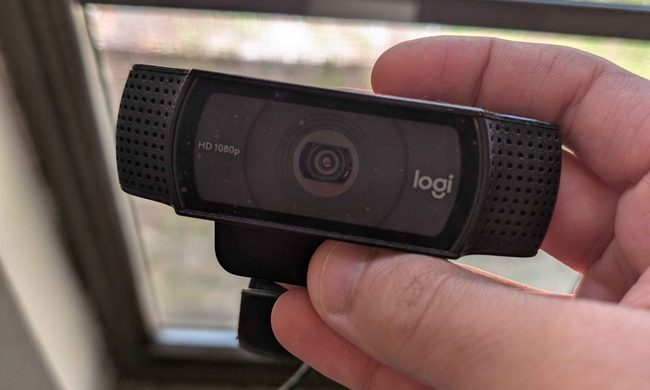
I'm holding my Logitech C920 1080p webcam in my hands.

The webcam built into your laptop might be good enough for a quick call with friends and family. But its shortcomings become much harder to ignore when you are presenting a semester project, interviewing for an internship, or maybe if you're planning to stream for fun.

Laptop cameras also tend to sit far too low, especially when the computer is placed directly on a desk. Meanwhile, a dedicated webcam lets you position the camera closer to eye level. This improves the framing and brings larger sensors, better microphones, and more effective low-light processing.

Read more
I desperately want a new classic Walkman, but Sony probably can’t give me one
Tech minimalism is begging for a new Walkman. Though rebuilding it may be close to impossible
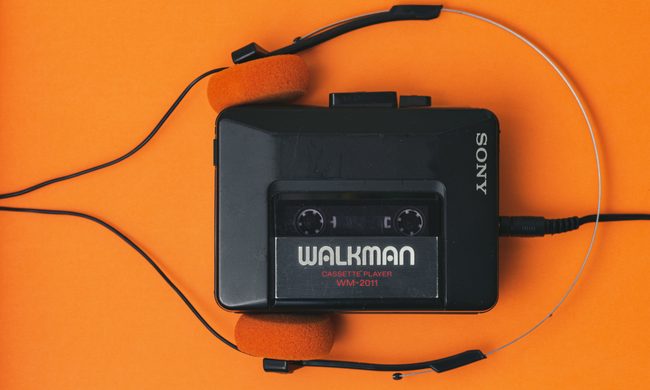
Sony Walkman WM2011

Every few months, another piece of tech that seems obsolete crawls out of a drawer and becomes cool again. The age of minimalism has revived the popularity of iPods among younger buyers. Dumbphones have become an escape hatch from endless notifications. Similarly, digital cameras are dangling from bags again. Physical media keeps attracting people who want something they can actually hold instead of another frustrating subscription.

All of this makes it the perfect time for Sony to bring back the classic Walkman, which was a phenomenon during the 80s and 90s. I would love one. Give me a compact cassette player, physical buttons, and wired headphones. Keep the apps, notifications, and algorithms that shape your taste of music. No more AI assistants or personalzied feeds, just you and your Walkman. There is only one problem though. Recreating the Walkman that people love and remember, would be far harder than putting an old design back into production.

Read more
Proton reveals how smart TVs track you and the escape situation is pretty grim 
Modern smart TVs fingerprint your screen content at the chipset level.
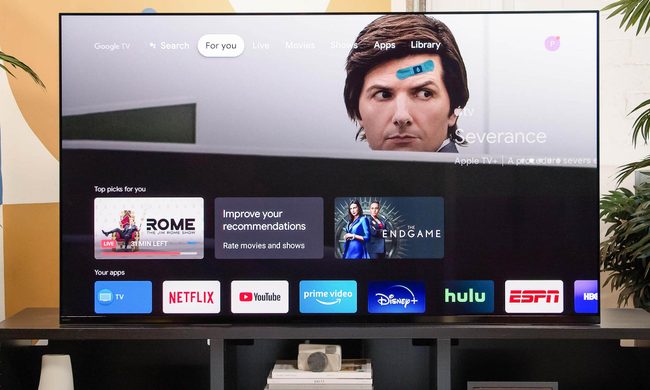
Google TV applications on the Sony A95K TV.

Your smart TV may know far more about your viewing habits than you realize, even if you rarely use its smart features. In a new privacy explainer, Proton warns that many modern TVs quietly collect data about everything displayed on the screen and share it with manufacturers, advertisers, and analytics companies.

The worrying part is that escaping this tracking is becoming increasingly difficult because many privacy controls are buried deep in settings or enabled by default. Proton argues that buying a smart TV today often means accepting a level of surveillance that most people never knowingly signed up for.

Read more