  1. Home
  2. Cars
  3. Legacy Archives

Toyota’s first hydrogen car delivery in America will be a contest giveaway

Add as a preferred source on Google

When Toyota’s hydrogen fuel cell car (FCV) goes on sale in the U.S. next year, there will undoubtedly be a long waiting list.

For one lucky Californian, though, the list will be a lot shorter.

Recommended Videos

Toyota and the Environmental Media Association (EMA) have partnered to create a contest that will decide the first American FCV owner. Residents can enter by purchasing tickets online that will raise money for the EMA’s nonprofit programs. The EMA uses the entertainment industry as a vessel to educate the masses about environmental issues, while also encouraging green film production.

The contest is available solely in the Golden State due to the infrastructural support of hydrogen in California.

The winner will be announced at the 24th annual EMA Awards, held at Warner Bros. Studios on October 18th.

Related: Toyota’s head of R&D says EVS are still a Nobel Prize away from viability

California may be most hydrogen capable state in the Union right now, but it’s certainly not the only government embracing the technology.

Auto Express is reporting that the British Government, in collaboration with Toyota, has raised £11 million ($17.7 million) to build 15 hydrogen fueling stations throughout the country, with operational status coming by the end of 2015.

Business minister Matthew Hancock is optimistic that the partnership will spur British commuters to embrace hydrogen-powered cars, making the United Kingdom a “global leader” in low emissions vehicles.

“Hydrogen cars present us with a huge economic opportunity and can bolster our internationally renowned automotive industry,” he said. “We want to make the UK one of the best places in the world to design, manufacture and sell ultra-low emission vehicles.”

The United Kingdom currently has 13 public stations. California, by contrast, has 10, but Toyota hopes to help build 50 there by 2016.

Andrew Hard
Andrew first started writing in middle school and hasn't put the pen down since. Whether it's technology, music, sports, or…
Topics
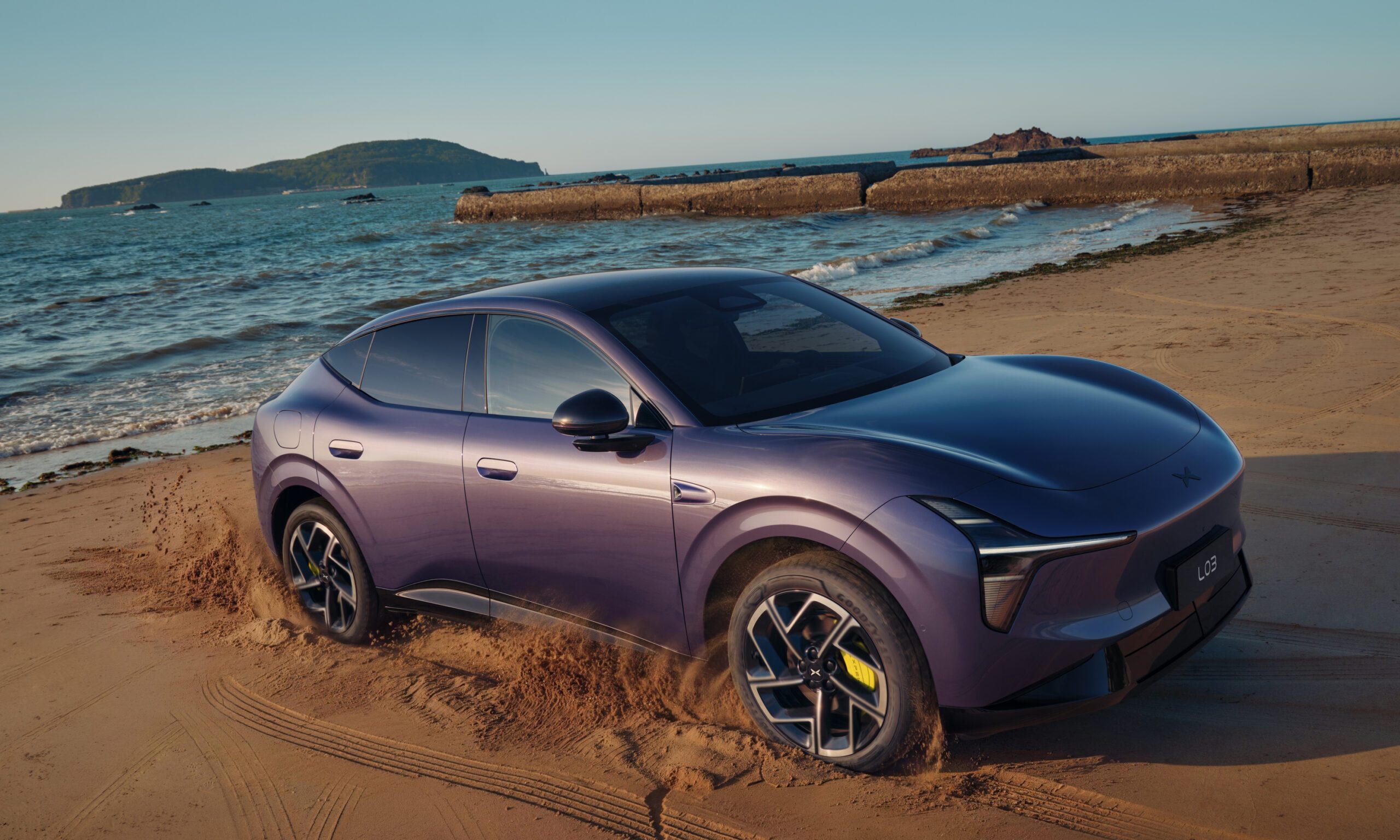
This sleek Chinese EV pairs supercar styling with three AI brains
The Xpeng L03 is an AI supercomputer disguised as a stylish family SUV
Xpeng L03

Xpeng’s latest electric vehicle carries enough processing power to make the term "smart car" actually sound more realistic than it actually is. The new Xpeng L03 debuted simultaneously in Europe and China on July 16, with the company presenting it across 65 markets. Available as a fully electric vehicle and an L03 Power X range-extender, the coupe-SUV is Xpeng’s most internationally focused model so far. Market-specific prices and sales dates remain unannounced.

Three AI chips and Google Maps built right in

Read more
A new sodium battery posts wild four-minute charging numbers, but don’t expect it in an EV yet
The breakthrough could improve fast charging and battery life, but the study hasn’t demonstrated those results in a production-sized pack
EV Charger

A new sodium-metal battery has posted a charging number that makes today’s EVs look painfully slow. In laboratory testing, the cell operated at a 15C rate, equivalent to completing a charge or discharge in roughly four minutes.

That doesn’t mean researchers plugged in an electric car and watched it fill up before the driver finished buying coffee. The result came from a small experimental cell using a new quasi-solid electrolyte, while the larger pouch-cell prototype delivered far less dramatic performance.

Read more
The Apple Car may be dead, but it became the foundation of Apple Intelligence
A decade of work on a canceled car project reportedly laid the groundwork for Apple Intelligence.
Apple Intelligence in Apple Car

The Apple Car may have never left the garage, but it apparently gave birth to Apple's AI ambitions. According to Bloomberg's Mark Gurman, Apple's canceled autonomous vehicle project, one that consumed more than a decade of work and over $10 billion before being scrapped in 2024, ended up laying the technological foundation for Apple Intelligence. In a rather ironic twist, one of Apple's most expensive failures may also become one of its most important long-term investments.

The Apple Car forced Apple to think like an AI company

Read more