1. Home
  2. Emerging Tech
  3. Legacy Archives

Scientists develop a brain decoder that can hear your inner thoughts

Add as a preferred source on Google

Researchers at the University of California, Berkeley have invented a brain decoder device that’s able to work out what you’re thinking based on neuron activity inside the brain — essentially, the experimental system means your private inner thoughts are no longer so private. Researchers invited test subjects to read a passage of text out loud and then again in their mind, monitoring brain activity each time to look for linked patterns.

This is about more than spying on your secret thoughts, though — it could be an invaluable method of communication for people who have lost the ability to speak, for whatever reason. Further down the line we could find ourselves controlling smartphones, computers and other devices using nothing but the power of our minds.

Recommended Videos

“If you’re reading text in a newspaper or a book, you hear a voice in your own head,” the University’s Brian Pasley told New Scientist. “We’re trying to decode the brain activity related to that voice to create a medical prosthesis that can allow someone who is paralysed or locked in to speak.” Pasley and his team based their work around the hypothesis that hearing words in our head causes the same kind of brain activity as hearing them spoken.

The hardware required for this sophisticated decoding is still at the developmental stage and isn’t accurate enough to be used outside of the lab yet, but the signs are promising. “It’s preliminary data, and we’re still working on making it better,” says Pasley. The researchers are also looking into the effects that hearing music has on the brain.

At the moment, the technology only works if the subject has been carefully monitored for some time, and the algorithms underpinning the system can vary from person to person. Still, when an all-encompassing instant mind reading device does appear, remember that you heard it here first.

[Header image: Sebastian Kaulitzki / Shutterstock.com]

David Nield
Former Contributor
Dave is a freelance journalist from Manchester in the north-west of England. He's been writing about technology since the…
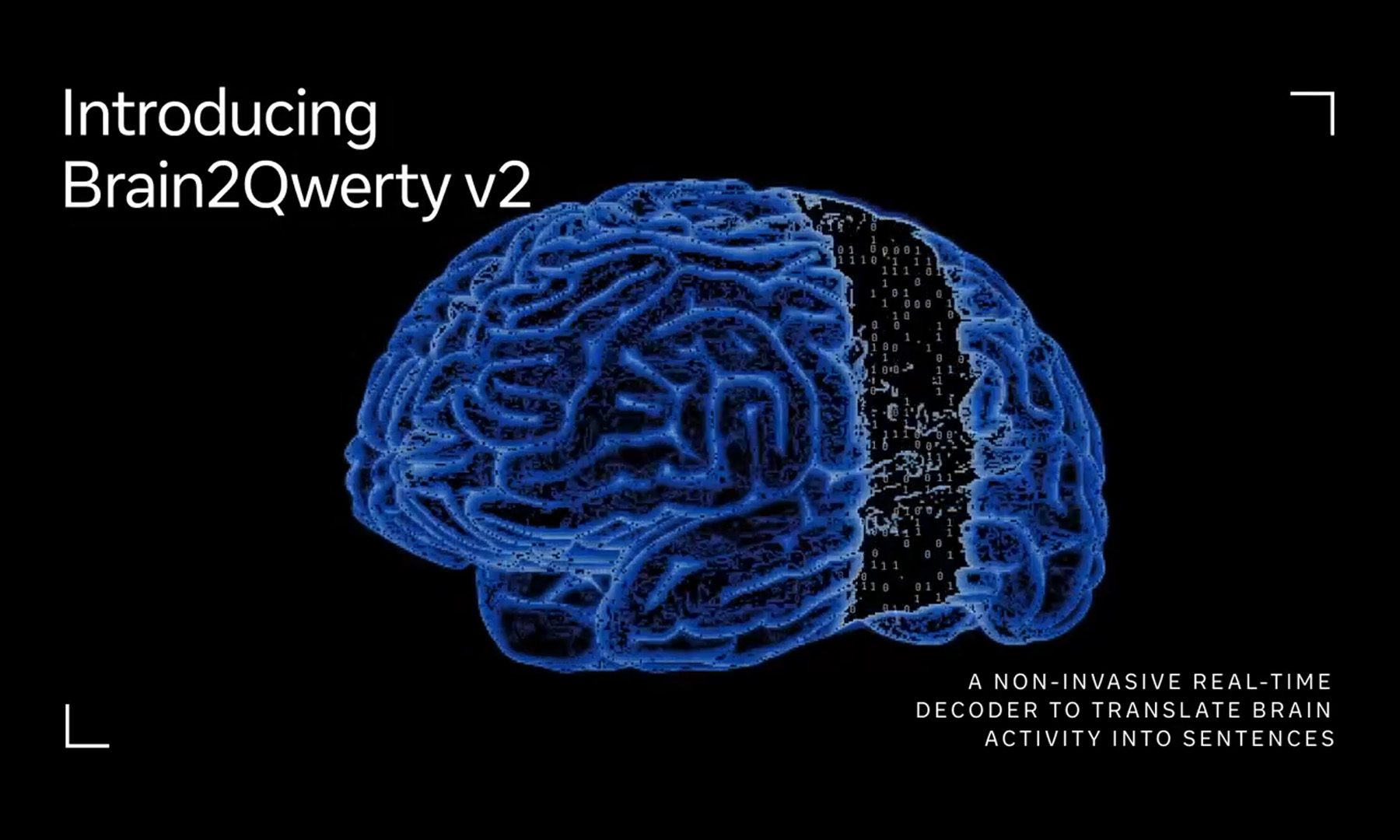
Meta’s Brain2Qwerty v2 turns thoughts into text, and it doesn’t need brain implants
The latest AI model decodes brain signals into coherent sentences using external scanners.
Meta Brain2Qwerty v2 Featured

Artificial intelligence is getting surprisingly good at understanding humans. Now, Meta wants it to understand our brains too. The company has unveiled Brain2Qwerty v2, an upgraded AI system that can translate brain activity into full sentences, all without requiring brain implants or surgery. The goal isn't mind reading for the masses. Instead, it's to help people who have lost the ability to speak communicate again.

How a Brain-powered keyboard works

Read more
AI chatbots can often feed into your delusions. Researchers say you should look for three signs
Experts warn that chatbot design choices can reinforce unhealthy beliefs in vulnerable users.
ChatGPT on a smartphone

Artificial intelligence chatbots have become incredibly good at sounding human. But a new review paper by psychiatrist Marc Augustin and fellow researchers Thomas A. Pollak and Helen Morrin, published in NPP—Digital Psychiatry and Neuroscience, argues that existing AI research points to an overlooked psychological risk. The paper, highlighted by The Wall Street Journal, reviews previous studies and proposes a framework explaining how three common chatbot behaviors can combine to reinforce delusional thinking in vulnerable users, creating what the authors call an "amplification spiral."

Researchers say these are the three warning signs

Read more
Lost access to your crypto wallet? Don’t Google your way out of it
Security researchers warn that fake recovery tools are becoming the latest trap for crypto owners.
Bitcoin crypto wallet featured

Forgetting the recovery phrase to a crypto wallet can be stressful enough. Unfortunately, that's exactly the moment scammers are waiting for. A new warning highlights a growing scam in which cybercriminals disguise malware as cryptocurrency recovery software, tricking desperate users into handing over far more than just access to their wallets.

The fake recovery tool that's actually malware

Read more