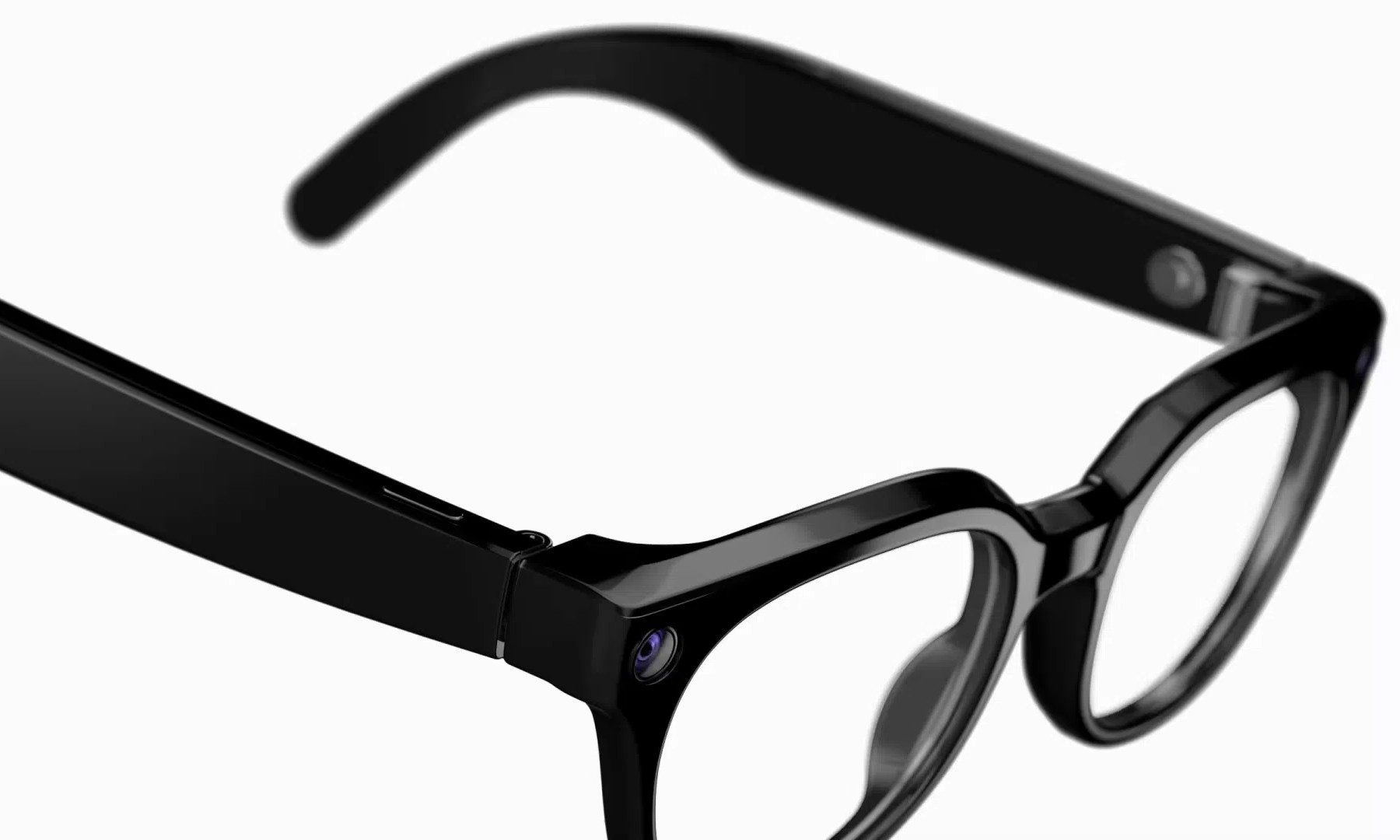
Last week was a big one for fans of Google Glass non-news. When it was discovered that the company was halting sales of its experimental wearable, the op-ed eulogies flooded in, ranging from the sincere to the eye-rollingly tongue in cheek.
In hindsight, everyone really jumped the gun. No surprise, really. There likely wasn’t a single tech publication in the world that didn’t have some sort of “Google Glass R.I.P.” column just sitting around, just waiting for the opportunity to blanket Techmeme with hot takes. Heck, we got dozens of the things the minute Sergey Brin showed up to a red carpet event with nothing but tan lines on the bridge of his nose.
Google doesn’t seem to have an issue acknowledging that Glass was an imperfect thing — and as we touched on in a previous column, that was really the point all along.
According to Google itself, Glass is just heading back to the top secret woodshed for a little bit of retooling. In fact, the company is actually going so far as opening up a brand new woodshed — moving Glass from the Santa’s workshop that is the Google X research lab to its own standalone unit. Google doesn’t seem to have an issue acknowledging that Glass was an imperfect thing — and as we touched on in a previous column, that was really the point all along.
Glass’s current state of technological limbo is perhaps less interesting on a macro level than it is for what it signals for the rest of the wearable space. Bear with me for a moment here: We’re going to have to take a brief field trip through time into the origins of wearable computing, all the way back to the dark days of the early 1980s, when MIT’s godfather of wearables, Steve Mann, first strapped what looked like a tube television to his forehead. Since then, many have followed in Mann’s footsteps attempting to bring someone manner of wearable computer to the world’s collective face.
Time and again they’ve have missed the mark. Now in 2015, smart glasses seem like a mere footnote to the wearables conversation. Sure, virtual-reality headsets like the Oculus Rift still generate excitement — and for good reason — but when it comes to devices designed to incorporate head-mounted displays into our day-to-day life, products like Glass are, at best, mentioned in passing. Common wisdom has it that the wrist is going to be the first frontier in the battle for mainstream wearable adoption.


Even Google seems to have lost the thread a bit, publicly pivoting from the sci-fi possibilities of Glass to the current-day probabilities of Android Wear. But for all of the potential possessed by the wrist-worn Android off-shoot, put up against a project as bold as Glass (one of those famous Google “moonshots”), Wear truly feels like something of a hedged bet on Google’s part.
There’s good news buried in the lukewarm reception to Google’s very public Glass experiment. The company is clearly taking all of the lessons learned from one of the most public betas in recent memory back to the drawing board. And really, the whole thing may have been a necessary evil — how do you test a product like Google Glass without turning the whole of the outside world into a testing ground?
Sure there’s something to be said for the product as platform, but not when you’re charging $1,500 a pop.
By offering up an unfinished product for all the world to see, the company that traditionally protects its moonshots with Apple-like secrecy really did show its hand here. The Explorer program was Google’s way of saying of letting everyone know about a neat idea it had that may or may not be totally ridiculous. As such, competing manufacturers have no doubt learned just as much from Glass’s misfires as Google itself.
Off the bat, there are some pretty simple changes that Google needs to make to not repeat its mistakes of the past. The obvious one here is price. In fact, it’s easy to see that $1,500 price tag as an attempt by Google to limit the product’s circulation and truly keep it in the hands of developers and the like. But if the company truly does see itself on the path to mainstream adoption, it needs to offer a product that isn’t three times the price of a premium unlocked smartphone.
Scale alone will help bring that price down. As Google and its still-nascent competitors ramp up production on smart eyewear, component pricing will drop precipitously. Of course, this assumes that the failure to launch of Google Glass Gen 1 didn’t already cool manufacturers and consumers alike on the concept.
Killer apps — they’re important. I know, I know, it’s been said a million times, but if we choose to view Google Glass the way we view mainstream consumer products (a mistake, but an inevitable one nonetheless), the company shot itself in the foot in the way it rolled out app functionality. At first, the whole thing seemed like little more than a glorified head-mounted camera. The company slowly announced more partnerships, but by that point much of the sheen had worn off for many casual observers.

When you’re charging $1,500 a pop, the vast majority of consumers are going to want some baked-in functionality. Otherwise you’re stuck with a funny-looking piece of hardware and nothing to do with it. That’s a pretty good opportunity to use up some of that developer goodwill: Offer trusted software geniuses a secret NDA in exchange for being an early exclusive partner. That way you get to announce a product while listing off a handful of reasons consumers will no longer be able to live without the thing.
The third point is, in some sense, the trickiest. There are the inherent privacy concerns with a device like Glass. Developers had to walk a tightrope being subtle and being flashy. The notion of people walking into public restrooms wearing a head-mounted camera was understandably upsetting for some. For that reason, Google needed to develop a product that let people know you were wearing the thing — a design decision that apparently got at least one user punched in the face.
For most of us, however, Glass’s final design was just too damn goofy to make us want to wear the thing in public.
There’s also the notion that, if you’re spending $1,500 on a product, you sort of want everyone to know — though not to the degree that it’ll get you held up at gunpoint.
For most of us, however, Glass’s final design was just too damn goofy to make us want to wear the thing in public. The company had to learn the hard way the lesson that smart-watch makers seem to finally be coming around to: You need to make a wearable that people actually want to wear.
The solution to all of these problems is, naturally, time. For better or worse, people will eventually accept the notion of mainstream head-mounted cameras as part of life, and privacy activists will likely get less up in arms as devices like Google Glass begin to more and more resemble a regular pair of eyeglasses. Ditto for pricing and app development. The good news in all of this is that, for the moment at least, Google is investing in Glass. Once it can prove success in the field, other manufacturers will no doubt follow suit.