1. Home
  2. Computing
  3. Web
  4. News

Hackers steal up to $1 billion in huge online bank heist

Add as a preferred source on Google

A huge and highly sophisticated malware attack affecting multiple banks in as many as 30 countries has reportedly netted those behind the crime as much as $1 billion over the last two years.

Chris Doggett of computer security firm Kaspersky North America told the NY Times the malware used by the cybercriminals represented a marked increase in the complexity of such attacks on financial organizations.

Recommended Videos

“This is likely the most sophisticated attack the world has seen to date in terms of the tactics and methods that cybercriminals have used to remain covert,” Doggett said.

Kaspersky pegged the stolen amount at between $300 million and $1 billion, adding that so far it hasn’t been able to offer a more definitive figure as each of the detected thefts was limited to a maximum amount of $10 million.

The security firm said the attack started in late 2013 when the cybergang sent emails to hundreds of bank workers that tricked them into downloading the malicious software. This gave hackers the opportunity to trawl a bank’s computer network in search of employees operating its money transfer systems and ATMs.

The criminals then installed tools capable of capturing video and screenshots of employees’ workstations to learn how they worked.

Kaspersky’s Sergey Golovanov told the NY Times that the cybergang’s goal was “to mimic [the bank’s] activities,” adding, “That way, everything would look like a normal, everyday transaction.”

When the necessary information had been gathered, fake accounts were set up in a number of countries into which money transfers were made. ATMs were also commandeered to dispense cash to waiting associates.

According to Kaspersky, hacking into banks’ accounting operations has netted the gang the largest amounts. Using this method, the gang would inflate an account’s balance and then immediately withdraw the inflated amount before returning the account to its original balance. Such a method made it harder for the account holder and bank to spot that an illegal transaction had taken place.

While most of the targets have been in Russia, banks in the U.S., Europe, and Japan have also been hit. None of the affected banks have so far been named, though Kaspersky said law enforcement agencies around the world, among them the FBI, have already been briefed on its findings.

The security firm plans to publish a full report on the incident today.

Trevor Mogg
Contributing Editor
Not so many moons ago, Trevor moved from one tea-loving island nation that drives on the left (Britain) to another (Japan)…
Asus and Gigabyte just made your next RTX 50 GPU even more expensive
One canceled order shows exactly how brutal the current market has become for buyers.
asus-nvidia-GeForce-RTX-5060-evo

After weeks of rumors around another round of hikes, Asus and Gigabyte have pulled the plug. They’ve made the impending price hike official, increasing prices across their entire RTX 50 lineup, and even AMD's Radeon RX 9000 cards. 

It’s worth mentioning that both companies already raised prices in January, blaming the ongoing DRAM and NAND memory shortage and surging costs. From what it looks like, things have only gotten worse since. 

Read more
Huawei made an utterly sleek laptop that’s 35% lighter than MacBook Air. Too bad you don’t need it.
The MateBook Pro S weighs less than 800 grams but runs HarmonyOS instead of Windows
Pen, Notebook, Computer

Huawei has made one of the most tempting ultralight laptops most people will probably never consider buying. The new MateBook Pro S weighs just 798 grams in its lightest configuration, making it around 35% lighter than the 13-inch MacBook Air. It is slightly thicker at 11.9mm, but Huawei still managed to fit a larger display and a 54Wh battery inside its magnesium-alloy chassis.

Its color options are pure eye candy, too. The soft pastel finishes immediately reminded me of the MacBook Neo and give the laptop far more personality than the usual sea of silver, gray, and black ultrabooks.

Read more
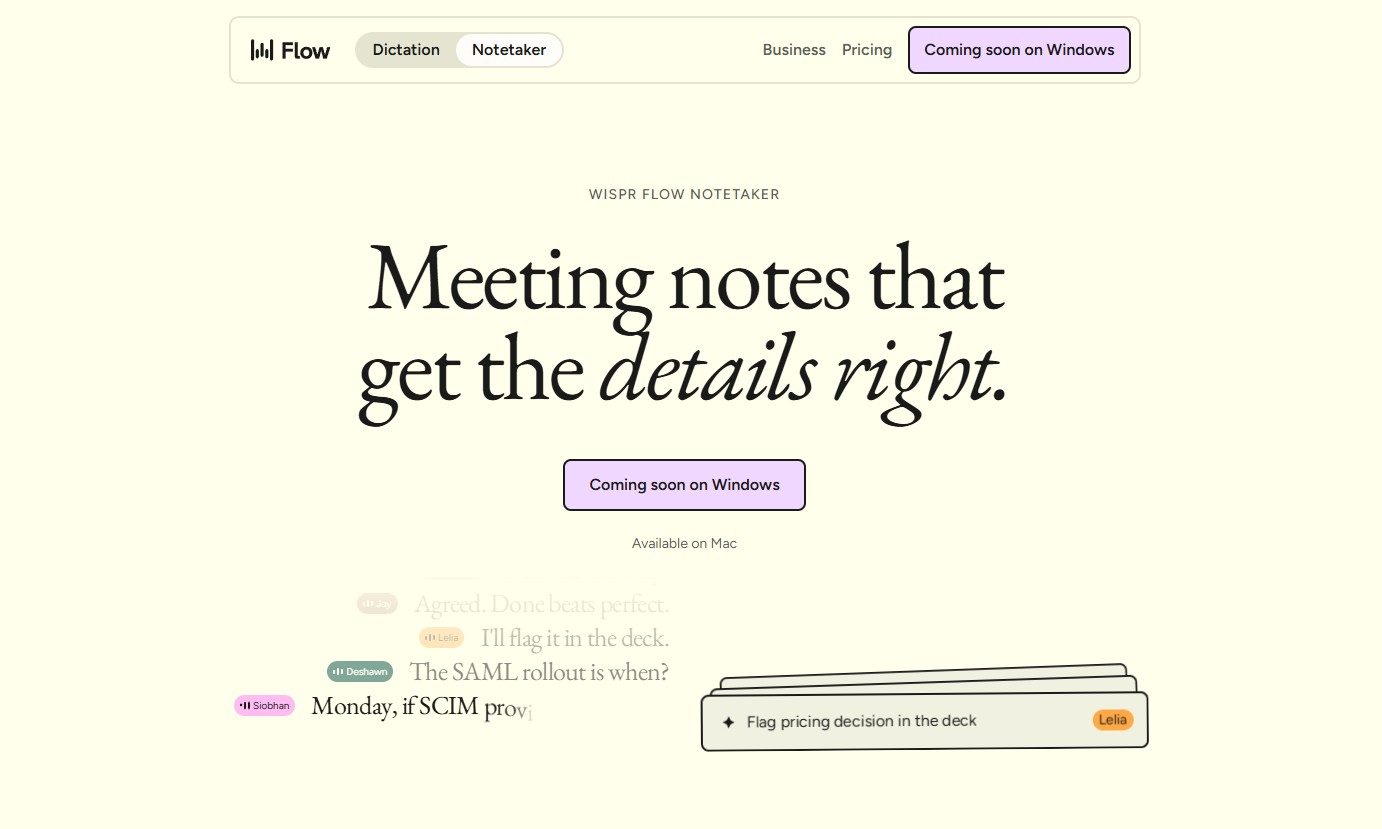
Wispr Flow launches an AI note-taker that works without joining calls
The new Wispr Flow tool called Notetaker creates live transcripts, summaries, and follow-up notes
Page, Text

Wispr Flow has launched Notetaker, an AI meeting assistant built into its existing Mac app. It can record conversations, show a live transcript, and prepare notes covering decisions, deadlines, assigned work, and unresolved issues.

Wispr Flow is best known for its dictation tool, which turns spoken thoughts into edited text wherever the user is working. Notetaker takes the company beyond voice typing and applies its transcription technology to meetings, interviews, and in-person conversations.

Read more