1. Home
  2. Emerging Tech
  3. Virtual Reality
  4. News

Chop down mountains with the edge of your hand in this augmented-reality sandbox

Add as a preferred source on Google

With the popularity of augmented and virtual reality at what appears to be an all-time high, researchers all over the world have started finding new and unique ways to implement the futuristic tech. While most projects seem to be focused on gaming, a group of researchers from UC Davis and UCLA have devised an educational use for augmented reality — one that gives people the ability to interact with a topographical map like never before. Basically, this crazy AR sandbox allows people to literally move mountains with their hands. Check it out in the video above.

By utilizing a Xbox Kinect sensor, a projector, and a physical sandbox, the researchers built an incredibly responsive program capable of not only reading changes made in the sand, but also reacting to them in real time. By simply altering the layout of the sandbox, users can create towering mountains and volcanos, or water-filled valleys and rivers. When a user creates valleys and peaks, the Kinect sensor quickly detects the modifications and applies real-time topographical changes. Moreover, the software allows users to create falling rain onto the map by just raising their hands over the sandbox. As it falls, the rain erodes some of the landscape and pools into pits and valleys.

UCLA's Augmented Reality Sandbox

The idea for this project was born from a desire to give undergraduate students hands-on ways to study science. After a group of researchers at UC Davis developed the AR sandbox, UCLA’s Modeling and Educational Demonstrations Laboratory applied the topographical feature to create the finished product. This hands-on approach to topography gives students the ability to shape and influence landscapes however they please. The team hopes the system will give students a better understanding of various terrain even when the sandbox is unavailable — i.e. when they’re are actually outdoors.

Recommended Videos

While this looks like an incredibly fun tool to mess around with, for the moment, the sandbox is currently only available to students attending UCLA. Nevertheless, this is one of the most unique takes on augmented reality we’ve come across and showcases  this revolutionary tech isn’t merely just a phase.

Rick Stella
Former Associate Editor, Outdoor
Rick became enamored with technology the moment his parents got him an original NES for Christmas in 1991. And as they say…
Google Earth’s AI misadventure lasted only a day. It was a tale of dangerous ignorance.
Nuclear reactors, tanks, and historical destruction on a life-like satellite map? Yeah, that's bad.
Nano Banana AI image generator representation.

Technology behemoths are clearly not reading the room, or they are just moving faster than they should when it comes to AI deployment. Google has already stuffed its Gemini AI in every corner of its software stack, from Android to daily productivity tools like Gmail that are used by hundreds of millions of users every day. AI is everywhere. Not all of it is bad, mind you. But in a few places, it just feels forced.

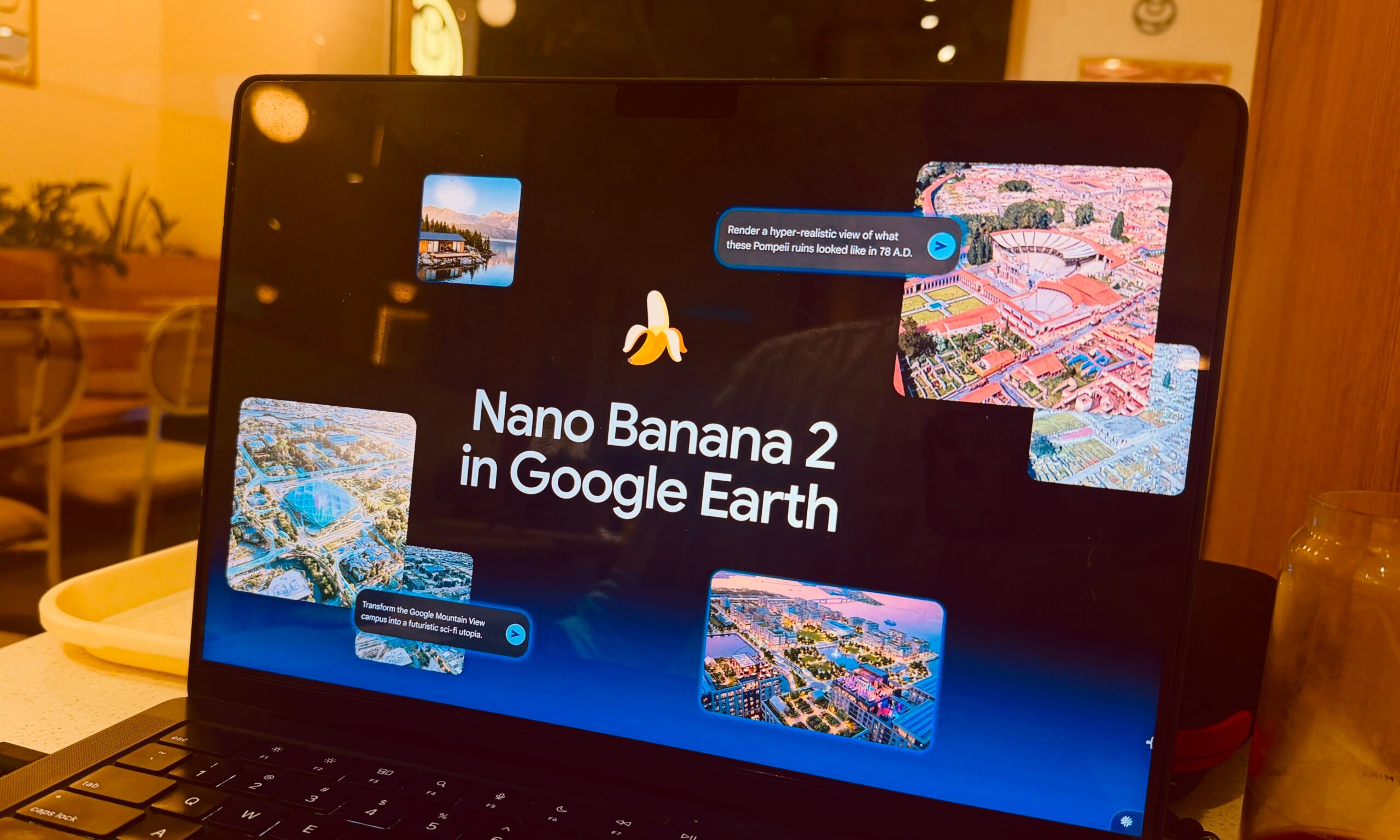
In its latest AI-fication experiment, the company targeted Google Earth. The idea was to let the audience use its Nano Banana 2 AI image generator and make images that can be placed on the map view. On paper, it's a cool idea. What would the Colosseum of Rome look like in your urban neighborhood? Yeah, fun stuff like that.

Read more
Google’s new AI gives robots better balance, smarter hands, and teamwork capabilities
Google just made robots a lot less clumsy and a lot more helpful.
Gemini robotics 2.0

Google DeepMind just brought sci-fi robots closer to reality, and it is very exciting. Building on its original Gemini Robotics model, the company has introduced Gemini Robotics 2, an AI system designed to help robots think, move, and even work together. Unlike most robots today, which rely on pre-programmed routines or someone controlling them remotely, this new system lets robots figure things out on their own when situations get unpredictable.

Can robots finally handle whole-body tasks?

Read more
Remember Samsung’s Ballie home robot? It may finally be inching closer to reality
Leaked app wireframes give the strongest hint yet that Samsung's Ballie home robot, first shown at CES 2020, might still be headed toward an actual release.
Samsung Ballie robot in a room next to a dog feeder.

Samsung's rolling home robot has been the industry's longest-running "will it ever actually ship" joke, and I'll admit I'd mostly given up on it. Now, there's finally a glimmer of hope.

Samsung first unveiled Ballie as a concept at CES 2020. Then, it showed it as a significantly upgraded version four years later. However, the company never confirmed a release date or committed to releasing it at all. 

Read more