1. Home
  2. Computing
  3. Web
  4. News

The Java browser plugin will die later this year

Add as a preferred source on Google

Java’s browser plugin, the software attackers just love to exploit, is going away. Oracle, who owns Java, is retiring the plugin a year from now in their next SDK update.

The Java browser plugin is infamous for its security problems. It is a common entry point for trojans and other attacks on Windows computers and Macs alike, and security experts frequently recommend disabling it entirely. Even the US Department of Homeland Security told people to turn the plugin off to protect their data.

Recommended Videos

Oracle has always patched problems, but never quickly enough to satisfy security experts. So browsers started to force the issue, by removing the plugin capability from their products entirely.

Oracle’s announcement comes after Mozilla’s Firefox, Google’s Chrome, and Microsoft’s new Edge browser all indicated the end of support for browser plugins that use the ancient Netscape Plugin Application Programming Interface (NPAPI). This means that, even if Oracle kept updating their browser plugin, only Apple’s Safari and Microsoft’s legacy Internet Explorer browsers would support it.

Responding to this, Oracle announced the end of the plugin in a blog post.

“With modern browser vendors working to restrict and reduce plugin support in their products, developers of applications that rely on the Java browser plugin need to consider alternative options,” the post said, adding that the company “plans to deprecate the Java browser plugin in JDK 9” later this year.

With or without support, it’s likely that the Java browser plugin will live on in corporate environments. Many custom-built applications used by businesses and government still depend on the plugin to function, and can’t be easily replaced. Oracle’s announcement means people at those companies will need to keep the plugin around, without the security of software patches.

At the same time, knowing that the security patches will stop working a year from now — and that major browsers will also stop working with legacy versions of the plugin — might be just enough motivation to finally replace the software.

Justin Pot
Justin's always had a passion for trying out new software, asking questions, and explaining things – tech journalism is the…
Google Assistant finally has a shutdown date, and it’s only weeks away
Google Assistant starts shutting down September 4 as Gemini takes over.
google assistant mobile.

Google Assistant’s long goodbye now has a firm date. Google says it will begin discontinuing the voice assistant on eligible mobile devices on September 4, 2026, according to an email sent to users and shared publicly on Reddit.

The transition may take several weeks, so Assistant won’t vanish from every device at once. Once the change reaches an eligible Android device, Gemini will replace Assistant with no option to switch back.

Read more
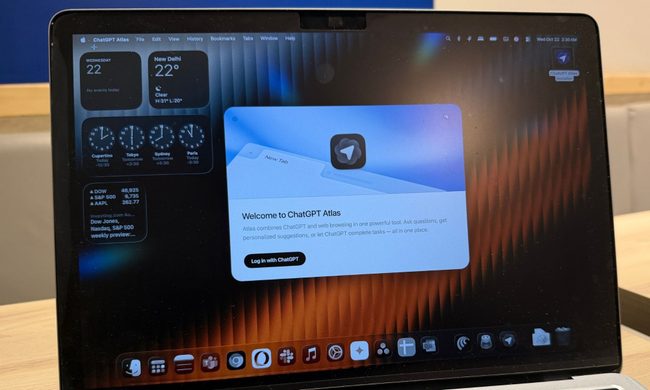
ChatGPT Atlas is shutting down and it has some homework left before you migrate
OpenAI is pulling the plug on Atlas, so start packing your bookmarks
ChatGPT Atlas browser on a MacBook.

ChatGPT Atlas is heading toward an early grave, and anyone still using OpenAI's browser has a small pile of homework to finish before the shutdown. OpenAI has confirmed that Atlas is scheduled to stop working on August 9, 2026.

After that date, the browser may no longer be operational. So users won't be able to browse the web or get access to its agent-powered workflows. Meanwhile, the company is moving those browser-based capabilities into ChatGPT and Codex. But unfortunately, the transition isn't as convenient as users may hope.

Read more
Google quietly rewrote Chrome’s AI documentation with important answers to on-device AI downloads
Google quietly clarified how Chrome handles on-device AI downloads.
Google Chrome with Gemini

I remember Chrome quietly downloading a 4GB AI model onto PCs. It raised plenty of eyebrows in May 2026. The next day, a Chrome executive clarified how on-device AI is core to its “developer & security strategy,” and that the model processes data locally. 

Now, Chrome has updated its support documents to explain the download and, more importantly, include an option to stop it. 

Read more