1. Home
  2. Emerging Tech
  3. News

Watch the Navy’s LOCUST launcher fire reconaissance drones like they’re missiles

Add as a preferred source on Google

Armed forces around the world are looking to machines to change how wars are won. Inside the War Fighting Lab, the Marine Corps is developing remote-controlled land-based robots and aerial drones that operate in teams; the United States Army is building robotic medics that can tend to soldiers and rescue them from the battlefield; and DARPA’s Gremlin drones are being designed to take off from and return to a “mothership” after completing reconnaissance missions.

Not to be outdone by the military’s other branches, the Navy’s Office of Naval Research (ONR) has developed swarming drones and a related drone launcher. The unmanned aerial vehicles (UAVs) can be sent into battle in single file, but in quick succession, before grouping into formation as shown in ONR’s new video of the prototype. The project is one part of the Low-Cost UAV Swarming Technology (LOCUST) program announced last year.

Recommended Videos

One drone is intimidating enough, but that effect multiplies as you add more UAVs to the team. According the ONR, LOCUST and the swarming drones are intended to “autonomously overwhelm an adversary” in either offensive or defensive operations, while keeping soldiers at a safe distance. The launchers’ small size allows for the firing of UAVs from ships, vehicles, or aircraft, depending on the mission.

LOCUST

Once in flight, the drones can transmit information to other members of the swarm, which allows for autonomous, collaborative tactics similar to those of the Marine Corps robot-drone teams. And, like the Marine Corps machines, LOCUST and the UAVs will ultimately be monitored by a human who can override their controls if needed.

“This level of autonomous swarming flight has never been done before,” ONR program manager Lee Mastroiann said in a press release last year. “UAVs that are expendable and reconfigurable will free manned aircraft and traditional weapon systems to do more, and essentially multiply combat power at decreased risk to the warfighter.”

Dyllan Furness
Former Contributor
Dyllan Furness is a freelance writer from Florida. He covers strange science and emerging tech for Digital Trends, focusing…
Scientists made robots curious like toddlers, and it helped them learn language twice as fast
Give a robot curiosity, and it starts learning language (and misbehaving) just like a toddler.
robots and kids photo

Scientists have been trying to figure out how kids pick up language so fast for decades, and a new study out of the Okinawa Institute of Science and Technology (OIST) might have cracked part of the puzzle: curiosity.

Researchers built a virtual robot with a brain-inspired neural network and set it loose in a simulated 3D world full of shapes, colors, and simple commands like "push left magenta dumbbell." 

Read more
You can now buy a computer mouse controlled entirely by your tongue
Augmental has opened public sales of the MouthPad, and introduced a new wearable that lets you type hands-free.
Augmental MouthPad and Vox featured

Augmental first showed off its tongue-controlled MouthPad as a CES curiosity in 2024. Today, the device is a real product you can buy, with the company opening public US sales alongside a beta release of Vox, a companion wearable built to handle the typing half of Augmental's hands-free computing promise.

A retainer that doubles as a mouse

Read more
Yet another study says AI is bad for elections, and the rabbit hole gets worse
AI may be an election bomb waiting for someone to light the fuse
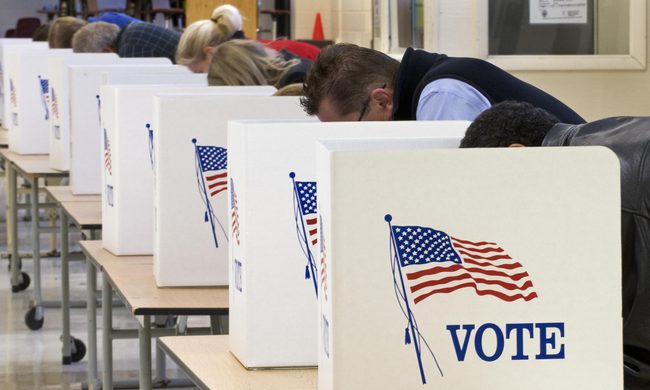
Voters cast their ballots on Election Day

Another election, another study has concluded that asking an AI chatbot for political guidance is a spectacularly bad idea. Research conducted during Hungary’s 2026 parliamentary election found that ChatGPT and Google Gemini offered not just inaccurate but also inconsistent and unreliable voting advice. The chatbots misclassified voter profiles, overlooked relevant parties, recommended parties absent from the ballot, and sometimes produced materially different answers when given the same information repeatedly.

AI keeps failing the voter test

Read more