1. Home
  2. Cars
  3. Mobile
  4. News

Mapping the autonomous future: TomTom launches HD navigation data for 17 states

Add as a preferred source on Google

TU-Automotive Detroit is known as “the undisputed home of the connected car,” and as such, each year brings a plethora of announcements concerning infotainment and autonomous driving. This time around, navigation specialist TomTom covered both.

The biggest reveal is that the Dutch brand has officially launched HD Map and RoadDNA data for 17 new states, both of which provide essential information for carmakers developing self-driving technology. In total, TomTom has mapped out 20 states.

Recommended Videos

“With over 122,000 kilometers of HD Map coverage globally, we’re equipping our automotive customers with the data needed to continue to push autonomous driving forward,” said Willem Strijbosch, head of autonomous driving at TomTom. “The importance of having a map in the vehicle for autonomous driving is now widely accepted; TomTom has responded to this need with an unprecedented ability to provide HD Maps today, while others are still in the R&D stage.”

Read more: TomTom’s Trucker 5000 is specifically suited for big and tall driving

HD Map and RoadDNA data is now available for interstates in the following areas: Connecticut, Delaware, the District of Columbia, Georgia, Idaho, Kansas, Louisiana, New Hampshire, New Mexico, North Carolina, Ohio, Pennsylvania, Rhode Island, South Dakota, Tennessee, Texas, Vermont, California, Michigan, and Nevada. TomTom also covers Germany’s famous Autobahn network.
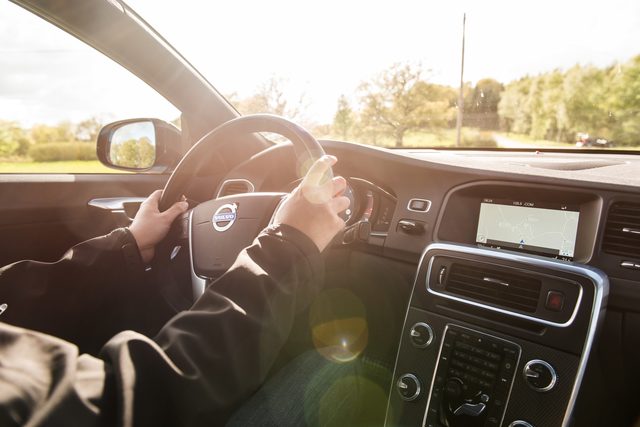
Volvo interior
Image used with permission by copyright holder

It wasn’t all about driverless tech at TU-Automotive Detroit though, because TomTom made another big announcement regarding infotainment — the brand has signed a deal to provide location and navigation content for Volvo Cars starting in 2019. The new services will be built into the Swedish automaker’s new infotainment system, which will be available on cars riding on the SPA platform (XC90, S90, V90) as well as the upcoming CMA architecture.

“We are extremely pleased to announce this collaboration between TomTom and Volvo Cars, one of the most respected car brands in the world,” said Antoine Saucier, managing director of TomTom Automotive. “Thanks to the trust that Volvo Cars has put into TomTom’s products, we are uniquely positioned in the automotive industry to offer Volvo Cars  future-proof systems that meet the rapidly changing market requirements.”

Andrew Hard
Andrew first started writing in middle school and hasn't put the pen down since. Whether it's technology, music, sports, or…
Tesla launches the six-seat Model Y Long Wheelbase in the US
The stretched electric SUV brings more space, more comfort, and up to 325 miles of range.
Tesla Model Y Long Wheelbase Featured

Tesla is giving the Model Y a little more breathing room. The company has officially launched the Model Y Long Wheelbase in the United States and Puerto Rico, introducing a stretched version of its best-selling electric SUV with a three-row, six-seat layout that's designed to make family road trips a lot more comfortable.

A bigger Model Y with a focus on comfort

Read more
A stolen Kia reveals the hidden limits of connected car technology
Kia can see where your stolen car is. GDPR means it won't share that in real time. That is the entire problem.
Kia EV3 design

If you’re buying a car with connected car technology, thinking it would help you to recover it in the event of theft, you might want to recalibrate your expectations. 

A recent incident in the UK, in which a car owner had three tracking devices installed in his car and still couldn’t recover it, led the carmaker to state that connected-car technology isn’t a “certified security vehicle tracker” (via the BBC).

Read more
Cambrige experts find utterly simple fix for longer lasting EV batteries. Just put some pressure on it.
Scientists found a way to make EV batteries last longer without reinventing the battery
EV Charging

EV battery breakthroughs typically involve new chemistry, exotic materials, or faster charging/higher capacity. But a new study reveals that you can skip all the fancy stuff and go with a very simple solution, Researchers from the University of Cambridge found that putting the battery under the right amount of pressure actually helps.

The study was about how physical pressure affects lithium-ion battery life, which found that keeping cells under constant pressure could double their lifespan. The work was published in Nature Energy, and the team says the improvement came without changing the active materials, electrolyte, or basic battery chemistry.

Read more