1. Home
  2. Emerging Tech
  3. News

Project Soli isn’t in wearables yet, but these guys used it to create invisible violin

Add as a preferred source on Google

Playing the world’s tiniest violin used to be a way to dismiss over-sensitive whiners, but now, thanks to the good folks over at cutting edge design studio [Design I/O], it’s the description of an awesome DIY project that allows would-be musicians to create a violin sound simply by rubbing their fingers together.

The project uses Google Soli, the search giant’s purpose-built interaction sensor that uses radar for motion tracking of the human hand. While Google is using it for proper grownup applications like objection recognition and next-gen wearables, however, [Design I/O]’s project offers something a bit more musical.
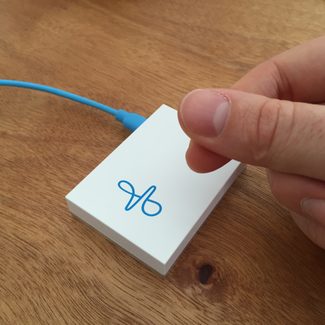
IMG_0157
Image used with permission by copyright holder

In order to do this, it also relies on Wekinator, a free machine learning tool used to train and detect the violin gestures, as well as open source C++ toolkit openFrameworks for communicating with the Soli and playing the sweet, sweet music. Once all of these pieces are put together, what results is a device capable of working out whether or not a violin gesture is being made and playing back a violin sample accordingly.

Recommended Videos

“This is, I believe, the first time someone has made the small violin gesture actually play music,” [Design I/O] partner Theodore Watson tells Digital Trends. “When we first saw the Soli demo last year, the gestures used in the demo reminded us so much of the smallest violin joke that we thought we would try it out if we ever got hold of a dev kit.”

Watson says he would describe the tiny violin as more of a “speed project” than the somewhat more serious interactive projects he normally works on. But he says that he and his [Design I/O] collaborators, “thought it would be a fun and accessible way for people to understand what types of things are possible with this incredibly innovative technology.”

It’s hard to disagree with that logic — particularly when the end result is as cool as this!

Luke Dormehl
I'm a UK-based tech writer covering Cool Tech at Digital Trends. I've also written for Fast Company, Wired, the Guardian…
Samsung’s humanoid robot ambitions are real, but factories come first
Samsung’s new robotics division has humanoids in its sights, although its immediate business is far more practical factory automation
Robot Touch Human Finger

Samsung wants a place in the humanoid race, but its new robotics push begins with machines built for factories rather than homes.

The CEO-led RX robotics division will initially focus on manufacturing robots. Samsung has separately identified humanoids as a priority, although it hasn’t announced a commercial model or explained where one fits into the division’s immediate plans.

Read more
The future of AI may depend on this one behind-the-scenes change
Running Claude on Android.

Whenever a new AI model arrives, it's easy to get caught up in the bells and whistles. We talk about how much smarter it is, how quickly it answers questions, or how realistic its images have become. But here's the thing: none of that matters much if the AI can't reliably work with the apps and services people use every day.

That's why an upcoming update to the Model Context Protocol (MCP) caught my attention. It isn't a new chatbot or a fancy AI model. In fact, most people will never even know it's happening. But it could quietly make the AI ecosystem a lot healthier. If you've never heard of MCP before, don't worry. Think of it as a shared language that lets AI assistants safely talk to apps like Gmail, Slack, calendars, databases, and countless other services. Instead of every company inventing its own way to make those connections, MCP gives everyone a common rulebook.

Read more
The AI game-dev boom has a dark side: fewer jobs for the people starting out
Solo creators are thriving with tools like Claude Code and Copilot, but entry-level game roles are disappearing.
Man playing a video game on a desktop with glowing red and blue lights

AI is making it easier than ever for a single person to build a game. That sounds like a win for creativity, and in many ways, it absolutely is. But there is a catch. As generative AI tools help solo developers and small studios do more with fewer people, the same shift is making life tougher for writers, artists, concept creators, and junior programmers trying to break into the gaming industry.

AI is giving solo developers superpowers

Read more