1. Home
  2. Computing
  3. News

New malware can make a PC’s cooling fans cough up passwords, encryption keys

Add as a preferred source on Google

There are a lot of ways to steal info off a computer once you’re connected to it. Whether over Wi-Fi, Bluetooth, Ethernet, or even a USB stick, once a computer is connected to the outside world, it’s no longer safe from prying eyes.

One solution is to “air-gap” important systems, or separate them from other computers and the network at large by removing any remote access. It’s a solid plan, but now researchers from the Cyber Security Labs at Ben Gurion University have skirted that security method. The team managed to transfer data using an infected PC’s cooling fans.

Recommended Videos

To do this, the computer has to be infected with malware designed for it. Once it’s installed, the malware flips the fan speed between 1,000 RPM and 1,600 RPM, an audible difference that a microphone, like one found on a smartphone, can easily pick up on. The demo shows the computer rattling off a long chain of numbers, in binary because of the fan’s two speeds, and a nearby phone listening and interpreting.

In doing so, the malware effectively defeats the air gap. A computer with absolutely nothing connected to it — not even a monitor — could still have data stolen with this attack. The catch, of course, is that a device with a microphone needs to be planted near the target device. That means this malware is never going to target massive numbers of users, but it could still be used to pull off heists worthy of a Bond film.

The malware, which the team calls “Fansmitter,” allows for up to 1,200 bits an hour to be transmitted, in ones and zeroes, over the air to a phone. That’s a full 150 alphanumeric characters per hour, more than enough to steal a couple of passwords or an encryption key.

Malware that attacks air-gapped systems has become an increasingly popular topic over the last few years, as the methods of limiting access to a networked machine become less effective. Fansmitter is not the most practical attack, but it proves that even keeping a system disconnected from the Internet — and any peripherals — does not provide absolute security.

Brad Bourque
Brad Bourque is a native Portlander, devout nerd, and craft beer enthusiast. He studied creative writing at Willamette…
Claude’s Sonnet 5 is built to do more on its own and cost you less
Better than its predecessor, nearly as good as the flagship, and meaningfully cheaper than both.
Art, Floral Design, Graphics

Every major AI lab is racing to prove its models can work autonomously with minimal hand-holding; we’re now seeing pricing emerge as the next battleground. 

Anthropic just fired its latest shot, Claude Sonnet 5, a model the company says performs nearly as well as its flagship Opus 4.8 at a fraction of the cost.

Read more
Apple Creator Studio adds AI tools across Final Cut Pro, Logic Pro and Pixelmator Pro
Final Cut Pro gets AI captions, Auto Mask and better Pixelmator Pro workflows in Creator Studio update
Computer Hardware, Electronics, Hardware

Apple has introduced a major update to Apple Creator Studio, adding new AI features, deeper Pixelmator Pro integration, and workflow upgrades across Final Cut Pro, Logic Pro, Keynote, Pages, Numbers, Motion, Compressor, Freeform, and Final Cut Camera.

The update makes Creator Studio more useful across Mac, iPad, and iPhone, especially for people who move between video editing, image editing, presentations, documents, spreadsheets, and music production.

Read more
AI browsers like Perplexity Comet can be tricked into spilling your password through BioShocking exploit
Six AI browsers were found leaking saved passwords and many of them haven't fixed it yet.
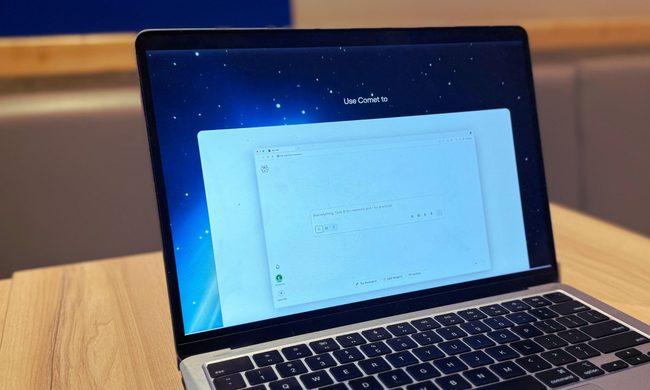
MacBook Air in hand, Comet browser loaded—let’s see what Perplexity’s AI can really do

Security researchers just found a strange way to trick AI browsers into handing over your passwords. They managed to trick AI browser agents into exposing sensitive data like saved passwords, session cookies, and private tokens by disguising the theft as part of a harmless "game."

The technique is called BioShocking, named after the popular video game BioShock, where a brainwashed character is manipulated into believing a false reality. Once an AI browser falls for the same trick, it stops following its own safety rules entirely.

Read more