  1. Home
  2. Cars
  3. Photo Galleries
  4. Legacy Archives

Grown-up drop-tops: 2016 Audi TT Roadster and TT S Roadster set for Paris debut

Add as a preferred source on Google

Just ahead of the 2014 Paris Motor Show, Audi is dropping the tops on the redesigned TT Roadster and TT S Roadster convertibles.

Sharing styling and tech with the 2015 TT coupe unveiled at Geneva back in March, the new TT Roadster will have substance as well as style.

The chiseled exterior is more aggressive and, dare we say it, macho, than the first two generations of TT, even with the top down.

That soft top takes just 10 seconds to fold, at speeds up to 31 mph. It also folds in a “Z” pattern that allows it to take up less space when folded.

With the top down, pedestrians will get a good look at the stylish interior. It features the same “virtual cockpit” layout as the TT coupe, with one 12.3-inch LCD display replacing both analog gauges and the traditional center-stack infotainment screen.

Since it doesn’t have to house a bulky screen, the dashboard is very thin. It’s actually supposed to look like an airplane wing, and is topped by vents that feature their own miniature digital readouts.

Related: 2016 Audi TT first drive

U.S. powertrain offerings will likely mirror those of the TT coupe, meaning consumers on this side of the Atlantic will get to choose between a pair of 2.0-liter turbocharged four-cylinder engines.

The base TT Roadster will get 230 horsepower 272 pound-feet of torque and will likely be offered with either a six-speed manual transmission and front-wheel drive, or a six-speed S tronic dual-clutch unit and Audi’s quattro all-wheel drive.

Stepping up to the TT S Roadster nets 310 hp and 280 lb-ft of torque. Audi says it will do 0 to 62 mph in 4.9 seconds, just 0.2 second off the pace of the TT S coupe. Expect both manual and automatic transmission options, with quattro standard.

The Audi TT Roadster will make its formal debut at the 2014 Paris Motor Show next week, with U.S. sales likely to start next year. Be sure to check back for all of the latest updates from France.

Stephen Edelstein
Stephen is a freelance automotive journalist covering all things cars. He likes anything with four wheels, from classic cars…
Volvo is rolling out Apple Music to over 2 million cars with a simple OTA update
Your Volvo may soon get Apple Music without needing CarPlay
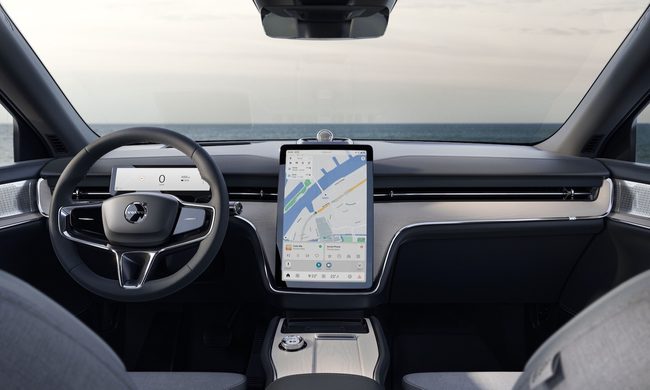
Interior view of the 2024 Volvo EX90.

The line between your smartphone and your car continues to blur. Volvo has announced that it is rolling out an over-the-air software update that brings Apple Music directly to the infotainment systems of more than 2 million vehicles worldwide. Instead of relying on Apple CarPlay or plugging in an iPhone, eligible drivers will be able to stream music natively from their car's built-in system, making Apple Music another integrated feature of Volvo's software experience.

The update is arriving for a wide range of Volvo models, including the EX90, ES90, XC90, S90, V90, XC60, S60, V60, XC40, EX40 and EC40, covering model year 2020 onwards. Availability, however, may vary depending on the vehicle.

Read more
Chery’s latest EV packs flagship tech for the price of a base Tesla, but you can’t buy it
Here's everything packed into Exeed's 2027 Exlantix ES, from its 27-sensor autonomous driving suite to its 860 km range, all starting under $31,000.
Car, Transportation, Vehicle

Chery's premium arm just dropped a sedan that makes you wonder why American EVs cost twice as much for half the tech.

Exeed's 2027 Exlantix ES ships with a driver-assist system called Falcon 700. It is built around an Nvidia Orin-Y chip and a genuinely stacked sensor suite.

Read more
A new AI model wants self-driving cars to think before they swerve
Forget guessing games, this self-driving AI actually shows its work.
Self driving car

Self-driving cars have gotten pretty good at driving. The harder problem is teaching them to drive safely in situations nobody planned for. We have heard horror stories of self-driving cars, behaving erratically in emergency situations, often times delaying first responders from reaching the scene.

A team at Seoul National University, led by professor Jun Won Choi from the Department of Electrical and Computer Engineering, thinks they have cracked part of that puzzle with a new AI model called SafeDrive. The research was recently selected as a highlight paper at CVPR 2026, a distinction that goes only to roughly 3% of all submissions.

Read more