1. Home
  2. Cars
  3. News

BMW’s i8 convertible will finally go into production, but not until 2018

Add as a preferred source on Google

BMW has been teasing a convertible version of its i8 plug-in hybrid since before the current coupe model went into production, starting with the i8 Spyder concept (pictured above) all the way back in 2012. Now, BMW may finally be ready to pull the trigger on a drop-top i8.

During a press conference in Santa Monica, California, last week, BMW CEO Harald Krueger said the i8 convertible would arrive in 2018, reports Reuters. Krueger didn’t give any other details, but the convertible will likely arrive as part of a comprehensive update of the i8. While it still looks like it drove out of the future, the i8 has been in production since 2014 without significant changes, so a refresh within the next couple of years seems likely.

Recommended Videos

This isn’t the first time an i8 convertible has been mentioned in recent months. BMW unveiled a second i8 convertible concept at CES earlier this year, triggering more speculation that it was considering a production version. Called the i Future Interaction concept, that car was built primarily to show off BMW’s infotainment tech.

Read more: Mini teases first plug-in hybrid model

Mechanically, the i8 convertible shouldn’t be too different from the current i8 coupe. It will likely feature the same powertrain, including a 1.5-liter turbocharged three-cylinder engine, electric motor, and lithium-ion battery pack. Some rearranging of the carbon fiber-reinforced plastic body shell will be required, along with structural bracing to account for the loss of a fixed roof.

The i8 convertible could also benefit from upgrades reportedly planned for the current i8 coupe. The revised i8 could get a boost in both power and electric-only driving range, British car magazine Autocar reported earlier this year. Power output could rise from 357 horsepower to 420 hp. The production i8 could also adapt the 10-kilowatt-hour battery pack (replacing a 7.1-kWh pack) and wireless charging system from the current i8 Formula E pace car.

The refreshed i8 is expected to appear sometime next year, meaning BMW will able to incorporate any changes into the convertible in time for its 2018 arrival. In addition to the i8 and i3 electric car, BMW is expected to expand its “i” lineup with a new model called the i5 and a flagship model codenamed “iNext” in the near future.

Stephen Edelstein
Stephen is a freelance automotive journalist covering all things cars. He likes anything with four wheels, from classic cars…
This sleek Chinese EV pairs supercar styling with three AI brains
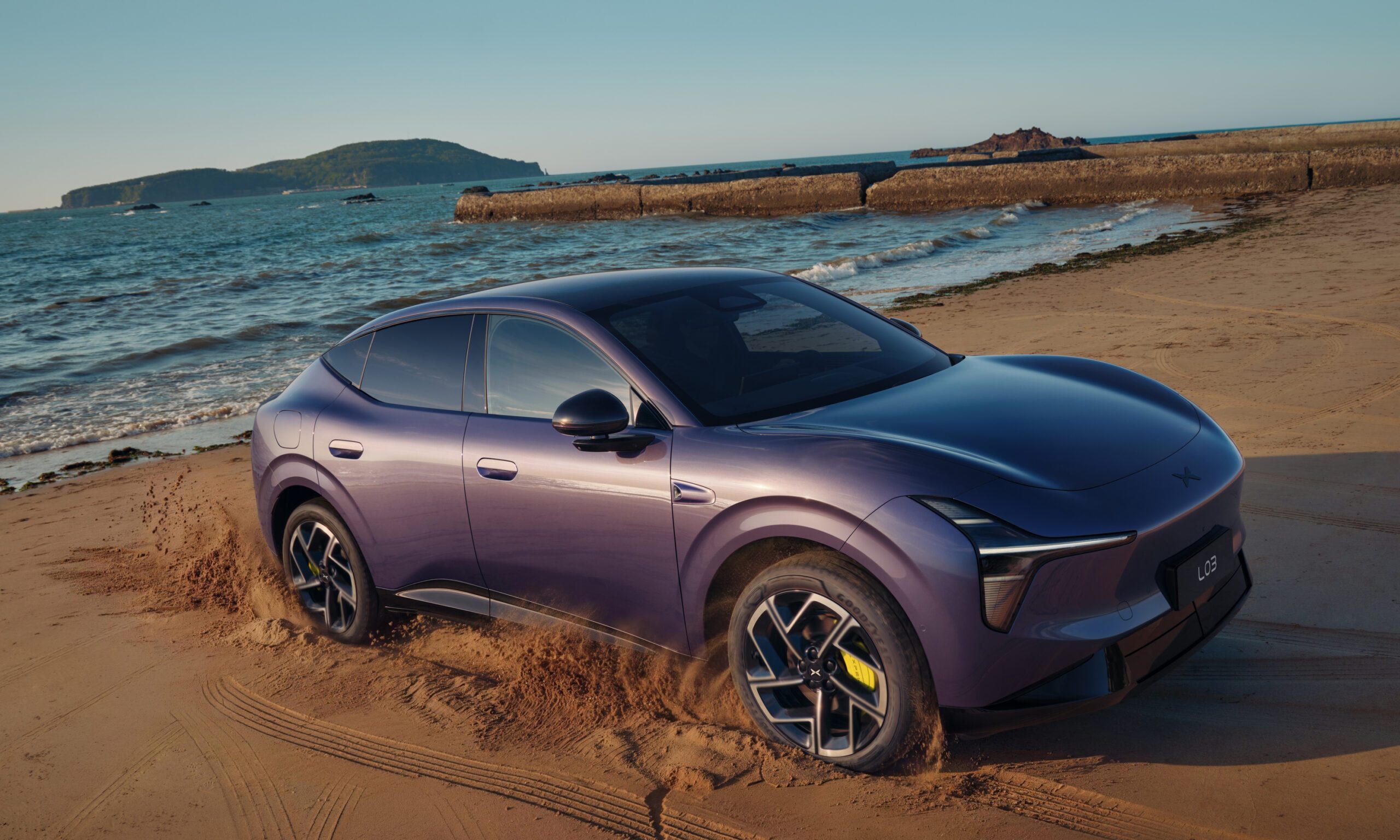
The Xpeng L03 is an AI supercomputer disguised as a stylish family SUV
Xpeng L03

Xpeng’s latest electric vehicle carries enough processing power to make the term "smart car" actually sound more realistic than it actually is. The new Xpeng L03 debuted simultaneously in Europe and China on July 16, with the company presenting it across 65 markets. Available as a fully electric vehicle and an L03 Power X range-extender, the coupe-SUV is Xpeng’s most internationally focused model so far. Market-specific prices and sales dates remain unannounced.

Three AI chips and Google Maps built right in

Read more
A new sodium battery posts wild four-minute charging numbers, but don’t expect it in an EV yet
The breakthrough could improve fast charging and battery life, but the study hasn’t demonstrated those results in a production-sized pack
EV Charger

A new sodium-metal battery has posted a charging number that makes today’s EVs look painfully slow. In laboratory testing, the cell operated at a 15C rate, equivalent to completing a charge or discharge in roughly four minutes.

That doesn’t mean researchers plugged in an electric car and watched it fill up before the driver finished buying coffee. The result came from a small experimental cell using a new quasi-solid electrolyte, while the larger pouch-cell prototype delivered far less dramatic performance.

Read more
The Apple Car may be dead, but it became the foundation of Apple Intelligence
A decade of work on a canceled car project reportedly laid the groundwork for Apple Intelligence.
Apple Intelligence in Apple Car

The Apple Car may have never left the garage, but it apparently gave birth to Apple's AI ambitions. According to Bloomberg's Mark Gurman, Apple's canceled autonomous vehicle project, one that consumed more than a decade of work and over $10 billion before being scrapped in 2024, ended up laying the technological foundation for Apple Intelligence. In a rather ironic twist, one of Apple's most expensive failures may also become one of its most important long-term investments.

The Apple Car forced Apple to think like an AI company

Read more