  1. Home
  2. Cars
  3. Photo Galleries
  4. News

Callaway’s supercharged Camaro SC740 will leave Hellcats and Mustangs in the dust

Add as a preferred source on Google

Chevrolet made waves by premiering the track-tuned, 640-horsepower Camaro ZL1 this week, but just days later, famed tuner Callaway is looking to one-up General Motors by announcing its own version of the iconic pony car.

By the end of 2016, customers will be placing orders for the Callaway Camaro SC740, which is expected to boast a whopping 740 horsepower as its name suggests. Currently, the most potent ‘Maro made by Callaway is the SC610, so the SC740 is sure to make muscle car fans weak in the knees.

At the heart of the SC740 will be Callaway’s GenThree Supercharger system, which bolts up to the vehicle’s Corvette-sourced V8 and replaces the ZL1’s stock blower setup. Rotor pack displacement jumps from 1740cc all the way up to 2300cc in Callaway’s hands, and in combination with the new supercharger housing and integrated intake manifold, it results in more airflow and much more power. To keep things running smoothly the hood, Callaway will also add its TripleCooled intercooler system. Buyers will be able to choose from the six-speed manual or all-new 10-speed automatic gearbox.
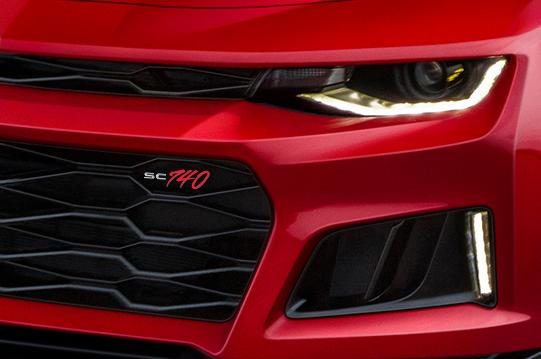
Callaway Camaro SC740
Image used with permission by copyright holder

Callway has not disclosed any enhancements to the suspension, aerodynamics, or aesthetics over the standard car, but all the track-focused goodies from the ZL1 will carry over. That means the SC740 will ride on a lighter, stiffer platform than its predecessor, one accompanied by GM’s trick Magnetic Ride suspension and electronic limited-slip. The coupe-only model will also offer a Driver Mode Selector, a Performance Data Recorder, launch control, Performance Traction Management, and a dual-stage exhaust to scare the neighbors.

Outside of a few new badges, Callaway’s version should look no different from the ZL1, but that isn’t exactly a bad thing. The vehicle’s bad intentions are showcased through the styling, which is equal parts aggressive, modern, and downright mean. It’ll surely be a harrowing sight as it pulls into your rear-view on track day, but from the look of things, it won’t stay there for long.

Andrew Hard
Andrew first started writing in middle school and hasn't put the pen down since. Whether it's technology, music, sports, or…
Chery’s latest EV packs flagship tech for the price of a base Tesla, but you can’t buy it
Here's everything packed into Exeed's 2027 Exlantix ES, from its 27-sensor autonomous driving suite to its 860 km range, all starting under $31,000.
Car, Transportation, Vehicle

Chery's premium arm just dropped a sedan that makes you wonder why American EVs cost twice as much for half the tech.

Exeed's 2027 Exlantix ES ships with a driver-assist system called Falcon 700. It is built around an Nvidia Orin-Y chip and a genuinely stacked sensor suite.

Read more
A new AI model wants self-driving cars to think before they swerve
Forget guessing games, this self-driving AI actually shows its work.
Self driving car

Self-driving cars have gotten pretty good at driving. The harder problem is teaching them to drive safely in situations nobody planned for. We have heard horror stories of self-driving cars, behaving erratically in emergency situations, often times delaying first responders from reaching the scene.

A team at Seoul National University, led by professor Jun Won Choi from the Department of Electrical and Computer Engineering, thinks they have cracked part of that puzzle with a new AI model called SafeDrive. The research was recently selected as a highlight paper at CVPR 2026, a distinction that goes only to roughly 3% of all submissions.

Read more
Your next car’s software update could become its biggest security risk
Your next car could receive updates like your smartphone. That's also becoming a cybersecurity nightmare.
OTA technology allows manufacturers to remotely deliver software updates.

Modern cars are no longer machines that stay the same after they leave the showroom. Increasingly, they're becoming software-defined vehicles that receive new features, bug fixes, and security patches wirelessly, much like smartphones. But while over-the-air (OTA) updates have made vehicle maintenance easier and cheaper, cybersecurity experts are warning that the same technology could also become one of the automotive industry's biggest security challenges.

Researchers and policymakers are now calling for stronger oversight as connected vehicles become increasingly dependent on remote software updates. Their concern isn't just about hackers stealing personal data. It's about someone potentially interfering with the operation of a moving vehicle.

Read more