1. Home
  2. Cars
  3. Legacy Archives

The 1,035-horsepower Ferrari FXX K just made its track debut. And yes, it’s loud

Add as a preferred source on Google

If cars were musicians, the Ferrari FXX K would be the first chair soloist.

The dynamic, dragon-like hypercar has an incredible voice, and its track-only talents were on full display during its debut at Yas Marina Circuit last week.

Recommended Videos

The 1,035-horsepower Ferrari was only there for a demonstration lap or two, but it was enough to make an impression. You don’t hear many arguing that Van Halen’s “Eruption” isn’t a powerful song.

A video of the laps has been posted by 4WheelsofLux, and although the car wasn’t pushed to the limit in Abu Dhabi, the FXX K’s commanding power and cornering prowess were easy to see.

Behind closed doors, Ferrari claims the car can go around its private Fiorano Circuit five seconds quicker than the standard LaFerrari. That is an incredible achievement, considering it takes the road car only 1:19 to get around.

How is the track version so much faster? For starters, the FXX K is the most powerful production Ferrari ever. Building off the hypercar performance of LaFerrari, the FXX K equips the same naturally aspirated, 6.3-liter V12, but it’s been upgraded from 789 hp to 860 hp. In combination with the HY-KERS electric system, the K boasts a ridiculous total output of 1,035 hp.

Furthermore, it’s 198 pounds lighter, wears sticky Pirelli slicks, and equips an aero kit that creates a spine-crunching 1,190 lbs of downforce at 124 mph.

At about the midway point of the video, the FXX K is joined by a slew of other top flight Ferraris, including the Enzo-based FXX and a couple 599XXs.

The magnificent congregation prompts a spirited lap, bathed in a beautiful symphony of Italian V12s. The thoroughbred engines reverberate off the Yas Marina track like brass at Carnegie Hall, their sonic intensity matched only by blinding speed.

The car costs $2.7 million and has been limited to only 32 units. As you may have guessed, it’s already sold out.

(Video by 4WheelsofLux)

Andrew Hard
Andrew first started writing in middle school and hasn't put the pen down since. Whether it's technology, music, sports, or…
Volvo is rolling out Apple Music to over 2 million cars with a simple OTA update
Your Volvo may soon get Apple Music without needing CarPlay
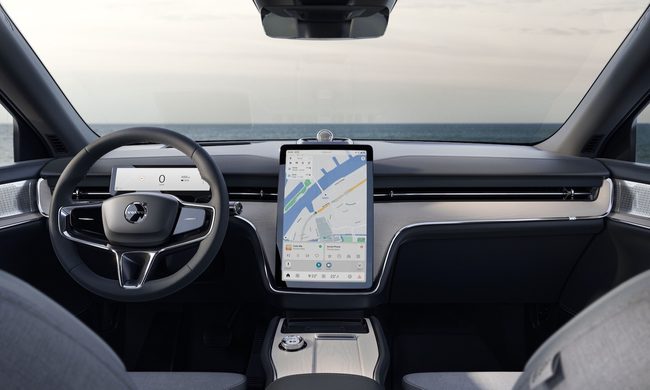
Interior view of the 2024 Volvo EX90.

The line between your smartphone and your car continues to blur. Volvo has announced that it is rolling out an over-the-air software update that brings Apple Music directly to the infotainment systems of more than 2 million vehicles worldwide. Instead of relying on Apple CarPlay or plugging in an iPhone, eligible drivers will be able to stream music natively from their car's built-in system, making Apple Music another integrated feature of Volvo's software experience.

The update is arriving for a wide range of Volvo models, including the EX90, ES90, XC90, S90, V90, XC60, S60, V60, XC40, EX40 and EC40, covering model year 2020 onwards. Availability, however, may vary depending on the vehicle.

Read more
Chery’s latest EV packs flagship tech for the price of a base Tesla, but you can’t buy it
Here's everything packed into Exeed's 2027 Exlantix ES, from its 27-sensor autonomous driving suite to its 860 km range, all starting under $31,000.
Car, Transportation, Vehicle

Chery's premium arm just dropped a sedan that makes you wonder why American EVs cost twice as much for half the tech.

Exeed's 2027 Exlantix ES ships with a driver-assist system called Falcon 700. It is built around an Nvidia Orin-Y chip and a genuinely stacked sensor suite.

Read more
A new AI model wants self-driving cars to think before they swerve
Forget guessing games, this self-driving AI actually shows its work.
Self driving car

Self-driving cars have gotten pretty good at driving. The harder problem is teaching them to drive safely in situations nobody planned for. We have heard horror stories of self-driving cars, behaving erratically in emergency situations, often times delaying first responders from reaching the scene.

A team at Seoul National University, led by professor Jun Won Choi from the Department of Electrical and Computer Engineering, thinks they have cracked part of that puzzle with a new AI model called SafeDrive. The research was recently selected as a highlight paper at CVPR 2026, a distinction that goes only to roughly 3% of all submissions.

Read more