1. Home
  2. Cars
  3. News

With Ford’s ‘By Design’ campaign, your art might star in the brand’s next billboard

Add as a preferred source on Google

Have you ever driven by a huge advertising billboard and thought you could do better? Thanks to Ford’s new “By Design” campaign, you can.

The American automaker is lettings its customers (or anybody else) crank out artwork for digital billboards all across the country. Simply head to the brand’s dedicated website and choose a city — New York, Los Angeles, Chicago, San Francisco, Washington, D.C., or Miami — and pick  your preferred Ford vehicle. Once you’ve done that, your artistic side is encouraged to take over as you are invited to add a variety of fractals, smoke trails, and chalk smudges around the car.


“We wanted consumers to experience and be a part of our brand in a unique way,” said Lisa Schoder, Ford’s digital marketing manager. “By showcasing what our consumers’ vehicles mean to them, we have made their individual expressions the driving message of our campaign.”

Recommended Videos

After submitting your composition, it goes up for viewing somewhere in your selected city — Times Square or the San Francisco Bay Bridge, for example — with your name and hometown attached. For added vanity, the company will send you a webcam shot of the artwork on display, something Ford calls a “billboard selfie.” Check the process out in the video below, but keep those tunes going because the video has no sound.

When it’s not devising new ways for people to interact with its products, Ford is busy bringing old, broken engines back to life. Last week, the company detailed a technology called Plasma Transferred Wire Arc, which lines the walls of cylinder blocks with a high-tech coating to bring them back to factory condition. According to the manufacturer, the technique utilizes far fewer resources than are required to build a new engine, while also generating 50-percent fewer CO2 emissions.

In other Ford news, the company has added Siri Eyes Free voice control to over five million vehicles this month viaa  software update. You can read more about the story here.

Andrew Hard
Andrew first started writing in middle school and hasn't put the pen down since. Whether it's technology, music, sports, or…
Your next car’s software update could become its biggest security risk
Your next car could receive updates like your smartphone. That's also becoming a cybersecurity nightmare.
OTA technology allows manufacturers to remotely deliver software updates.

Modern cars are no longer machines that stay the same after they leave the showroom. Increasingly, they're becoming software-defined vehicles that receive new features, bug fixes, and security patches wirelessly, much like smartphones. But while over-the-air (OTA) updates have made vehicle maintenance easier and cheaper, cybersecurity experts are warning that the same technology could also become one of the automotive industry's biggest security challenges.

Researchers and policymakers are now calling for stronger oversight as connected vehicles become increasingly dependent on remote software updates. Their concern isn't just about hackers stealing personal data. It's about someone potentially interfering with the operation of a moving vehicle.

Read more
This sleek Chinese EV pairs supercar styling with three AI brains
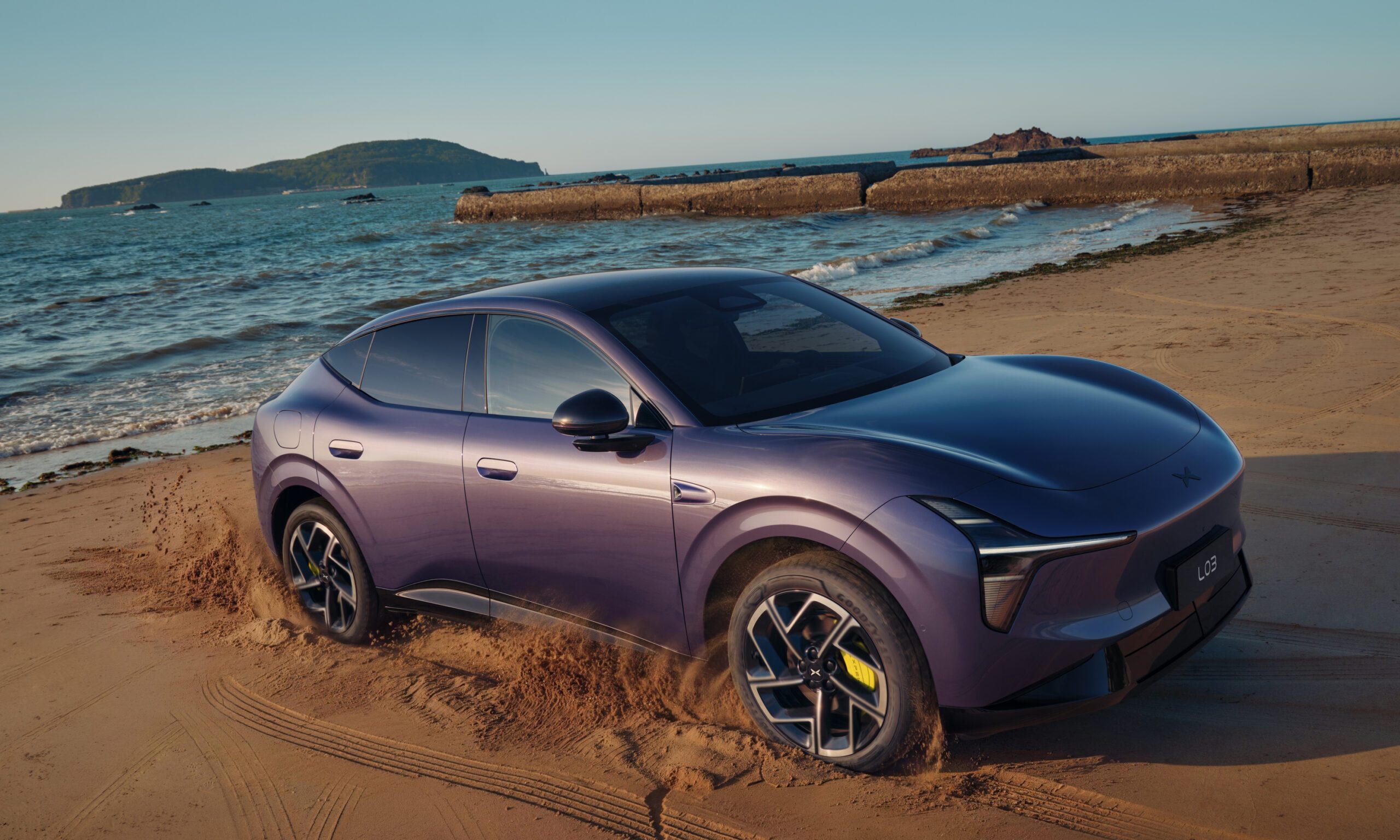
The Xpeng L03 is an AI supercomputer disguised as a stylish family SUV
Xpeng L03

Xpeng’s latest electric vehicle carries enough processing power to make the term "smart car" actually sound more realistic than it actually is. The new Xpeng L03 debuted simultaneously in Europe and China on July 16, with the company presenting it across 65 markets. Available as a fully electric vehicle and an L03 Power X range-extender, the coupe-SUV is Xpeng’s most internationally focused model so far. Market-specific prices and sales dates remain unannounced.

Three AI chips and Google Maps built right in

Read more
A new sodium battery posts wild four-minute charging numbers, but don’t expect it in an EV yet
The breakthrough could improve fast charging and battery life, but the study hasn’t demonstrated those results in a production-sized pack
EV Charger

A new sodium-metal battery has posted a charging number that makes today’s EVs look painfully slow. In laboratory testing, the cell operated at a 15C rate, equivalent to completing a charge or discharge in roughly four minutes.

That doesn’t mean researchers plugged in an electric car and watched it fill up before the driver finished buying coffee. The result came from a small experimental cell using a new quasi-solid electrolyte, while the larger pouch-cell prototype delivered far less dramatic performance.

Read more