  1. Home
  2. Cars
  3. News

Eyes on you: Cadillac eye-tracking tech will wake you up or pull you over

Add as a preferred source on Google

As we travel on the road to fully self-driving cars, the automotive industry wants you to stay alert. Cadillac’s new Super Cruise tracks your eyes to be sure you’re paying attention when using the optional semi-autonomous system, according to The Wall Street Journal.

Offered first for the 2017 Cadillac CT6, the Super Cruise system uses visual and audible alerts if it detects you’re not paying attention. Ignore the alerts and an OnStar information system rep will speak to you via intercom — OnStar is required with Super Cruise. If you still don’t respond the car pulls to the side of the road and stops.

Recommended Videos

Super Cruise will only work on highways with fully detailed map data — if the car is going to pull over on its own it needs to know for sure where to go safely.

Super Cruise also checks that your hands are on the wheel, the most common way carmakers have been tracking alertness. But that’s not enough, says General Motors EVP for global product development Mark Reuss, because “you can defeat the hands-on-the-wheel devices pretty readily.” Therefore GM “will use something that’s pretty hard to get around,” Reuss said.

Consumers have mixed feelings about self-driving cars, but manufacturers and government regulators are in overdrive rushing to advance the technology. The fact that over 90 percent of crashes result from human error is motivating both the industry and the government.

Until fully self-driving vehicles can take over, however, humans have shown a tendency to over-rely on driver-assist features that still require driver monitoring. This reliance had tragic, headline-grabbing, fatal results in May in the case of a Tesla Model S that had the company’s driver-assist AutoPilot system engaged.

So as carmakers develop fully capable vehicle autonomy, the focus is on driver attention and alertness in operating the interim semi-autonomous tech.

Bruce Brown
Bruce Brown Contributing Editor   As a Contributing Editor to the Auto teams at Digital Trends and TheManual.com, Bruce…
A new AI model wants self-driving cars to think before they swerve
Forget guessing games, this self-driving AI actually shows its work.
Self driving car

Self-driving cars have gotten pretty good at driving. The harder problem is teaching them to drive safely in situations nobody planned for. We have heard horror stories of self-driving cars, behaving erratically in emergency situations, often times delaying first responders from reaching the scene.

A team at Seoul National University, led by professor Jun Won Choi from the Department of Electrical and Computer Engineering, thinks they have cracked part of that puzzle with a new AI model called SafeDrive. The research was recently selected as a highlight paper at CVPR 2026, a distinction that goes only to roughly 3% of all submissions.

Read more
Your next car’s software update could become its biggest security risk
Your next car could receive updates like your smartphone. That's also becoming a cybersecurity nightmare.
OTA technology allows manufacturers to remotely deliver software updates.

Modern cars are no longer machines that stay the same after they leave the showroom. Increasingly, they're becoming software-defined vehicles that receive new features, bug fixes, and security patches wirelessly, much like smartphones. But while over-the-air (OTA) updates have made vehicle maintenance easier and cheaper, cybersecurity experts are warning that the same technology could also become one of the automotive industry's biggest security challenges.

Researchers and policymakers are now calling for stronger oversight as connected vehicles become increasingly dependent on remote software updates. Their concern isn't just about hackers stealing personal data. It's about someone potentially interfering with the operation of a moving vehicle.

Read more
This sleek Chinese EV pairs supercar styling with three AI brains
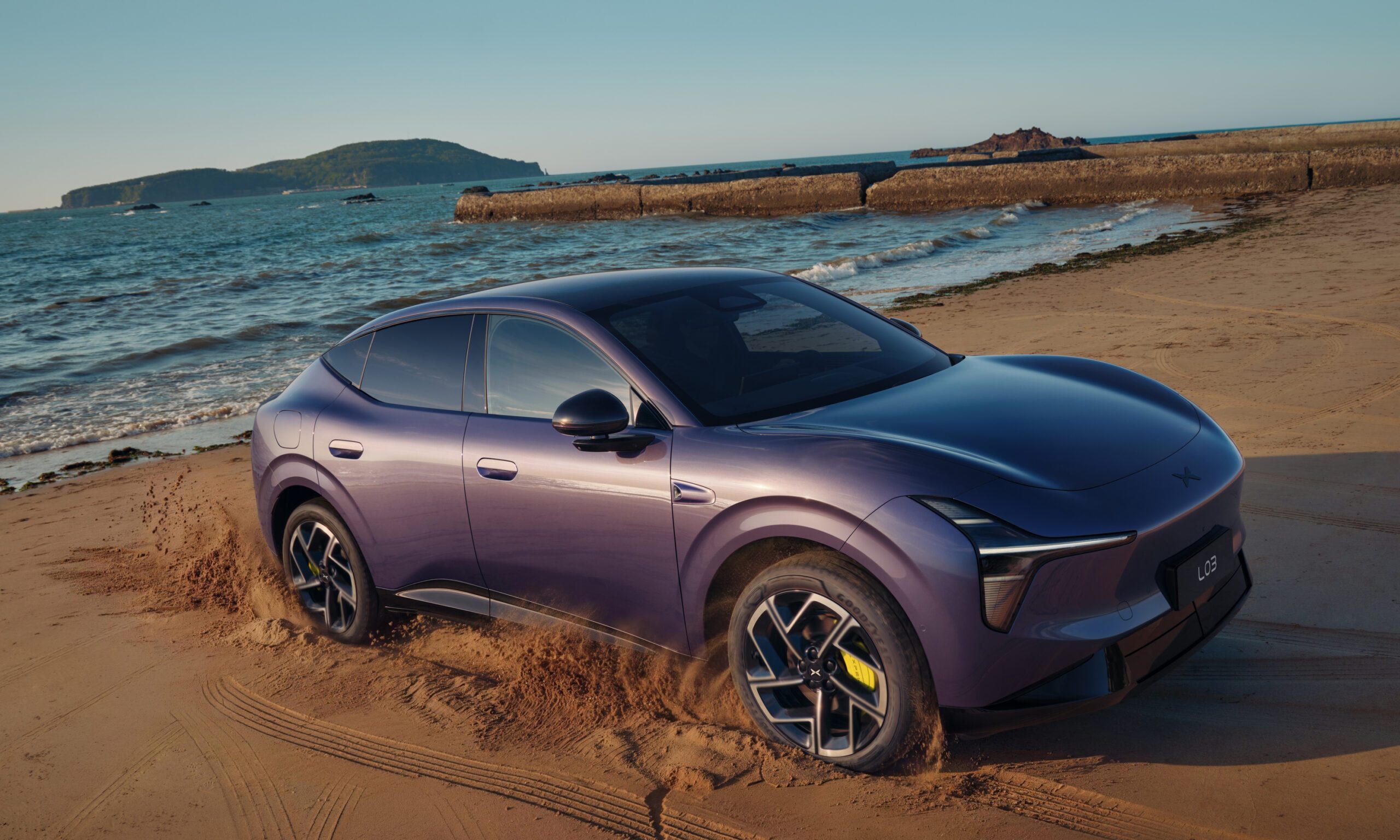
The Xpeng L03 is an AI supercomputer disguised as a stylish family SUV
Xpeng L03

Xpeng’s latest electric vehicle carries enough processing power to make the term "smart car" actually sound more realistic than it actually is. The new Xpeng L03 debuted simultaneously in Europe and China on July 16, with the company presenting it across 65 markets. Available as a fully electric vehicle and an L03 Power X range-extender, the coupe-SUV is Xpeng’s most internationally focused model so far. Market-specific prices and sales dates remain unannounced.

Three AI chips and Google Maps built right in

Read more