  1. Home
  2. Cars
  3. Legacy Archives

Honda fined a record $70 million for NHTSA safety violations, automaker agrees to pay

Add as a preferred source on Google

Honda has been fined a record $70 million by the National Highway Traffic Safety Administration (NHTSA) for two major violations of safety law.

According to The New York Times, the automaker failed to disclose hundreds of product-related injuries and deaths that occurred from mid-2003 to mid-2014, while also underreporting warranty declarations during the same time period.

Recommended Videos

A total of 1,729 written claims were not revealed by the Japanese automaker, an internal audit found, a fact that Honda admitted to last September.

Among other things, the manufacturer’s actions violate a system called ‘Early Warning Reporting,’ which requires carmakers to disclose claims concerning defect-related injuries and deaths. Early Warning Reporting was instituted in 2000.

As a result, federal regulators charged Honda with the maximum fine for each grievance, $35 million, totaling the record $70 million.

Some of the missing incidents reportedly involved Takata airbags, which have been recalled by several automakers worldwide. The airbags have caused several injuries and deaths due to a flaw that can send metal fragments toward the driver during deployment.

“Today’s announcement sends a very clear message to the entire industry that manufacturers have responsibility for the complete and timely reporting of this critical safety information,” said Mark Rosekind, head of the NHTSA.

Honda was quick to respond to the regulator’s announcement, disclosing that it will pay the fine and cooperate with the NHTSA.

“In order to ensure full compliance with its early warning reporting obligations, Honda has already begun taking steps to correct the errors responsible for the violations,” reads the brand’s statement. “The company is in the process of initiating new training regimens, changing internal reporting policy, making staffing and organizational changes, and enhancing oversight of its early warning reporting process.”

Andrew Hard
Andrew first started writing in middle school and hasn't put the pen down since. Whether it's technology, music, sports, or…
Volvo is rolling out Apple Music to over 2 million cars with a simple OTA update
Your Volvo may soon get Apple Music without needing CarPlay
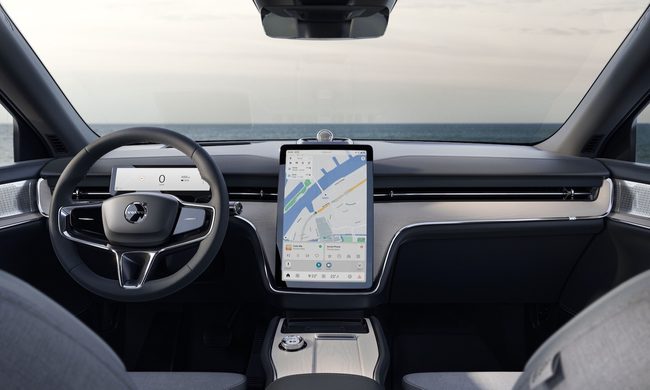
Interior view of the 2024 Volvo EX90.

The line between your smartphone and your car continues to blur. Volvo has announced that it is rolling out an over-the-air software update that brings Apple Music directly to the infotainment systems of more than 2 million vehicles worldwide. Instead of relying on Apple CarPlay or plugging in an iPhone, eligible drivers will be able to stream music natively from their car's built-in system, making Apple Music another integrated feature of Volvo's software experience.

The update is arriving for a wide range of Volvo models, including the EX90, ES90, XC90, S90, V90, XC60, S60, V60, XC40, EX40 and EC40, covering model year 2020 onwards. Availability, however, may vary depending on the vehicle.

Read more
Chery’s latest EV packs flagship tech for the price of a base Tesla, but you can’t buy it
Here's everything packed into Exeed's 2027 Exlantix ES, from its 27-sensor autonomous driving suite to its 860 km range, all starting under $31,000.
Car, Transportation, Vehicle

Chery's premium arm just dropped a sedan that makes you wonder why American EVs cost twice as much for half the tech.

Exeed's 2027 Exlantix ES ships with a driver-assist system called Falcon 700. It is built around an Nvidia Orin-Y chip and a genuinely stacked sensor suite.

Read more
A new AI model wants self-driving cars to think before they swerve
Forget guessing games, this self-driving AI actually shows its work.
Self driving car

Self-driving cars have gotten pretty good at driving. The harder problem is teaching them to drive safely in situations nobody planned for. We have heard horror stories of self-driving cars, behaving erratically in emergency situations, often times delaying first responders from reaching the scene.

A team at Seoul National University, led by professor Jun Won Choi from the Department of Electrical and Computer Engineering, thinks they have cracked part of that puzzle with a new AI model called SafeDrive. The research was recently selected as a highlight paper at CVPR 2026, a distinction that goes only to roughly 3% of all submissions.

Read more