1. Home
  2. Cars
  3. News

Honda partners with FirstElement Fuel to build ‘at least 12’ hydrogen stations in Cali

Add as a preferred source on Google

Toyota has invested millions of dollars into expanding the hydrogen fuel infrastructure in the U.S., but the Japanese brand isn’t alone.

Honda, who just announced its own FCV Concept in Japan, is partnering with FirstElement Fuel to build several hydrogen stations across the state of California.

Recommended Videos

The automaker has pledged $13.8 million in financial assistance to the Newport Beach-based company, which in combination with state grants, could result in an additional 12 stations popping up across the Golden State.

“FirstElement Fuel is providing a vital piece of what is needed for a successful launch of fuel-cell vehicles,” said Steven Center, VP of Honda’s Environmental Business Development Office. “Through this collaboration, FirstElement will enable our customers to experience hydrogen refueling that is as reliable, convenient and consumer-friendly as the vehicles are.”

Earlier this year, FirstElement received an additional $27 million in grants from the California Energy Commission to construct 19 stations, and the state hopes to have 100 sites built by 2024. If things keep going the way they are, FirstElement could be directly responsible for nearly a third of them. Currently, there are nine public stations in California.

California law requires that 33 percent of all hydrogen produced in the state to come from ‘green’ renewable sources, such as refuse and even human waste. FirstElement expects its fueling stations to become profitable by around 2020.

Honda’s concept is the successor the brand’s noted Clarity FCV, but it features a hydrogen fuel stack that is 33 percent smaller than its predecessor’s. The system is good for 134 horsepower, and boasts an impressive range of 435 miles.

Like Toyota’s Mirai, Honda’s FCV can also equip an external power port, which allows the vehicle to act as a mobile generator. In the case of an emergency, the hydrogen car can provide invaluable electricity to a home or other structure as needed.

Andrew Hard
Andrew first started writing in middle school and hasn't put the pen down since. Whether it's technology, music, sports, or…
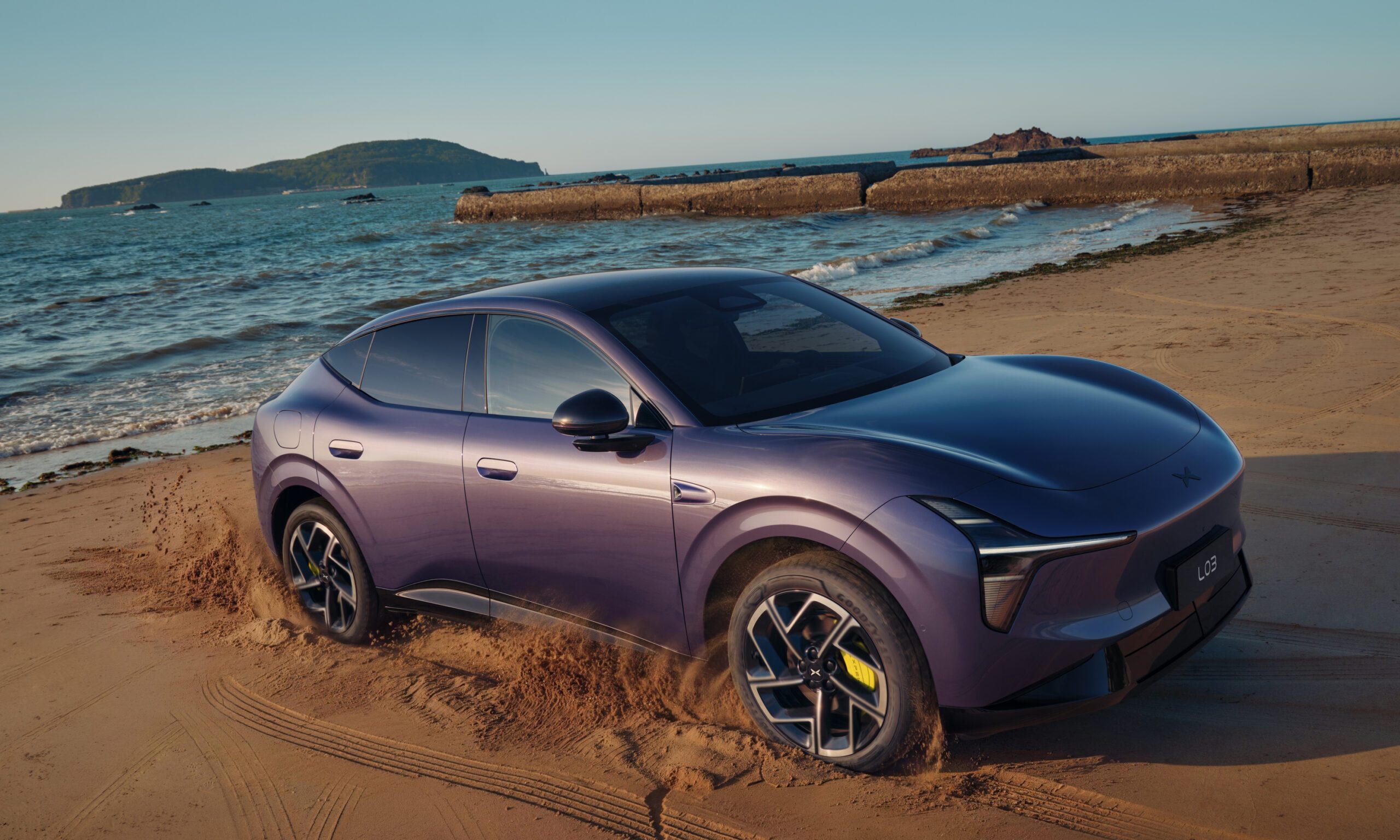
This sleek Chinese EV pairs supercar styling with three AI brains
The Xpeng L03 is an AI supercomputer disguised as a stylish family SUV
Xpeng L03

Xpeng’s latest electric vehicle carries enough processing power to make the term "smart car" actually sound more realistic than it actually is. The new Xpeng L03 debuted simultaneously in Europe and China on July 16, with the company presenting it across 65 markets. Available as a fully electric vehicle and an L03 Power X range-extender, the coupe-SUV is Xpeng’s most internationally focused model so far. Market-specific prices and sales dates remain unannounced.

Three AI chips and Google Maps built right in

Read more
A new sodium battery posts wild four-minute charging numbers, but don’t expect it in an EV yet
The breakthrough could improve fast charging and battery life, but the study hasn’t demonstrated those results in a production-sized pack
EV Charger

A new sodium-metal battery has posted a charging number that makes today’s EVs look painfully slow. In laboratory testing, the cell operated at a 15C rate, equivalent to completing a charge or discharge in roughly four minutes.

That doesn’t mean researchers plugged in an electric car and watched it fill up before the driver finished buying coffee. The result came from a small experimental cell using a new quasi-solid electrolyte, while the larger pouch-cell prototype delivered far less dramatic performance.

Read more
The Apple Car may be dead, but it became the foundation of Apple Intelligence
A decade of work on a canceled car project reportedly laid the groundwork for Apple Intelligence.
Apple Intelligence in Apple Car

The Apple Car may have never left the garage, but it apparently gave birth to Apple's AI ambitions. According to Bloomberg's Mark Gurman, Apple's canceled autonomous vehicle project, one that consumed more than a decade of work and over $10 billion before being scrapped in 2024, ended up laying the technological foundation for Apple Intelligence. In a rather ironic twist, one of Apple's most expensive failures may also become one of its most important long-term investments.

The Apple Car forced Apple to think like an AI company

Read more