
  1. Home
  2. Cars
  3. Emerging Tech
  4. Legacy Archives

Let the robots do the walking for you with the Honda ‘Walking Assist Device’

Add as a preferred source on Google
Honda walking assist device
Image used with permission by copyright holder

Honda was founded with a single principle at its core: “utilizing technology to help people.” Typically, that has meant cars, motorcycles and walk-behind lawnmowers. But it is in this spirit that Honda also created the Walking Assist Device, a hip-mounted mechanical unit that assists users in the act of walking.

Weighing less than 5.7-pounds, the WAD uses thin motors and acontrol system in combination with hip angle sensors to assist in walking while also improving the timing and symmetry of the user’s gate.

Recommended Videos

Presently, only 100 units have been sent out to Japanese hospitals on a leasing program. While the WAD has received a great deal of positive feedback in its preliminary trials, Honda hopes to take what it learns from this larger-scale lease program and apply it to a broader release.
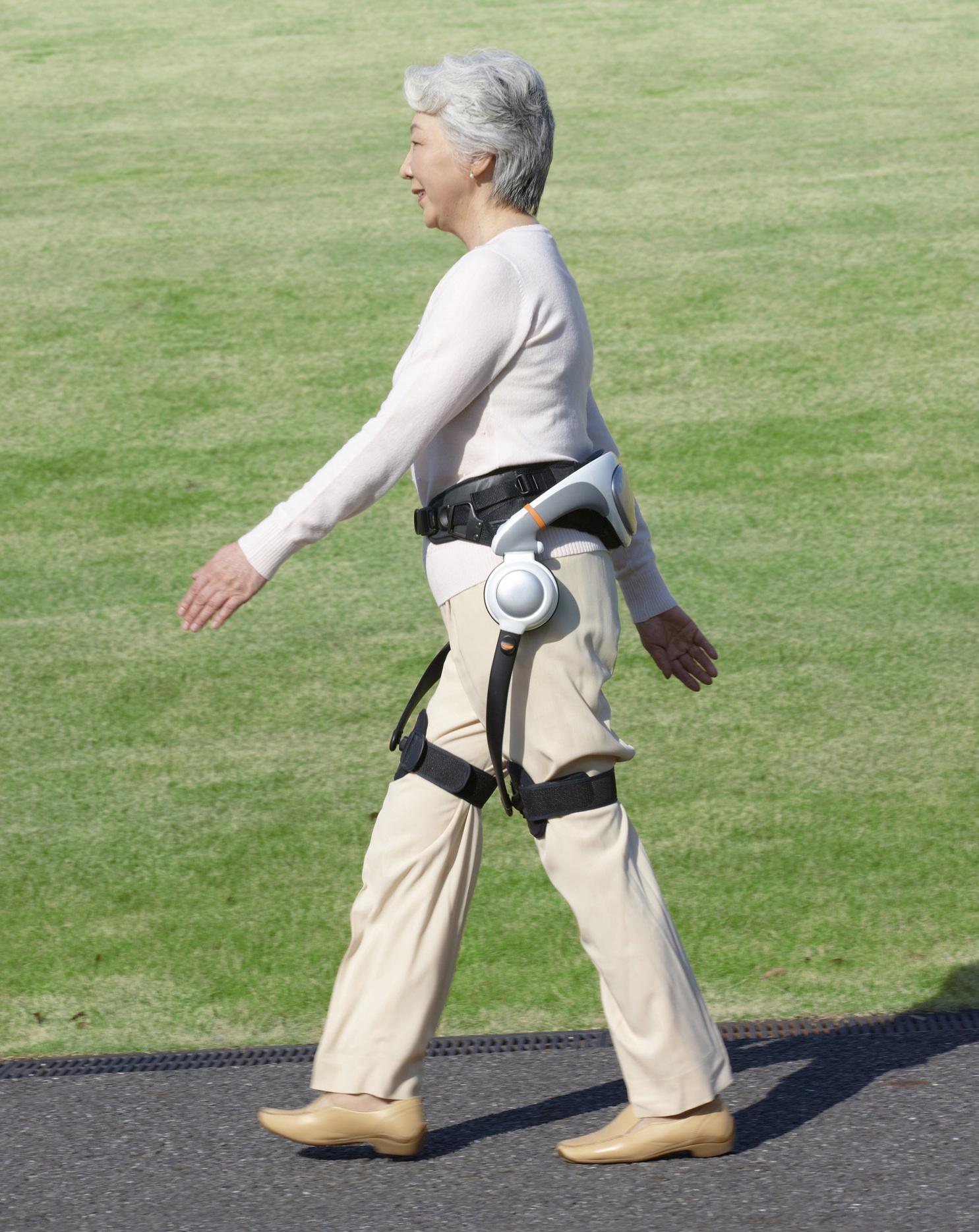
Honda WAD
Image used with permission by copyright holder

Powered by a small, onboard lithium-ion battery pack, Honda claims the WAD is capable of a 60+ minute operating time. Smartly, Honda has also made the WAD weather resistant and operational in temperatures from 36-degrees to 86-degrees Fahrenheit. The WAD also best operates in humidity levels between 30  and 85 percent.

As it stands, the WAD is only available in M-size (hip width: 13.3-inches) L-size (hip width: 14.9-inches), which makes it obliviously inappropriate for most Americans. Also, its limited temperature operation range cuts out most of the areas where retirees live, like Arizona and Florida, which often see temperatures well in excess of 86 degrees. Also, Florida often sees humidity well above 85 percent in the mornings, making the WAD a questionable choice for older Floridians. At least this version. 

Sure, we’re jumping the gun a bit, as the WAD is not yet available outside of Japan. Regardless, we’re quite excited by the development and eagerly await when we don’t have to walk from our desk to the office fridge under our own power.

Nick Jaynes
Former Automotive Editor
Nick Jaynes is the Automotive Editor for Digital Trends. He developed a passion for writing about cars working his way…
Waymo wants your next robotaxi ride to feel less like a taxi and more like your living room
Your next Waymo ride could come with Gemini as your travel companion
Adult, Female, Person

Waymo is giving its robotaxis one of its biggest passenger-facing upgrades yet, bringing Google's Gemini AI assistant into the cabin alongside a redesigned in-car interface that reimagines how riders interact with autonomous vehicles. Both features will debut in the Ojai, Waymo's purpose-built robotaxi, as the company prepares to expand access to more public riders. Rather than changing how the vehicle drives, the update focuses on what passengers can do once they're inside, signalling that the next phase of the robotaxi race may be fought on experience rather than autonomy.

For years, autonomous vehicle companies have competed on sensors, safety records and driverless capabilities. Waymo now appears confident enough in those foundations to shift attention toward the cabin itself, treating the journey as a product rather than simply a trip from one location to another.

Read more
Two Indian automakers just beat Tesla at the one thing you’d expect it to own
Two Indian automakers, Tata Motors and Mahindra, just topped a global EV efficiency ranking ahead of Tesla and BYD.
Car, Suv, Transportation

I'll admit, Tesla topping an efficiency ranking felt like a foregone conclusion until I actually saw the numbers. Turns out two Indian automakers just embarrassed both Tesla and the world's biggest EV maker at their own game. 

The first time I read the report, I couldn’t believe it, and I’ve been following the Indian automobile industry for a couple of years now.  

Read more
BYD’s new Racco is Japan’s first electric kei car with over 300 km range
The Racco also undercuts Nissan's Sakura on price before taxes and incentives, which packing in features rarely seen in the kei car segment.
BYD Racco

BYD has entered the Japanese kei car market with the Racco, an electric car built specifically for the country's compact car segment. Its top trim delivers 320 km of range, making it the first compact electric car in the market to pass 300 km, according to ITHome.

Kei cars are a Japanese vehicle class with strict size and power limits, and the segment has long been dominated by domestic automakers such as Honda, Nissan, Suzuki, and Daihatsu. The Racco is BYD's first attempt to compete in that space.

Read more