  1. Home
  2. Cars
  3. News

Tesla upgrades factory in anticipation of Model 3

Add as a preferred source on Google

In less than two weeks, Tesla will unveil its highly-anticipated Model 3 electric car. With an estimated 200-mile range and $35,000 base price, the Model 3 is expected to not only boost the appeal of electric cars among a wider audience, but also help Tesla reach its goal of selling 500,000 cars per year by 2020.

Of course, Tesla will need a place to build all of those cars, so the company has been upgrading its Fremont, California, factory. Wall Street investors recently got a tour of the factory, which currently builds the Model S and Model X, and believe it should be ready to produce a much larger number of electric cars, according to Bloomberg.

Recommended Videos

Today’s Tesla factory was originally New United Motor Manufacturing, Incorporated (NUMMI), a joint venture of General Motors and Toyota. It used to build mostly compact cars like the Geo Prizm and Pontiac Vibe, and was taken over by Tesla after the two larger companies stopped using it. The plant was able to build 500,000 cars per year at peak capacity under GM-Toyota ownership, but under Tesla it’s been set up to build much smaller car volumes.

Over the past year, however, Tesla has tried to increase capacity with new equipment, including an aluminum stamping press that has 10 to 20 times the output of its predecessor, according to a Credit Suisse analyst. The Model S and Model X both have aluminum bodies, but Tesla hasn’t said what the Model 3 will be made from. Tesla also added a new paint shop, and increased the speed of the assembly line.

The Tesla factory already features squads of red robots, many named after superheroes, but the company reportedly added even more to gear up for Model 3 production. The machines aren’t displacing humans, though: Tesla increased its workforce 29 percent last year to 13,058, according to company filings.

Battery packs for the Model 3 will be made at the huge “Gigafactory” under construction near Reno, Nevada. Billed as the largest factory of its kind in the world, the Gigafactory is crucial to achieving the economy of scale needed for the Model 3’s $35,000 base price. The car itself will be unveiled March 31, and will start production next year. Despite all of the advance work, it’s worth noting that Tesla has missed all of its vehicle-launch deadlines, so there’s a chance the Model 3 won’t arrive on time.

Stephen Edelstein
Stephen is a freelance automotive journalist covering all things cars. He likes anything with four wheels, from classic cars…
This sleek Chinese EV pairs supercar styling with three AI brains
The Xpeng L03 is an AI supercomputer disguised as a stylish family SUV
Xpeng L03

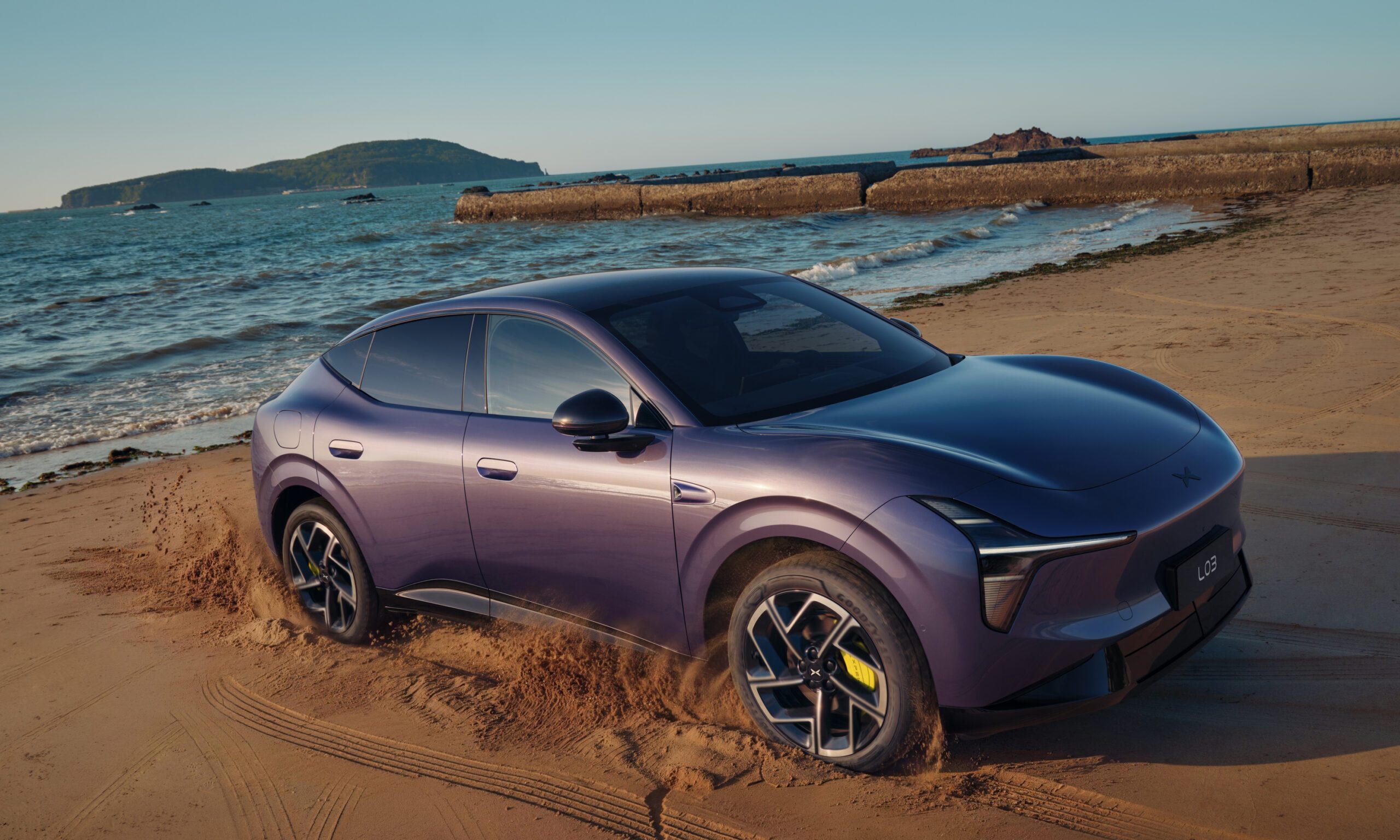
Xpeng’s latest electric vehicle carries enough processing power to make the term "smart car" actually sound more realistic than it actually is. The new Xpeng L03 debuted simultaneously in Europe and China on July 16, with the company presenting it across 65 markets. Available as a fully electric vehicle and an L03 Power X range-extender, the coupe-SUV is Xpeng’s most internationally focused model so far. Market-specific prices and sales dates remain unannounced.

Three AI chips and Google Maps built right in

Read more
A new sodium battery posts wild four-minute charging numbers, but don’t expect it in an EV yet
The breakthrough could improve fast charging and battery life, but the study hasn’t demonstrated those results in a production-sized pack
EV Charger

A new sodium-metal battery has posted a charging number that makes today’s EVs look painfully slow. In laboratory testing, the cell operated at a 15C rate, equivalent to completing a charge or discharge in roughly four minutes.

That doesn’t mean researchers plugged in an electric car and watched it fill up before the driver finished buying coffee. The result came from a small experimental cell using a new quasi-solid electrolyte, while the larger pouch-cell prototype delivered far less dramatic performance.

Read more
The Apple Car may be dead, but it became the foundation of Apple Intelligence
A decade of work on a canceled car project reportedly laid the groundwork for Apple Intelligence.
Apple Intelligence in Apple Car

The Apple Car may have never left the garage, but it apparently gave birth to Apple's AI ambitions. According to Bloomberg's Mark Gurman, Apple's canceled autonomous vehicle project, one that consumed more than a decade of work and over $10 billion before being scrapped in 2024, ended up laying the technological foundation for Apple Intelligence. In a rather ironic twist, one of Apple's most expensive failures may also become one of its most important long-term investments.

The Apple Car forced Apple to think like an AI company

Read more