  1. Home
  2. Computing
  3. News

Digital Trends may earn a commission when you buy through links on our site. Why trust us?

Alienware rolls out the first 480Hz laptop displays

Add as a preferred source on Google

Dell announced updates to two of its 17-inch Alienware laptops, both of which sport the first 480Hz screens to ever debut on gaming laptops. It’s available now as an option for the previously announced Alienware x17 R2, and it’s debuting on the all-AMD Alienware m17 R5.

We got a taste of 480Hz laptop displays in May, but we didn’t expect them to hit the market so soon. As we saw earlier this year, the Alienware laptops come with a Full HD resolution to hit the high refresh rate, and the response times are bit higher than gamers might be accustomed to — 3ms as opposed to the typical 1ms.
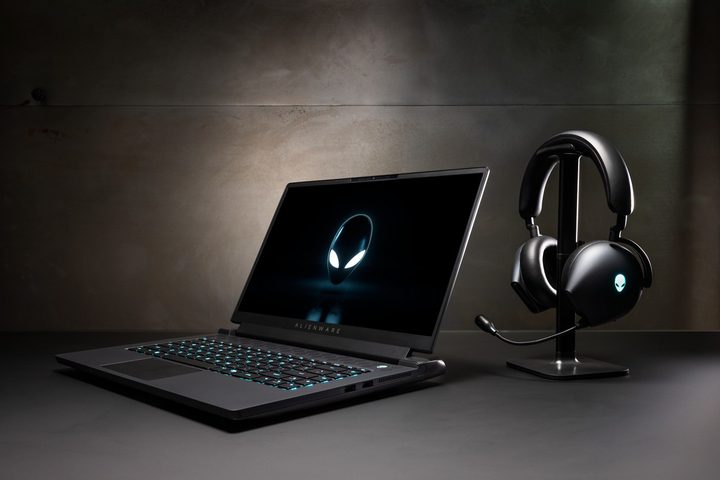
Alienware m17 R5 laptop sitting next to a headset.
Dell / Alienware

Although Dell is the first to market with a 480Hz laptop display, there should be more soon. AUO, the company that originally demoed the cutting-edge display, works with vendors like MSI, Acer, and Asus, among others. As the year continues, we could see more 480Hz laptops start to make their way to market.

Recommended Videos

For the laptops themselves, Dell says the m17 R5 is “the world’s most powerful 17-inch AMD Advantage laptop.” It comes equipped with up to an eight-core Ryzen 9 6900HX processor, as well as a 12GB RX 6850M XT graphics card. You need both an AMD CPU and GPU for the AMD Advantage features, but Dell is offering the laptop with Nvidia GPUs as well — up to a mobile 16GB RTX 3080 Ti.

If you opt for the Advantage configuration, you’ll have access to three of AMD’s Smart Technologies. SmartShift Max allows the CPU and GPU to dynamically swap power when needed; SmartAccess Graphics enables them to optimize battery life or performance by going between the integrated graphics and dedicated GPU, and Smart Access Memory boosts game performance in certain titles by giving a direct line from the GPU to the CPU. The machine comes with FreeSync Premium, as well, even on the 480Hz model.

If you opt for an Nvidia GPU, you can still use a variable refresh rate with G-Sync, as well.

Although the 480Hz display is the crown jewel, you don’t have to go that high if you don’t want to. Dell is offering Full HD variants with a 165Hz or 360Hz refresh rate, or you can opt for a 4K 120Hz display if you want to chase resolution. Dell hasn’t announced pricing yet, but it’s safe to assume the 480Hz display will come at a premium.

The Alienware x17 R2 isn’t new, debuting in early 2022 alongside Intel’s mobile 12th-gen processors. Dell is simply adding a 480Hz panel option to the machine, which matches the specs available on the m17 R5. It serves as an Intel alternative to the m17 R5, coming with up to a Core i9-12900HK processor and RTX 3080 Ti mobile graphics card.

Jacob Roach
Former Lead Reporter, PC Hardware
Jacob Roach is the lead reporter for PC hardware at Digital Trends. In addition to covering the latest PC components, from…
Ask YouTube expands to mobile, web, and TVs across the US
YouTube’s AI search is now available across all major screens.
Ask YouTube on TV and desktop

Searching for something online by simply describing what you want is becoming pretty normal now. Google Search can do it. ChatGPT can do it. And YouTube has been slowly turning its own search box into something that works in a similar fashion.

YouTube has now announced a wider rollout for Ask YouTube, its conversational AI search tool. The feature is available to users in the U.S. across the web, mobile devices, and TVs. Mobile is the newest addition here, after Ask YouTube previously expanded to the web and smart TVs. Instead of putting a few keywords into the search bar, you can ask YouTube a complete question, describe what you are looking for, and then refine the results using follow-up questions.

Read more
Meta goes toe-to-toe with the big boys as it launches Muse Wonder AI models
Illustration of Meta Muse Wonder AI model.

It's raining frontier AI models. Soon after Anthropic set alarm bells ringing with its Claude Fable model at the summit of AI peformance, OpenAI answered with GPT-6 Astra. Not one to be left behind, Google released Gemini 4 Argon. The race is now getting hotter as Meta enters the fray with two new AI models in the Muse series: Wonder and Wonder Full. Cheesy naming aside, these Meta AI models mean business, or at least that's what the benchmark figures suggest. More importantly, these AI models are already making their way to Muse users.

https://twitter.com/DigitalTrends/status/2109699549375988120

Read more
Look, the MacBook Neo is a fine machine for building apps. And yes, I am utterly surprised
I am talking about apps with a generous dose of AI wizardry happening in the background.
MacBook Neo in yellow.

In a span of just one week, I have built a full-fledged Android app for my Galaxy Z Fold 8 foldable phone, three Mac apps, and an iPhone app. And here's the fun part. The entire journey of creating these apps actually started on a phone, jumped to my MacBook Neo, compiled just fine, and ran flawlessly, without making me want to tear my hair off. The latest example? 

It built my calendar-clipboard hybrid app in Terminal within 20 seconds, and an on-device transcription app with a retro look in roughly 15 seconds. I used to think building desktop software would have me burning the midnight oil. The MacBook Neo did it in less time than I can pour myself a can of soda and take the first sip. 

Read more