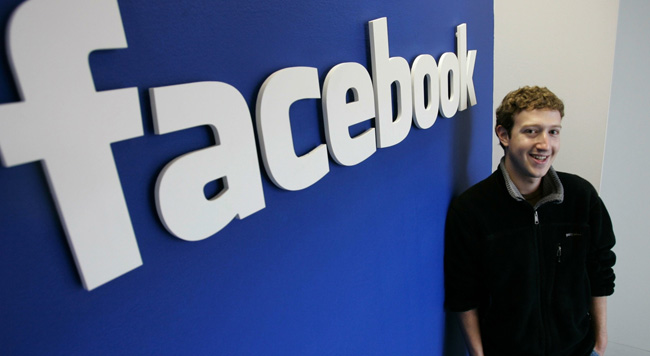
People may think Mark Zuckerberg is weird, but nobody thinks he’s stupid. ComScore has released data that shows just how monumental Facebook’s growth has been in the past year. According to Mashable, unique visitors to the site hit 151.1 million in October 2010, up 55.2 percent from a year ago when it posted 97.4 visitors. A year ago, Facebook had only 300 million active users around the world, now it has more than 550 million.
This is all despite the site taking a heavy beating from the media. In its war to compete with Twitter, the social network took the step of making its users’ data more public by default, but angered many of its core users who were unhappy about the site’s move toward more open communication. Facebook began as a more private social network for college students with a lot of restrictions, but has since made wall posts and status updates more public and taken the limits off of communicating outside of one’s own geographical area. As the site has grown in popularity, concerns about the privacy and security of user data has risen dramatically, peaking in mid-2010.
Bigger rivals emerge and dissolve
But does it even worry about Twitter anymore? Facebook now sees Google as one of its chief competitors. Just a year ago, the two worked together to strengthen YouTube’s integration into the social network, but now the two are having petty public quibbles. Facebook announced an email product that competes with Gmail and Google is rumored to be working on its own social network. Google has reason to be worried too. It only gets 173.3 million unique visitors in the United States. At its current growth rate, Facebook’s traffic will soon overtake the search giant’s.
Then there is Facebook Connect. The service has been a huge hit. Thousands, perhaps tens of thousands of websites now rely on Facebook for user logins and have “Like” buttons on all of their pages. Some have begun using Facebook for all comments. Connect is so popular that even Apple’s Ping social network and MySpace want to integrate with it.
It took a huge movie release, but Zuckerberg and Co. have begun putting on a better face for the world. Facebook has had several high profile events as of late. Instead of simply releasing products, it has opted for a more Apple-like approach and held a press conference to make a big deal of its unveilings. So far, the strategy has worked.
What will we be talking about next year? Will Facebook surpass 750 million users? What competition will spring up? Do you think Facebook is in a better position than it was last year?