1. Home
  2. Computing
  3. Photo Galleries
  4. Photography
  5. News

Google Earth View highlights surreal scenes from around the globe

Add as a preferred source on Google

Today, the novelty of Google Earth has worn off for many, but it’s hard to dispute just how amazing the service was when it launched back in 2005. Having access to satellite imagery on that scale seemed like something more suited to the Batcave than a Web browser, and having been under constant development over the past decade, it’s even more useful now than it was then.

From illegal marijuana farming to the bottom of the ocean, Google Earth has given us the opportunity to see things we might not have been able to otherwise. As the service celebrates its 10th birthday, several new features are being rolled out to ensure that it continues to wow users as it continues to mature and develop.

Voyager is a new way of navigating through the desktop version of Google Earth. It allows users to become acquainted with what Google Earth’s engineering manager Sean Askay describes as “the newest and most interesting imagery around the globe.” This includes seeing sights such as the Taj Mahal from Street View, a selection of cities rendered in 3D and a highlight tour of interesting locations.

It also contains Earth View, an eye-catching collection of satellite images that aims to gather images of our planet at its most beautiful. The project began, like several other notable Google projects, as part of the company’s ethos that 20 percent of each employee’s time should be spent working on projects to further Google’s reach.

There are more than enough projects in the world of technology that only serve to make a profit, but Google Earth certainly isn’t part of that number. For anyone with a passing interest in the planet they live on, it offers up a real treasure trove of things to see — for anyone without the means to explore the farthest reaches of Earth firsthand, it’s about the best alternative that we have for the time being. Isn’t that worth a spot on your hard drive?

Brad Jones
Brad is an English-born writer currently splitting his time between Edinburgh and Pennsylvania. You can find him on Twitter…
Windows 11 Search is getting bigger, but only by 4 pixels
The change could be in preparation for the upcoming Ask Copilot feature
Windows 11 Laptop

If you have used Windows 11 Search after the June update, you may have noticed it feels a little less annoying. Microsoft recently made the Start menu and Search more responsive, and also fixed one of Search’s stranger limits by letting it find local files using just two characters.

Now, the company appears to be making a much smaller change. According to Windows Central, Microsoft accidentally revealed that the search box in the Taskbar and Start menu is getting 4 pixels taller. Four pixels sounds like the kind of change only a UI/UX designer could love, but screenshots from the Insider Preview build suggest it is visible once you know where to look.

Read more
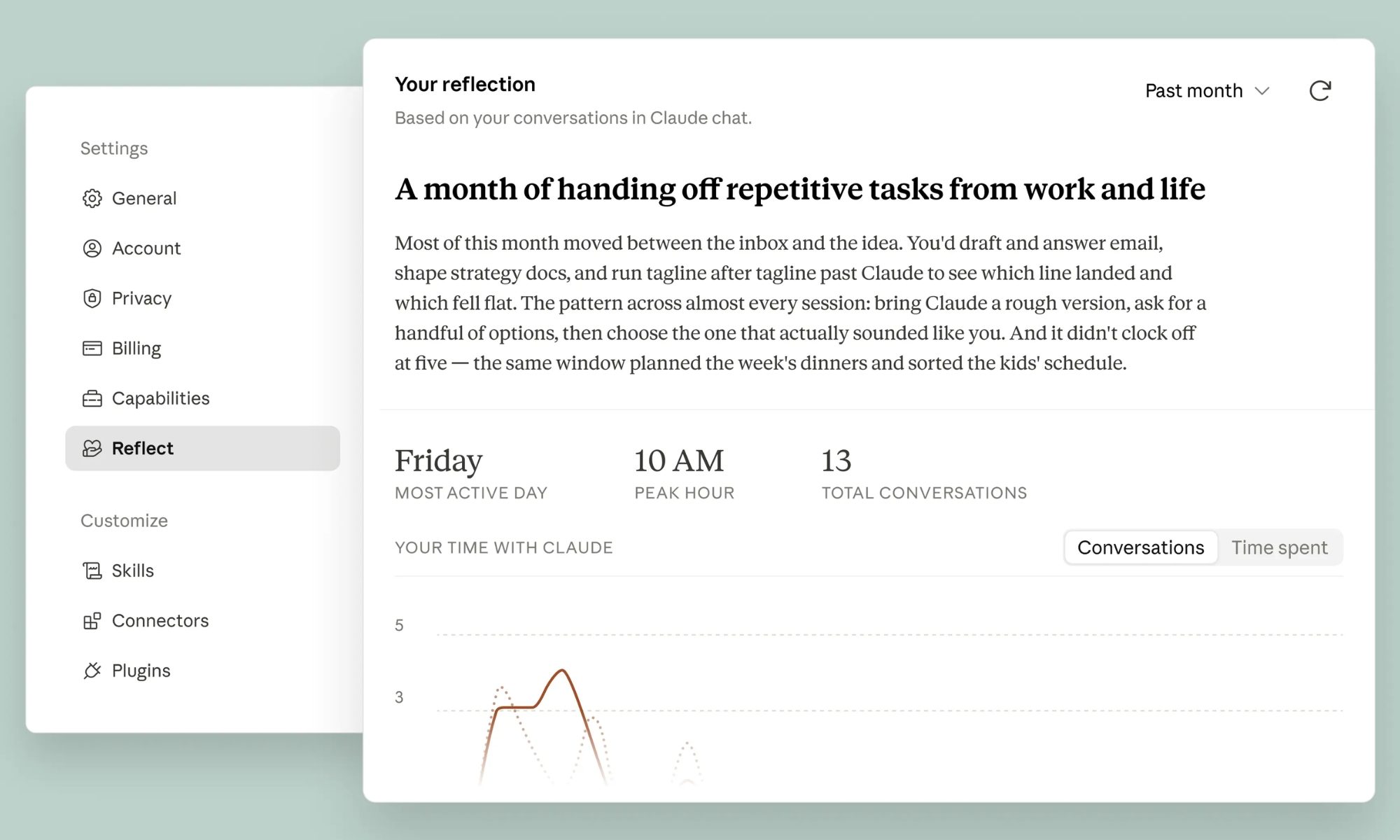
Claude Reflect is here. It’s your usual yearly Wrapped, but with Anthropic’s AI
It also makes you reflect on your usage and reminds you to take breaks.
Page, Text, Business Card

Anthropic just launched a usage analytics dashboard for Claude. It’s like the ‘Wrapped’ feature you see every major streaming or AI service announce at the end of a year, except it’s not called Claude Wrapped.

The feature is called Claude Reflect, as it does more than simply tell you what you’ve been using the AI for. Available in beta for free, Pro, and Max users who have enabled memory, the feature encourages mindful use of Claude or other AI tools. 

Read more
Parents worry AI is becoming a crutch for their kids while schools struggle to keep up, survey finds
Only 1 in 3 schools has AI guidelines as nearly 50% parents grow anxious about kids leaning on AI too much.
a boy using iPhone

Kids are using AI for their homework, and half of their parents are not sure that's a good thing. Deloitte's 2026 Back-to-School Survey, which polled 1,207 parents of K-12 students, found that 49% worry their child relies on AI too much.

The findings suggest AI adoption is moving far faster than the policies meant to guide it, leaving many parents unsure how these tools are being used in education.

Read more