It’s hard to compete with holograms.
Microsoft’s announcement of a multi-year secret program to develop a new “holographic” computing interface, called HoloLens, stole the show at the Windows 10 Consumer Preview event in Seattle Wednesday. But the time I spent with a handful of computers running the next preview build of Windows 10 left me positive about the direction of the operating system as well. Sure, holograms are sexy, but Windows 10 looks and feels great.
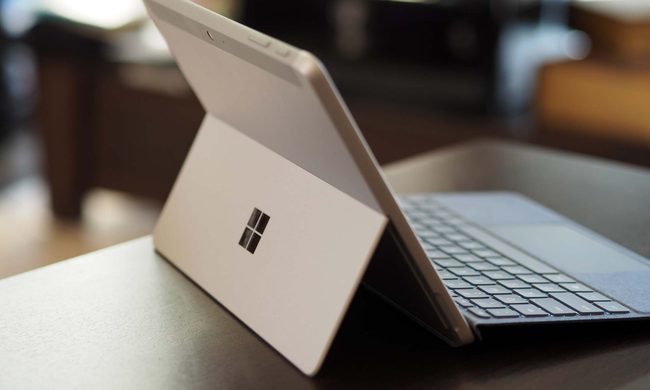
I used the newest build of the OS for as long as I was able amid demos and breakout sessions, on both a Microsoft Surface Pro 3 and a Lenovo Yoga 3 Pro. The changes from the currently available build aren’t big ones, but they’re smart, and make the system easier to use.
I could flip Windows 10 between tablet and desktop all day long. It was weirdly satisfying.
It’s great progress for an operating system that we’ve all come to use as a whipping boy, and with good reason. When I first saw Windows 8, I was confused. How was I going to click on tiles when I use a keyboard and mouse? I was impressed by the ambition of the operating system, which pointed a bold direction for computing in the near future. Unfortunately, it was the wrong direction.
That fundamental flaw has dogged Windows 8 from the get-go, and while Windows 8.1 took steps to improve it, the operating system hasn’t fundamentally changed to bridge the gap between how Microsoft thought consumers used their computers and how they actually do.
Windows 10 offers a better solution with Continuum, which lets a laptop act like a laptop and a tablet like a tablet, and lets one device switch simply and smartly between the two. The Surface Pro 3 is the perfect example of this class of in-between device, and when I pulled the keyboard from it, a slider popped up above the Notification Center asking if I wanted to switch to tablet mode. I sure do. Flick the switch and a new version of the Start screen appears, where you can mash those tiles all you want. Click the keyboard back into place and you’re allowed to go back to the pure desktop (yay!).
Like the snap-in keyboard on the Surface, I could flip that switch all day long. It was weirdly satisfying. And it means, of course, that your laptop won’t dip its toe in tile land just to search for something. Laptops never need to see that much maligned Start screen ever again.
The other big change is the arrival of Cortana, who lives between the Start icon and the Search button at the bottom left of the screen and responds quickly and smartly to “Hey Cortana.” With voice recognition, I’ve seen laptops and phones stumble when someone paused to think, or spoke too quickly. The Microsoft employees demoing Cortana talked fast and Cortana responded fast. It was a different story when I tried, however. Sometimes she was prompt, and sometimes she was out to lunch. Still, it’s a preview build and what I saw worked well enough to make me optimistic.
Another huge flaw in Windows 8 is the duplication factor. There are two versions of Internet Explorer, two versions of the control panel, two versions of OneNote. It’s enough to make you gnash your teeth. Really? That’s what you came up with, Microsoft?
Cortana wasn’t perfect, but she worked well enough to earn my optimism.
The latest build takes a step towards correcting that with a revamped, touch friendly Control Panel that adds in a great deal of functionality. Don’t get me wrong, the other one is still there, and will remain, for legacy apps and programs and compatibility. But the touch Control Panel that used to make me ache with frustration has become far more useful. We’re on the way!
The last big change is the overhaul of the Charms menu, the least intuitive part of Windows 8. A new Action Center replaces it, which includes actionable notifications just like those found on a smartphone. The build I played with – version 9924, though it varied based on which PC I used – didn’t have this feature fully implemented, but the menu popped out smoothly and was far more useable than what I was used to.
The new version of the Xbox app, which lets you stream games from your console to your desktop, wasn’t included in the build I was given access to, so I couldn’t test that out. And the other Microsoft apps were in various states of improvement as well. We’ll offer you a more thorough walk through when the next update is made available, next week. But what I’ve seen has me excited: Microsoft made some smart steps today. If they keep this up, Cortana and Windows 10 might itself be the next killer app.