1. Home
  2. Computing
  3. Legacy Archives

Hard Disk Tech Earns Physics Nobel Prize

Add as a preferred source on Google
Hard Disk Tech Earns Physics Nobel Prize
Image used with permission by copyright holder

The Royal Swedish Academy of Sciences has awarded the 2007 Nobel Prize in physics to France’s Albert Fert and Germany’s Peter Grünberg for their research into giant magnetoresistance&mdashGMR—which enables greater amounts of data to be packed into ever-smaller areas.

The two scientists discovered the phenomena independently of each other; they also shared the 2007 Japan Prize for their research.

Recommended Videos

GMR works by producing a disproportionately large electrical response to a very small magnetic input. The phenomena emerges due to the “spin” of electrons in atoms: the electrons can be made to spin in different directions in different circumstances, producing differences in electrical resistance which, in turn, can be used to represent digital data. Fert and Grünberg discovered ways to exploit the GMR effect using nanometer-thin layers of magnetic and non-magnetic material are stacked together. The discovery was unexpected, but quickly applied to commercial applications like data storage, where it has enabled the production of ever-smaller (and ever-denser) hard drives: it’s no exaggeration to say the iPod—and notebook computers—wouldn’t exist without the efforts of Fert and Grünberg.

Fert and Grünberg independently discovered the GMR phenomena in 1988. By 1997, scientists were working on the first read-out heads for employing the technology in hard drives.

Fert and Grünberg will share a prize of 10 million Swedish krona (about $1.5 million U.S. dollars).


Geoff Duncan
Former Contributor
Geoff Duncan writes, programs, edits, plays music, and delights in making software misbehave. He's probably the only member…
MSI’s new 4K 120Hz OLED monitor uses inkjet tech that could make premium screens cheaper
The first 27-inch 4K 120Hz IJP OLED monitor arrives through MSI and TCL CSOT
Computer Hardware, Electronics, Hardware

The future of OLED monitors may have just taken a significant step forward. MSI and TCL CSOT have unveiled the world’s first 27-inch 4K 120Hz desktop monitor built using inkjet-printed OLED technology, bringing a manufacturing method once limited to prototypes and specialist displays closer to everyday buyers.

Called the MSI Pro Max OLED 271UPJW12, the monitor uses a TCL CSOT panel created by printing organic light-emitting material directly onto the display. The process wastes less material than conventional OLED manufacturing and could eventually make panels cheaper and easier to produce at scale.

Read more
MSI launches a white 16-inch gaming laptop with a 12GB RTX 5070 and a pile of matching accessories
MSI bundles a mouse, headset, and extended mouse pad with its new white Crosshair gaming laptop
Adult, Female, Person

MSI has launched the Crosshair A16 HX MLG Edition globally, giving one of its upper mid-range gaming laptops a white-and-red makeover alongside a full set of matching accessories. MLG here stands for Mo-Loong-Gi, meaning “Dragon Princess,” and refers to an original character created by MSI rather than Major League Gaming.

What are you getting with this special edition laptop?

Read more
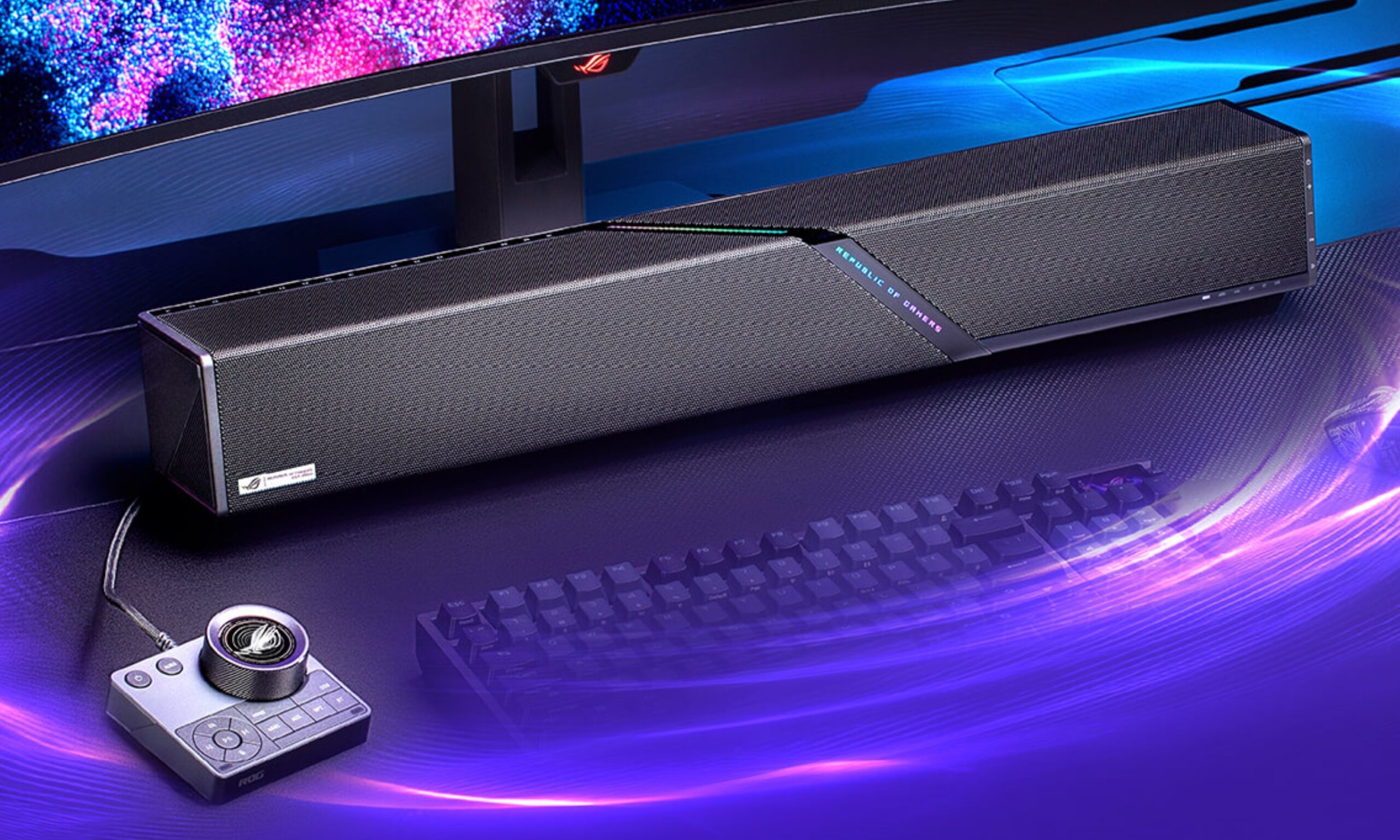
The ROG Gjallar packs Dolby Atmos in a compact form factor, but its US debut is still under wraps
Asus' new ROG Gjallar gaming soundbar brings Dolby Atmos and a wireless subwoofer to your desk.
Electronics, Speaker

Asus unveiled the ROG Gjallar back in early July 2026, as the first speaker system under the ROG brand. However, at the time, the company stayed quiet on pricing and availability. That's changed now. 

So what's actually inside the ROG Gjallar?

Read more