1. Home
  2. Computing
  3. Legacy Archives

Crowdsourced interactive music video celebrates 50 years of pointing and clicking

Add as a preferred source on Google

mouse-pointer-music-videoHow do thousands of mouse pointers moving at the beat of a song look? You can find out the answer for yourself in this new interactive crowdsourced music video by Amsterdam-based Studio Moniker for a song called “Kilo” by Dutch band Light Light. The Do Not Touch website loads up the interactive video where the movements of your mouse are tracked and your cursor is visible on-screen to other people around the world who are also participating.

First, you’re told that your mouse will be tracked, so it won’t be mistaken as an invasion of privacy that you’re totally unaware of. Once the video gets going, you’re asked a few personal questions, like where you’re from (showing an image of a world map, which you then hover your mouse over), whether you’re a man or a woman (showing male and female figures),  whether you prefer men or women, and so on. Then, you’re instructed to follow the green visuals on screen as the song plays in the background. Moving your mouse in a maze-like fashion, you’re taken through this interactive world.

Recommended Videos

If you’re wondering why Studio Moniker decided to create a music video out of a myriad of mouse pointers moving in unison, the website’s info page reads: “After 50 years of pointing and clicking, we are celebrating the nearing end of the computer cursor with a music video where all our cursors can be seen together for one last time.” As of this writing, the video has seen 52,578 pointers – most moving en masse to follow the green visuals, others moving around aimlessly – with the number growing steadily. 

More and more people are giving up traditional computers for touchscreen devices like tablets, and even those who have desktops and laptops often browse the Internet or do work via their mobile devices. Research firms forecast an even worse dip in PC sales this year, whereas things are looking quite rosy for the tablet industry. We don’t know if we’re actually “nearing the end of the computer cursor” or if that will ever happen at all, but this is a fun activity to do nevertheless. 

Mariella Moon
Mariella loves working on both helpful and awe-inspiring science and technology stories. When she's not at her desk writing…
Asus’s new business laptop has the kind of OLED screen I wish more work machines offered
Great specs, but the price tag is still hidden.
Computer, Electronics, Laptop

Business laptops usually make me yawn, but the latest Asus ExpertBook with a 120Hz OLED screen woke me up.

Asus has announced an AMD version of its ExpertBook A7, a 14-inch business laptop with Ryzen AI chips and a gorgeous OLED screen.

Read more
Google finally lets you turn any website into an app on Googlebook
Google heard your complaints, and now every website can be an app on your Googlebook.
Using the HP Googlebook

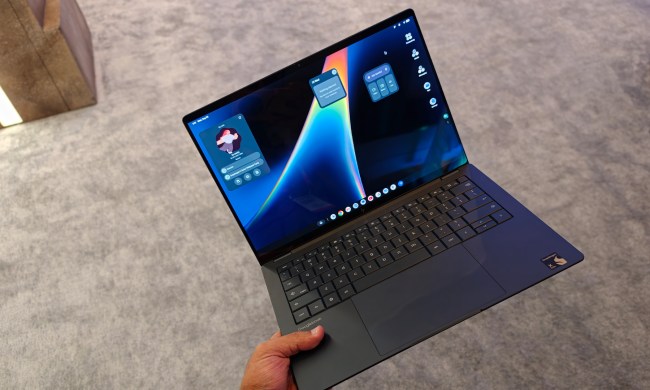
Googlebook users, rejoice. Google is rolling out a Chrome update that turns any website into a web app, and you have the community to thank for it.

When Googlebook first arrived, Chrome was picky about which sites you could install. Only websites that developers had set up as web apps got the Install option. Everything else ended up as a shortcut that simply launched a browser tab.

Read more
DigUp lets users find Mac files by describing them, not remembering their names
Can't remember where that screenshot, PDF or recording went? Just describe it and let AI do the digging.
DigUp App in Use screenshot

There's a particular kind of frustration that comes with knowing a file exists somewhere on a computer but having absolutely no idea what it's called. Was that screenshot saved as IMG_4837? Which PDF contained that clause? And where did that podcast recording mention the thing worth remembering? DigUp wants to end the filename guessing game, letting Mac users search for files by describing what they remember instead. The free, open-source app uses Google's EmbeddingGemma 2 to search across photos, documents, PDFs, audio recordings and videos, all without sending personal files to the cloud.

DigUp turns everyday descriptions into file searches

Read more