1. Home
  2. Computing
  3. Legacy Archives

Ionic Winds to Cool Computer Chips?

Add as a preferred source on Google
Ionic Winds to Cool Computer Chips?
Image used with permission by copyright holder

Researchers at Purdue University, working in collaboration with Intel, have developed a prototype device which uses an “ionic breeze” in conjunction with traditional fan-based cooling to dissipate heat from computer chips. And now, it’s not something you’d buy from the Sharper Image.

The premise is a little unusual: the “ionic engine” attached to a computer chip produces positively charged ions; these, in turn get “dragged” across the surface of the chip towards a negatively charged cathode. All this happens at a very tiny, molecular scale, but in the process of moving from one node to the other, the ions force air molecules on the surface of the chip to move rather than remain “stuck” in one place. In combination with conventional fan-based cooling, the ionic engine increases the cooling rate by up to 250 percent.

Recommended Videos

The research has been underway for several years, and had previous been described as using “mini lightning storms” to cool electronic components. Professor Suresh Garimella, one of the research authors, .: “Other experimental cooling-enhancement approaches might give you a 40 percent or a 50 percent improvement. A 250 percent improvement is quite unusual.”

A paper on the research, “Ionic Winds for Locally Enhanced Cooling,” written by D.B. Go, Suresh Garimella, Timothy Fisher, and R.K. Mongia, is due to be published in the Journal of Applied Physics.

The next step is to miniaturize the prototype device; although it’s only a few millimeters across, researchers hope to make it 100 times smaller for use in a wide variety of devices. If the miniaturization succeeds, ionic cooling may see its way into products in the next three to five years.


Geoff Duncan
Former Contributor
Geoff Duncan writes, programs, edits, plays music, and delights in making software misbehave. He's probably the only member…
MSI’s new 4K 120Hz OLED monitor uses inkjet tech that could make premium screens cheaper
The first 27-inch 4K 120Hz IJP OLED monitor arrives through MSI and TCL CSOT
Computer Hardware, Electronics, Hardware

The future of OLED monitors may have just taken a significant step forward. MSI and TCL CSOT have unveiled the world’s first 27-inch 4K 120Hz desktop monitor built using inkjet-printed OLED technology, bringing a manufacturing method once limited to prototypes and specialist displays closer to everyday buyers.

Called the MSI Pro Max OLED 271UPJW12, the monitor uses a TCL CSOT panel created by printing organic light-emitting material directly onto the display. The process wastes less material than conventional OLED manufacturing and could eventually make panels cheaper and easier to produce at scale.

Read more
MSI launches a white 16-inch gaming laptop with a 12GB RTX 5070 and a pile of matching accessories
MSI bundles a mouse, headset, and extended mouse pad with its new white Crosshair gaming laptop
Adult, Female, Person

MSI has launched the Crosshair A16 HX MLG Edition globally, giving one of its upper mid-range gaming laptops a white-and-red makeover alongside a full set of matching accessories. MLG here stands for Mo-Loong-Gi, meaning “Dragon Princess,” and refers to an original character created by MSI rather than Major League Gaming.

What are you getting with this special edition laptop?

Read more
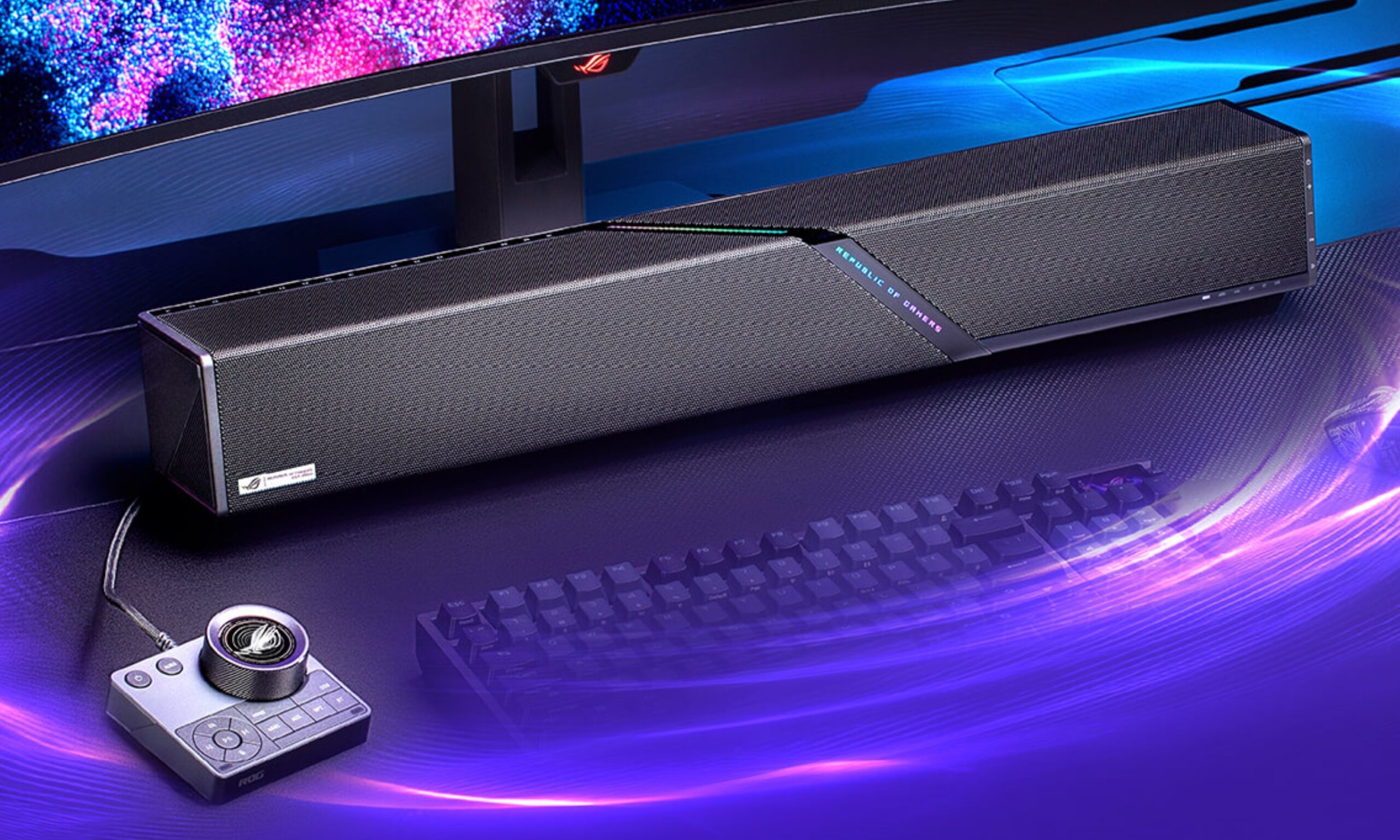
The ROG Gjallar packs Dolby Atmos in a compact form factor, but its US debut is still under wraps
Asus' new ROG Gjallar gaming soundbar brings Dolby Atmos and a wireless subwoofer to your desk.
Electronics, Speaker

Asus unveiled the ROG Gjallar back in early July 2026, as the first speaker system under the ROG brand. However, at the time, the company stayed quiet on pricing and availability. That's changed now. 

So what's actually inside the ROG Gjallar?

Read more