
  1. Home
  2. Computing
  3. Legacy Archives

Yay freebies! MediaFire now has a desktop app

Add as a preferred source on Google

Cloud storage is all the rage these days. If you prefer to store your data in the (virtual) heavens and you’re a Windows Mac OS X user, you have a new option at your disposal.

MediaFire announced that it is releasing a beta version of a desktop client for both Windows and Mac OS X. With the free version, you get up to 50GB of storage, though if you want to throw around some green, paid plans start at $29.88 per year for 100GB, despite the fact that MediaFire’s site indicates a $25 annual charge for 100GB. Either way, that’s pretty cheap. By comparison, 100GB of Dropbox storage will run you $99 a year.

Recommended Videos

Using the MediaFire client, you can share your files from your desktop directly to Facebook, Gmail and Twitter. You can also set sharing permissions, allowing others to access your content, while setting boundaries on what they can or can’t touch. You can also stream audio and video clips from your account. MediaFire’s desktop app supports over 200 file formats, so you shouldn’t have any concerns with respect to compatibility.

Here’s what MediaFire had to say about the announcement on their official blog.

“MediaFire Desktop has been designed from the ground up to let you do more with your Media. From automatic web-based audio and video transcoding, to viewing your files on the go through your mobile device, MediaFire provides you with all of the online storage that you need for around half of the cost of other online storage services.”
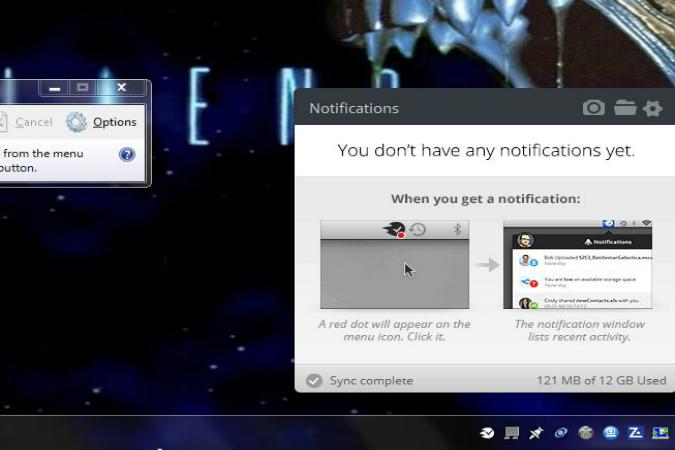
Mediafire 12GB
Image used with permission by copyright holder

Hands on: When we gave MediaFire a spin, we were a bit confused by the advertised storage space and the firm’s wording of “up to 50 GB.” Once we installed, we only had the option of selecting a free 10GB plan, though our desktop client indicated that we had a total of 12GB of space to use. Just keep this in mind.

Interested in giving MediaFire a whirl? You can download the MediaFire desktop client beta here.

Konrad Krawczyk
Former Computing Editor
Konrad covers desktops, laptops, tablets, sports tech and subjects in between for Digital Trends. Prior to joining DT, he…
Your Windows touchpad is about to make scrolling long pages way less tiring
Three touchpad tricks that make long documents feel a lot shorter.
Windows new scrolling feature

Today I learned about a touchpad tip that I think every Windows laptop user should know. Microsoft shared it as its Friday Windows tip of the day, and it’s all about scrolling.

If you read long documents, browse webpages, or write code on a Windows laptop, you know the drill. You swipe, lift your fingers, and swipe again until you reach the part you need. Microsoft has three touchpad features that cut down on all that swiping.

Read more
This app turns the iPhone Duo into a pocket-sized Mac
Headroom uses macOS's built-in Screen Sharing to let users control their Mac from the foldable iPhone, without installing additional software on the computer.
Headroom App on Apple iPhone Duo controlling a Mac

The iPhone Duo has barely been out for a day, and someone's already found a way to run their Mac on it. Well, sort of. Headroom, a remote desktop app from MusicFlow, lets users control their Mac from Apple's new foldable phone, with an interface that adapts as the device opens, closes, and folds in half. Think of it as turning a pocket-sized phone into a miniature MacBook, minus the actual MacBook.

Headroom turns the iPhone Duo into a mini Mac

Read more
AI helped uncover a hidden PHP flaw. Now websites worldwide are facing millions of hacking attempts.
A critical PHP vulnerability has websites worldwide racing to install security patches.
php-flaw-websites-under-attack

PHP is the programming language behind roughly 70% of websites, and it just ran into a serious problem. Security researchers used AI to uncover a critical flaw called PHP2Shell, which could let attackers take over web servers, steal data, or disrupt online services. Since the discovery, websites worldwide have been hit with millions of attempts to exploit it.

Hackers moved fast once the flaw went public. Cloudflare CEO Matthew Prince said the attack attempts jumped from tens of thousands within 45 minutes to millions overnight, The Guardian reports.

Read more