1. Home
  2. Computing
  3. News

Meta could be releasing a ‘Quest 2 Pro’ this year

Add as a preferred source on Google

By most accounts, Meta’s Quest 2 virtual reality headset has been a smash hit for the company. Now it seems, Meta is looking to capitalize on that success with a follow-up VR headset. This new headset improves on the Quest 2 with some useful new features.

Ming-Chi Kuo, normally known for his Apple-centric leaks, provided some details of the new VR headset. It will likely be known as the Quest 2 Pro instead of the Quest 3 and include upgraded specs such as 2160 x 2160 mini-LED displays for each eye and a dual-element lens design.

Recommended Videos

Meta would release new Oculus Quest with a better design & immersive experience in 2H22. I reiterate predictions from my report last year on upgrade highlights, including:
1. 2.48" mini-LED display with a resolution of 2160×2160 (per eye).
2. 2P Pancake (vs. current 1P Fresnel).

— 郭明錤 (Ming-Chi Kuo) (@mingchikuo) April 8, 2022

Other features may include support for facial recognition and even eye tracking. As far as a release date, Kuo believes the Quest 2 Pro will release sometime in the second half of this year. A launch near Christmas would make a lot of sense to take advantage of the holiday season. This may also allow Meta to reduce the price on the existing Quest 2 to bring more people into the ecosystem.

The Meta Quest 2 is the most popular VR headset and it’s not even close. TA recent Steam survey had it around 46% market share. It stands to reason that Meta would try to improve on it as it continues its “metaverse” aspirations.

Meta is also still in the process of developing a mixed-reality headset called Project Cambria. Unlike VR, this headset would allow virtual objects to be overlaid on the real world. Think walking down the street and getting GPS navigation directly on the sidewalk or the air. This is part of the metaverse that CEO Mark Zuckerburg envisioned when he explained the company’s change from Facebook to Meta.

The competition is heating up, however, as other companies continue to get into the VR and AR space. Sony finally unveiled the final design of its PlayStation VR2 headset. It includes eye tracking and 4K HDR displays with haptic feedback built into both the controllers and headset. This is no doubt similar technology as the PS5’s DualSense controllers.

If the Meta Quest 2 Pro is indeed real, we’ll likely hear an announcement from Meta in the coming months. The company canceled its annual F8 conference this year in order to “gear up on new initiatives” aimed at building the metaverse. That means that it will probably be a separate dedicated event or announcement.

David Matthews
David is a freelance journalist based just outside of Washington D.C. specializing in consumer technology and gaming. He has…
Meta goes toe-to-toe with the big boys as it launches Muse Wonder AI models
Illustration of Meta Muse Wonder AI model.

It's raining frontier AI models. Soon after Anthropic set alarm bells ringing with its Claude Fable model at the summit of AI peformance, OpenAI answered with GPT-6 Astra. Not one to be left behind, Google released Gemini 4 Argon. The race is now getting hotter as Meta enters the fray with two new AI models in the Muse series: Wonder and Wonder Full. Cheesy naming aside, these Meta AI models mean business, or at least that's what the benchmark figures suggest. More importantly, these AI models are already making their way to Muse users.

https://twitter.com/DigitalTrends/status/2109699549375988120

Read more
Look, the MacBook Neo is a fine machine for building apps. And yes, I am utterly surprised
I am talking about apps with a generous dose of AI wizardry happening in the background.
MacBook Neo in yellow.

In a span of just one week, I have built a full-fledged Android app for my Galaxy Z Fold 8 foldable phone, three Mac apps, and an iPhone app. And here's the fun part. The entire journey of creating these apps actually started on a phone, jumped to my MacBook Neo, compiled just fine, and ran flawlessly, without making me want to tear my hair off. The latest example? 

It built my calendar-clipboard hybrid app in Terminal within 20 seconds, and an on-device transcription app with a retro look in roughly 15 seconds. I used to think building desktop software would have me burning the midnight oil. The MacBook Neo did it in less time than I can pour myself a can of soda and take the first sip. 

Read more
AI could be doing to our tolerance for hard work what social media did to our patience
Even brief AI use may make unaided work feel more frustrating once the help disappears.
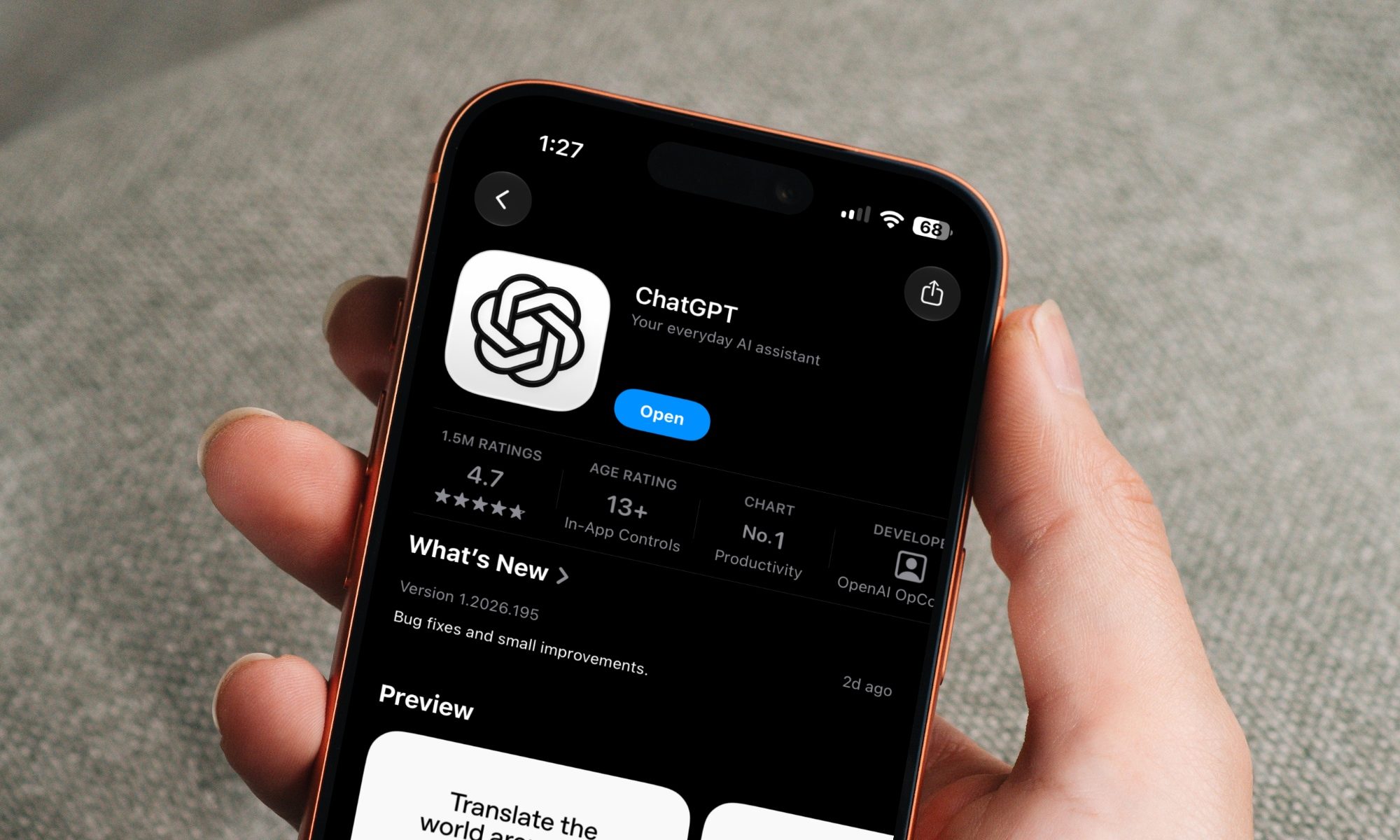
ChatGPT on iPhone

It is no secret that social media, and especially the rise of short-form content, has played a major role in the declining patience many of us have for anything that takes too long to get to the point. A few seconds without something interesting happening is enough to make us swipe away and look for the next thing. AI appears to be doing something similar to the way we approach work.

A new peer-reviewed study found that people who used AI for around 10 to 15 minutes were more likely to struggle and give up once the AI was taken away. The researchers ran three randomized experiments with 1,222 participants who were given math and reading-comprehension tasks. AI helped them perform better at first, but their performance tanked once they had to solve the problems on their own.

Read more