1. Home
  2. Computing
  3. Web
  4. News

Microsoft announces local data centers for German cloud users to avoid U.S. spies

Add as a preferred source on Google

Microsoft is storming ahead with its rollout of European data centers, announcing two new facilities in Germany to keep cloud traffic inside the country.

It follows similar data center launches in the Netherlands and the United Kingdom earlier this year, as Microsoft looks to establish strong local relationships with businesses that are not fond of U.S. surveillance. The company is also getting ahead of the potential fallout from the U.S.-EU safe harbor framework, which was recently ruled invalid by the European Court of Justice.

Recommended Videos

The two new data centers — located in Magdeburg and Frankfurt — will be used to access Azure, Office 365, and Dynamics CRM Online. That covers most of Microsoft’s services for businesses and consumers.

“Our new data center regions in Germany, operated in partnership with Deutsche Telekom, will not only spur local innovation and growth, but offer customers choice and trust in how their data is handled and where it is stored,” said Microsoft Chief Executive Satya Nadella in a statement.

Microsoft has been fighting against U.S. surveillance at every turn, calling it a “advanced persistent threat” in 2013 after the Edward Snowden leaks. It has since called for surveillance reform, and pushed to localize Internet traffic.

The move to bring data centers to Europe is unique in the technology world, with Facebook and Google intent on keeping data centers primarily in the United States. Both Internet companies went against the European Court of Justice’s decision on the U.S.-EU safe harbor framework, with Alphabet chairman Eric Schmidt going as far as to say it could damage “one of the greatest achievements of humanity.”

U.S. surveillance has shaken European countries, especially those targeted by the National Security Agency. German Chancellor Angela Merkel was apparently tapped by the NSA, and in partnership with U.K.’s Government Communications Headquarters (GCHQ) the NSA hacked allied corporations, including Belgacom and Gemalto.

This has led to an almost rebellious attitude by the European Union, recently revoking Edward Snowden’s criminal charges and asking European countries to accept Snowden’s asylum.

David Curry
Former Contributor
David has been writing about technology for several years, following the latest trends and covering the largest events. He is…
A broken Galaxy Fold 5 just became the Pixel desktop future I want Google to steal
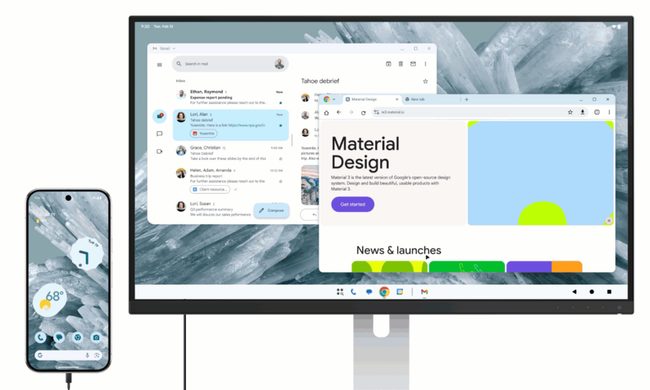
A broken Galaxy Fold 5 became a tiny PC because Samsung already built the desktop mode Google keeps treating like a side quest.
Desktop mode within Android 16.

A broken Galaxy Fold 5 should be a sad little monument to modern gadget math. One busted outer display, one repair bill nobody wants to inspect too closely, and suddenly a powerful foldable starts heading toward a drawer. Instead, a Redditor turned one into a glowing acrylic DeX box with spare parts, fans, a USB hub, and the kind of LED lighting that makes every homebrew computer look mildly illegal.

https://www.reddit.com/r/SamsungDex/comments/1upica7/fold_5_dexbox/

Read more
You’ll finally be able to try OpenAI’s GPT-5.6 Sol, Terra, and Luna models this week
The GPT-5.6 family will become publicly available on July 9, ending the restricted preview that lasted nearly two weeks.
OpenAI Sol Terra Luna featured

OpenAI is ready to expand access to its latest GPT-5.6 model family. In a recent post on X, the company confirmed that GPT-5.6 Sol, Terra, and Luna will become publicly available on Thursday, July 9. If you've been itching to try the new models since the limited preview began in late June, you won't have to wait much longer.

Why the rollout took longer than expected

Read more
A Windows 11 bug may be quietly eating hundreds of gigabytes of your storage
Windows 11’s storage-eating bug now has a fix from Microsoft
Windows 11 suffering from RAM crisis

If your Windows 11 PC suddenly looks low on storage, your downloads folder or game library may not be the problem. According to Windows Latest, a bug tied to a Windows system file can silently consume tens or even hundreds of gigabytes on the system drive.

The file in question is called CapabilityAccessManager.db-wal, and it sits inside Windows’ Capability Access Manager folder. Windows Latest says the issue may appear as unusually high “System files” usage in Windows 11’s storage breakdown, even though the Settings app does not clearly identify the exact file responsible. In some reported cases, users saw it grow to 200GB, and even more.

Read more