1. Home
  2. Computing
  3. Phones
  4. News

The memory crisis isn’t going to ease, and you will pay the price for it, says a research firm

Forty to 50% higher this quarter, 30 to 40% more next quarter, and no real relief until 2028. Plan accordingly.

Add as a preferred source on Google
RAM memory chips
Sergei Starostin / Pexels

If you were hoping the memory crisis was about to ease up, I have some bad news for you. It comes directly from Wall Street.

Your next smartphone, laptop, or tablet could cost even more, regardless of whether it has recently been subject to a price hike.

So how bad is it actually going to get?

Investment bank Jefferies has laid out the clearest and ugliest forecast yet. 

Recommended Videos

Memory prices are expected to jump by 40-50% in the third quarter of 2026 compared with the current quarter. While it would have been great if they had stopped there, prices could rise by another 30-40% in the fourth quarter of the year. 

For all of 2027, Jefferies projects a 40-45% year-on-year increase. Based on those sequential estimates, we’re looking at a compounded price increase of roughly 150-205% between today and the end of 2027. If I were in the market for a new smartphone or laptop, I’d be worried.

The only real relief comes in 2028, when roughly 15-20% of new manufacturing capacity is expected to come online. Even then, demand for AI and computing will continue to grow simultaneously. In other words, the new supply may not stretch as far (via Wccftech).
What does this mean for the price of your next phone or laptop?

Research firm Gartner had separately predicted that combined DRAM and SSD prices could surge 130% by the end of 2026, pushing average PC prices up 17% and smartphone prices up 13% compared to 2025 levels. 

That 13%, when you do the math, on a $1,000 phone, amounts to an additional $130 on your bill. Gartner also warned that the entry-level PC segment, devices costing less than $500, could effectively disappear by 2028, simply because companies might not be able to recoup their component costs, let alone earn a healthy margin.

Making things worse, 50% of total memory capacity is already locked into long-term contracts with major tech firms, a figure that could increase even further to 70%, leaving even less supply for consumer devices (via CNBC). 

Shikhar Mehrotra
For more than five years, Shikhar has consistently simplified developments in the field of consumer tech and presented them…
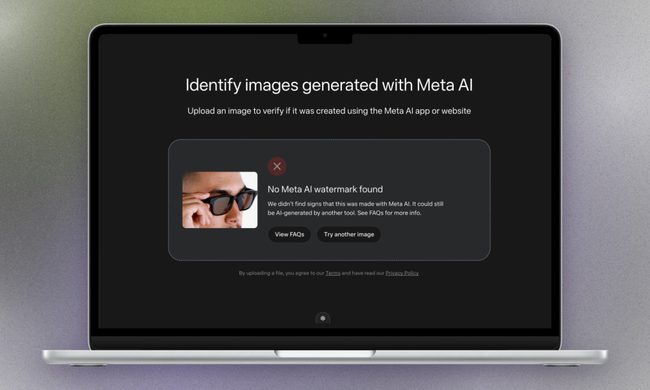
Meta’s detection tool fails to identify photos generated by its own Muse Image AI
Meta has created an invisible watermarking tool called Content Seal that is embedded in all images generated by the Muse Image AI.
Meta AI identification tool.

Earlier this week, Meta announced two new AI products, namely, Muse Image and Muse Video. As the name suggests, these are generative AI tools for making photos and video clips using natural language text prompts. Soon after their rollout commenced, these tools sparked controversy because Meta had automatically opted in Instagram users, allowing others to use their publicly posted media and convert them into remixed AI content. But it appears that Meta courted another loss on its side of the court.

What's the problem?

Read more
Your Google AI Studio apps can finally have polished, presentable web links
AI Studio web apps can now use personalized subdomains
google ai studio logos

Google AI Studio has made building a web app surprisingly easy. You can describe what you want, refine the design through prompts, and publish the result without setting up a traditional development environment. An awkward point of friction comes after deployment, when the finished app still has to live behind a long, forgettable Cloud Run link.

Google is now cleaning up that final step. AI Studio lets you assign a deployed web app a personalized address under the “ai.studio” domain, such as “your-app-name.ai.studio.” A recognizable URL should make the project look more presentable in a portfolio, client demo, social post, or internal project page.

Read more
You can now check if a Google ad was made using AI
Google will auto-label its own AI ads, but third-party AI ads still rely on advertisers to come clean.
google-ads-ai-label

Ever looked at an ad and wondered if a real person made it or if it was AI generated in seconds? Google is now giving you a way to find out.

The company just announced a new AI transparency label that tells you whether an ad was created or edited using generative AI tools. The label lives inside Google's My Ad Center, and it is rolling out across Google Search, YouTube, and Discover globally.

Read more