1. Home
  2. Computing
  3. Legacy Archives

Tobii eye-tracking development kit makes for an eye-pleasing demonstration

Add as a preferred source on Google
Image used with permission by copyright holder

Intel ended this year’s keynote by talking about perceptual computing, a term for input that relies on motion and voice instead of a keyboard and mouse. It is not alone in its research, however. Tobii, a small company hailing from Sweden, is making strides with its eye-tracking system.

The idea is simple. Humans naturally move their eyes while interacting with a device, so why not harness that movement? Tobii does just that by using a pair of infrared sensors and an embedded processor to track a user’s eyes with surprising precision. Tobii has two units: the Tobii IS20 and the Tobii IS 30. The only difference between the two is the maximum display size in which they are compatible.

Recommended Videos

Tobii let its demos do the talking. After an extremely short calibration process we were able to scroll through text, zap asteroids, and select images using nothing but eye movement. The effect was at first disorienting. At first, we found our hands kept reaching for the mouse. After several minutes, however, we began to adapt and noticed our input becoming more accurate.

Image used with permission by copyright holder

We were even more impressed by the unofficial work Tobii has performed with StarCraft II. Most of the game’s interface was still controlled by a keyboard and mouse, but several important functions, such as navigating the mini-map and moving units, could be performed by looking at a portion of the display and hitting a pre-defined hotkey. Representatives of the company said they’ve also experimented with other games. Imagine, for example, leaning out of a window in-game by leaning in real life.

Tobii isn’t perfect just yet. There were a few issues. Precision control was problematic at times, and the calibration window seemed a bit small. Moving more than a foot in any direction after calibration often threw off the device and made control either non-functional or far less accurate.

Issues like this aren’t deal breakers because it’s only a development kit. Anyone who wants to buy a Tobii will have to spend at least $995 for the standard development package that includes both the hardware and the SDK. Pricing on the consumer version, which will be available for preorder this spring and ship in the fall, is not yet announced.

Matthew S. Smith
Matthew S. Smith is the former Lead Editor, Reviews at Digital Trends. He previously guided the Products Team, which dives…
DuckDuckGo’s browser now blocks the YouTube ads everyone hates
DuckDuckGo adds a Brave-like YouTube ad blocking feature
Text, Aircraft, Airplane

DuckDuckGo has spent the past few months gaining fresh attention as more users look for alternatives to Google’s increasingly AI-heavy Search experience. Now, the privacy-focused company is adding a feature that could make its browser even more tempting for everyday use. DuckDuckGo says its browser can now block most video ads, including those on YouTube, when a video is playing inside the browser.

What’s happening?

Read more
ChatGPT Live could make talking to AI feel straight out of the movies
We might finally get the AI sidekick sci-fi movies promised
Elderly women using ChatGPT live on a smartphone

AI voice assistants have been chasing the sci-fi dream for years, but they still have a hard time holding a conversation with humans. Most voice systems still need clear turns, clean pauses, and a few seconds before they respond. OpenAI is now rolling out GPT-Live, a new voice model for ChatGPT Voice that is designed to make those exchanges feel faster and less scripted.

The main upgrade is what OpenAI calls a full-duplex architecture. In simpler terms, GPT-Live can listen and speak at the same time. It continuously processes what the user is saying while also generating its own response, allowing it to decide when to talk, when to pause, when to keep listening, and when to use a tool.

Read more
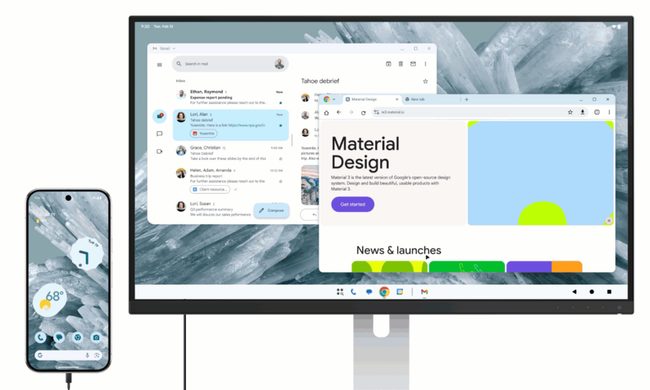
A broken Galaxy Fold 5 just became the Pixel desktop future I want Google to steal
A broken Galaxy Fold 5 became a tiny PC because Samsung already built the desktop mode Google keeps treating like a side quest.
Desktop mode within Android 16.

A broken Galaxy Fold 5 should be a sad little monument to modern gadget math. One busted outer display, one repair bill nobody wants to inspect too closely, and suddenly a powerful foldable starts heading toward a drawer. Instead, a Redditor turned one into a glowing acrylic DeX box with spare parts, fans, a USB hub, and the kind of LED lighting that makes every homebrew computer look mildly illegal.

https://www.reddit.com/r/SamsungDex/comments/1upica7/fold_5_dexbox/

Read more