1. Home
  2. Computing
  3. Audio / Video
  4. News

Western Digital makes big changes to My Cloud OS and My Cloud Mirror

Add as a preferred source on Google
IFA 2025
This story is part of our coverage of IFA Berlin 2025

Western Digital, the company responsible for the most popular personal cloud hardware and service, is making some big changes to its My Cloud OS and My Cloud Mirror hardware that should make the service quite a bit more appealing to the masses. These updates add some key functionality that makes the personal cloud service function in a way that is far more similar to public cloud services like DropBox or OneDrive.

The major feature added to My Cloud OS is called Sync. It lets users choose specific directories on their PC and have them automatically sent to the drive that’s connected to their router, which is serving as their personal cloud. When the user makes changes to files or folders, they will automatically be uploaded to My Cloud and synced to other connected devices.

WD-My-Cloud-OS-and-My-Cloud-Mirror-2
Image used with permission by copyright holder

This new feature makes My Cloud function more smoothly, as users don’t need to manually upload files they want synced. Like Dropbox and other cloud services, users can get access to their files and documents on smartphones as well on other computers.

Recommended Videos

In keeping with the theme of improved functionality, Western Digital is also adding photo syncing on mobile devices. Pictures can be uploaded to the My Cloud OS connected drive as soon as they’re taken. There’s also a new feature that lets users collect and share photos in full resolution.

Western Digital is also improving its SDK to allow developers to tap into the heart of the My Cloud devices with apps. It has already partnered with Milestone Surveillance, Plex, and Adobe, and it thinks that its new open-source standard will attract more developers than the previous version.

On the hardware side, Western Digital is also announcing its My Cloud Mirror 2, a new version of its router-connected hardware that actually features two drives for redundancy.

The update to the OS will be launched on September 21 to all existing My Cloud users. The new My Cloud Mirror 2 hardware will be available on September 30.

Dave LeClair
Former Digital Trends Contributor
Dave LeClair has been writing about tech and gaming since 2007. He's covered events, hosted podcasts, created videos, and…
Hidden prompts can secretly rewrite an AI’s memory, and researchers say that’s a serious problem
Researchers discover AI attack that rewrites an assistant's long-term memory
Chatbot on a smartphone.

Large language models are getting better at remembering us. Whether it's your preferred writing style, recurring tasks, shopping habits or project deadlines, AI assistants are increasingly storing long-term memories to make future conversations feel more personal and useful. But according to new research, that same feature could become one of AI's biggest security vulnerabilities.

Researchers from New Mexico State University have demonstrated a new attack called GhostWriter, capable of secretly planting false memories inside AI agents. Rather than stealing information outright, the attack manipulates what an AI remembers, potentially causing it to make dangerous decisions long after the original attack has taken place.

Read more
This experiment shows how easy it is to poison an open-weight AI model for under $100
This research raises new doubts about trusting open weight AI models.
Computer, Electronics, Laptop

Open-weight AI models have been having a moment lately. Just this month, Moonshot's massive Kimi K3 model landed close behind Claude Fable 5 and GPT 5.6 Sol in several benchmarks, all while remaining fully open-weight and downloadable by anyone.

However, Katie Paxton-Fear, a cybersecurity lecturer at Manchester Metropolitan University and staff security advocate at Semgrep, managed to poison an open-weight model and proved how easily that openness can be turned against you (via The Register).

Read more
Asus’ powerful new gaming laptop with a 240Hz Mini LED display makes its global debut
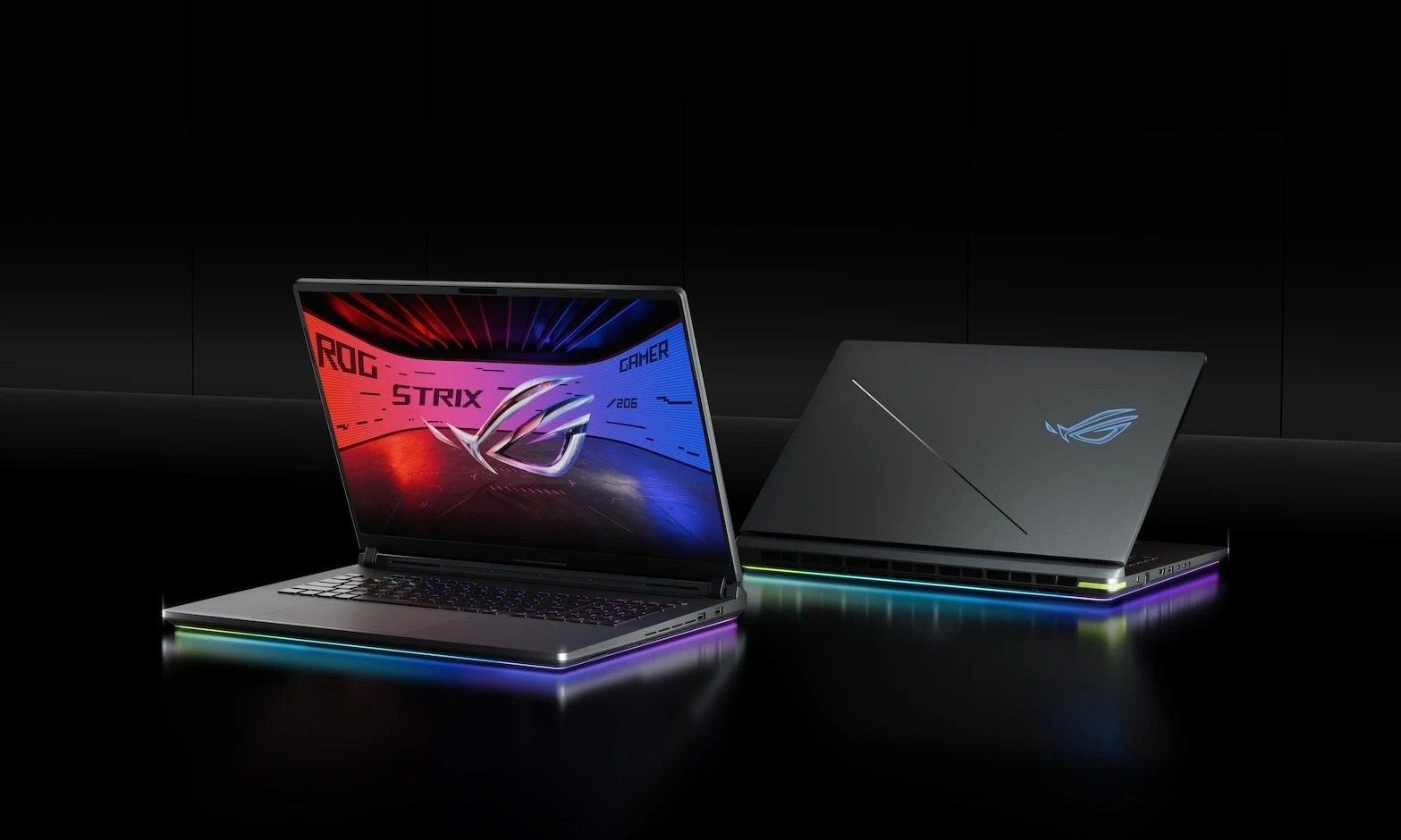
The 2026 ROG Strix G18 pairs up to RTX 5080 graphics with an Intel Core Ultra 9 290HX Plus CPU
ROG Strix G18 (2026) laptop

Asus has started rolling out the 2026 ROG Strix G18 globally, and the easiest way to describe it is as a slightly toned-down version of the ridiculous ROG Strix Scar 18. It keeps the same 24-core Intel Core Ultra 9 290HX Plus processor but tops out at an Nvidia GeForce RTX 5080 Laptop GPU instead of the Scar’s RTX 5090. (via Notebookcheck)

The Mini LED model gets the best balance

Read more