  1. Home
  2. Emerging Tech
  3. News

A DirecTV satellite could explode in space because of a battery issue

Add as a preferred source on Google

A 15-year-old DirectTV satellite might explode in space because of a battery malfunction, and if it does, it could take other satellites down with it. 

DirecTV requested temporary authority from the Federal Communications Commission (FCC) on Sunday to conduct an emergency operation that would reduce the risk of the satellite exploding. The Boeing-made satellite is currently situated in the geostationary arc, which is home to many communications satellites. 

Recommended Videos

“DirectTV’s emergency operations are in response to the extraordinary and unforeseen anomaly on Spaceway-1 and will reduce the potential for harm to other geostationary satellite operators,” the filing reads. 
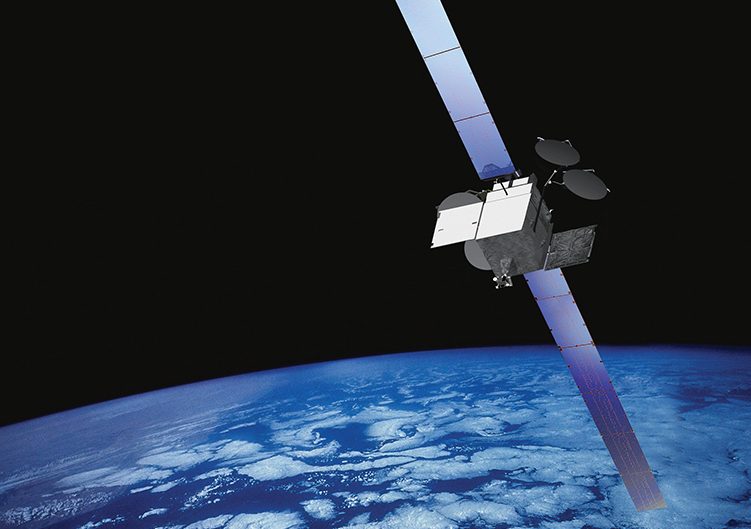
Boeing

The satellite was recently being used as a backup for Ka-band capacity over Alaska, according to Space News. However, the Spaceway-1’s batteries suffered “significant and irreversible thermal damage” in December. 

DirecTV asked the FCC to give them 30 days to decommission of the satellite’s remaining fuel before it explodes. To do this, it will take about 21 days to reach a disposal orbit to discharge its remaining bipropellant and then about seven days for “venting operations” before Spaceway-1 can be decommissioned. 

Satellites are required by the FCC to vent fuel before they move into what’s known as the “graveyard orbit.” According to the filing, it would typically take about two to three months for the same amount of fuel to unload, but DirecTV is asking for the FCC’s permission to discharge the remainder of the bipropellant in the 30 days before an explosion occurs. 

“The risk of a catastrophic battery failure makes it urgent that Spaceway-1 be fully de-orbited and decommissioned prior to the February 25th start of eclipse season,” DirecTV said in the filing. 

The spring eclipse season occurs from February 26 until April 12 or 13, and it affects satellites due to the sun illuminating both the northern and southern hemispheres equally, which casts a shadow through the orbital path of satellites. Since satellites rely on electric power from the sun’s solar rays, the satellite uses its batteries as a backup, and since Spaceway-1’s batteries no longer work, it’s crunch time to get the satellite decommissioned. 

Before Spaceway-1 had the battery problem last month, DirecTV expected the satellite to last until 2025, according to Space News. The High Power 702 Boeing model was originally designed to last 12 years.

Digital Trends reached out to DirecTV and to Boeing to comment on the Spaceway-1 satellite. We will update this story once we hear back. 

Allison Matyus
Former Digital Trends Contributor
Allison Matyus is a general news reporter at Digital Trends. She covers any and all tech news, including issues around social…
A new AI model wants self-driving cars to think before they swerve
Forget guessing games, this self-driving AI actually shows its work.
Self driving car

Self-driving cars have gotten pretty good at driving. The harder problem is teaching them to drive safely in situations nobody planned for. We have heard horror stories of self-driving cars, behaving erratically in emergency situations, often times delaying first responders from reaching the scene.

A team at Seoul National University, led by professor Jun Won Choi from the Department of Electrical and Computer Engineering, thinks they have cracked part of that puzzle with a new AI model called SafeDrive. The research was recently selected as a highlight paper at CVPR 2026, a distinction that goes only to roughly 3% of all submissions.

Read more
An AirPods-sized mini lab could help catch disease markers in minutes
Meet VPodDuo, an AirPods-sized molecular testing gadget
VPodDuo Mini Medical Device

Home testing could eventually become a lot more convenient. Researchs at the at the University of Illinois Urbana-Champaign has developed the VPodDuo, a pocket-sized fluorescence reader designed to measure sensitive molecular tests outside a conventional laboratory.

Its housing is roughly comparable in size and shape to an AirPods charging case, while Bluetooth connectivity sends results directly to a smartphone. Meaning, you might not have to wait in line anymore.

Read more
Your future AR glasses might finally stop making the real world look weird
Researchers have developed a new display technique that keeps virtual objects realistic without dimming the real world.
Samsung AR Glasses

One of the biggest promises of augmented reality is blending digital objects seamlessly into the real world. Ironically, today's AR glasses often make the real world harder to see. Researchers at the Shibaura Institute of Technology (SIT) in Japan, led by Assistant Professor Xiaodan Hu in collaboration with Dr. Yan Zhang and Professor Xubo Yang from Shanghai Jiao Tong University in China, and Professor Kiyoshi Kiyokawa from Japan's Nara Institute of Science and Technology, have developed a new AR display technique that aims to make virtual objects look realistic without reducing visibility of the real world. The study was published in IEEE Transactions on Visualization and Computer Graphics.

The biggest AR problem isn't virtual objects; it's everything around them

Read more