  1. Home
  2. Emerging Tech
  3. News

Drone-owning Brits will have to register their machine and take a test

Add as a preferred source on Google

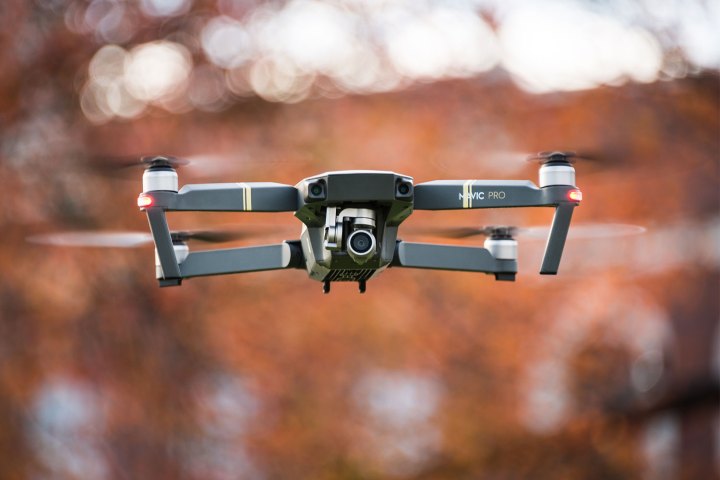
Hobbyist drone owners in the U.K. will have to register their flying machines and sit through a test to show they understand basic air safety rules, the British government announced on Saturday.

As is the case in the U.S. and other countries, remotely operated copters have been selling in ever-larger numbers in recent years. Mirroring the rise in popularity has been an increase in reports of rogue drone flights in designated no-fly zones such as airports and prisons. The government believes its registry will help to improve accountability and encourage owners to fly their drones in a responsible manner.

Recommended Videos

Anyone with a drone weighing more than 0.55 pounds (250 grams) will have to add their personal details to a database, though no date has yet been announced for when the registry will launch.

The government said it’s planning to release an app to aid the registration process, adding that owners will also have to sit a “safety awareness test” to show that they understand British air safety, security, and privacy regulations.

There are also plans to increase the use of geo-fencing, which uses GPS coordinates to create a kind of invisible shield around locations where drone flights are banned.

Aviation minister Lord Callanan said the new measures would “prioritize protecting the public while maximizing the full potential of drones.”

The minister said that drones are increasingly “proving vital for inspecting transport infrastructure for repair or aiding police and fire services in search and rescue operations, even helping to save lives,” adding, “But like all technology, drones, too, can be misused. By registering drones [and] introducing safety awareness tests to educate users we can reduce the inadvertent breaching of airspace restrictions to protect the public.”

Drone-related complaints in the U.K. reached 3,456 in 2016, nearly three times more than the number logged just a year earlier, the Press Association reported recently.

Misdemeanors ranged from people using drones to spy on neighbors, to near-misses with passenger planes flying into and out of major airports in the country, with 59 such cases reported in the last 12 months alone.

In the U.S., the Federal Aviation Administration (FAA) launched a similar database for hobbyist drone owners in December 2015, but new registrations were suspended in May after a Washington, D.C. Court of Appeals ruling affirmed a lower court ruling in 2016 that said the FAA didn’t have the power to make rules regarding model aircraft use.

Trevor Mogg
Contributing Editor
Not so many moons ago, Trevor moved from one tea-loving island nation that drives on the left (Britain) to another (Japan)…
Anti-surveillance clothing is getting cheaper, but don’t expect an invisibility cloak
Affordable shirts now claim to confuse facial recognition, although their protection depends heavily on the camera and software watching you
Chart, Plot, Adult

Anti-surveillance clothing is starting to look less like an art-school experiment and more like something you could actually wear outside. Shirts designed to confuse facial recognition systems now cost about as much as ordinary streetwear, although buying one won’t make you disappear.

The Guardian reports that designers are using face-like prints, unusual cuts and infrared lights to interfere with computer vision. These techniques target specific weaknesses, so their success depends on what happens to be watching you.

Read more
This spinning drone hides in plain sight using a visual illusion
This drone doesn't turn invisible. It tricks your brain into thinking it has.
Phantom Twist

For decades, engineers have chased the dream of an invisible drone. The usual approaches have involved transparent materials, camouflage coatings, or complex optical systems that bend light around an object. Researchers at Northwestern University decided to take a completely different route. Instead of hiding the drone itself, they chose to fool the human eye.

The result is Phantom Twist, an experimental drone that spins so rapidly it almost disappears into the background. It's not technically invisible, but to anyone watching, it looks more like a faint blur than a flying machine.

Read more
This smart knitted fabric can flip switches, count your steps, and even change shape
Grandma's knitting just entered its Iron Man era
Representative Image

For most of us, knitting brings to mind sweaters, scarves, and perhaps an ambitious grandmother determined to make winter more fashionable. Researchers at Harvard University, however, have a far more futuristic vision. They've transformed ordinary knitted fabric into a programmable material capable of changing shape, acting as an electrical switch, sensing movement, and potentially forming the foundation of tomorrow's wearable technology.

The research, published in Advanced Functional Materials by scientists at the Harvard John A. Paulson School of Engineering and Applied Sciences (SEAS), demonstrates how machine-knitted textiles can "snap" between multiple stable shapes without relying on motors or rigid mechanical parts.

Read more