  1. Home
  2. Emerging Tech
  3. News

Complaints about drones tripled in the space of a year in the U.K.

Add as a preferred source on Google

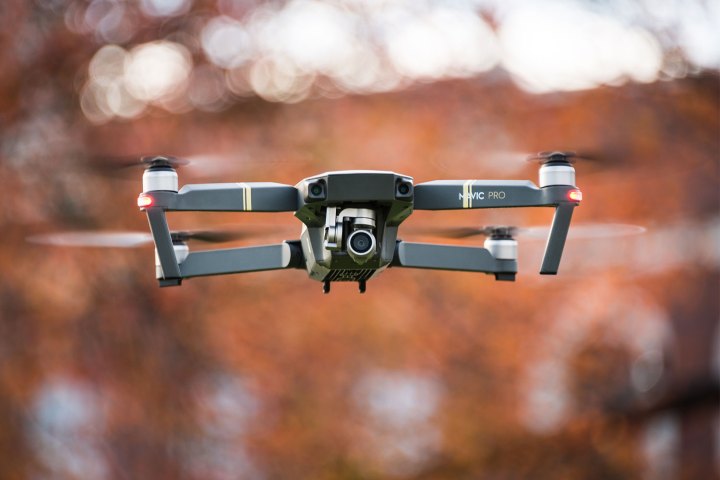
The last couple of years have seen drone ownership skyrocket around the world, with growing sales coming off the back of increased affordability. Folks across the pond in the U.K. have clearly bought into the technology, though new figures suggest a marked increase in complaints about the way the remotely controlled flying machines are being used.

Obtained by the Press Association following a recent Freedom of Information request, the police data shows drone-related complaints hit 3,456 in 2016, nearly triple that of the 1,237 complaints logged a year earlier. And in 2014, when drone ownership numbers were relatively small, a mere 283 complaints were made.

Recommended Videos

The data included a broad range of incidents, from neighbors complaining that others were using drones to spy on them in their backyards, to reported near-misses with passenger jets flying close to major airports, with 59 such cases brought to the attention of the authorities in the last 12 months alone.

Some of the incidents describe criminals using the camera-equipped machines to “scope out” properties ahead of a potential burglary, while others have been attempting — and in some cases succeeding — to fly contraband to prison inmates. One guy threatened to shoot down a drone with an air rifle, while another complained that his neighbor was flying one of the machines “just to annoy [him].”

Commenting on the data, David Dunn of Birmingham University told the Associated Press that the technology was impacting privacy in a big way. “Previously you had a hedge, you had a wall and you could do whatever you wanted in your garden without people disturbing you. That has changed because of drones,” Dunn said.

He added that burglars are “using them to fly behind properties to see if the lights are on, to see what sort of French windows they have or whether there are windows open” before deciding whether to enter a property.

Lawmakers are currently considering whether to implement a registration scheme forcing all U.K.-based drone owners to add their machine and personal details to a national database, similar to the one launched by the Federal Aviation Administration at the end of 2015. It’s believed such a scheme would encourage more responsible flying while helping the authorities to identify an owner in the event of a complaint or serious incident.

Trevor Mogg
Contributing Editor
Not so many moons ago, Trevor moved from one tea-loving island nation that drives on the left (Britain) to another (Japan)…
Researchers hid a prompt injection inside a PNG, and AI fell for it
Hacker

AI coding assistants like Claude are becoming every developer's favorite coworker. They can review code, explain confusing functions, and even write entire features with a single prompt. But new research suggests that this growing trust could also become their biggest weakness.

A team of security researchers (professor Sudipta Chattopadhyay and researcher Murali Ediga) has demonstrated an unusual attack that doesn't target the AI model directly. Instead, it targets what the AI doesn't pay enough attention to during code reviews. Rather than hiding malicious instructions in lines of code, the researchers tucked them inside an image file. Since many AI review tools treat images as decorative assets rather than as something worth inspecting, the pull request can appear perfectly harmless and sail through the review.

Read more
AI has already fallen into the wrong hands and they’re using it to make bombs
Logo, Text

Artificial intelligence has quickly become the go-to tool for everything from writing emails and summarizing meetings to helping students study or developers debug code. But the same technology that saves people time can also be misused, and a new report suggests that terrorist organizations are finding ways to do exactly that.

According to a research paper shared with The New York Times ahead of its publication, researchers found evidence that members of Boko Haram have been using popular AI chatbots to support both day-to-day activities and combat-related tasks. Interviews with 27 former members conducted in Nigeria over the past two years suggest that tools such as ChatGPT, Gemini, Claude, Grok, Meta AI, and DeepSeek were used to gather technical information, troubleshoot weapons, and even assist with planning attacks.

Read more
Claude Code can now browse the web without opening Chrome
The desktop app now includes an in-app browser that can read websites, click links, and interact with web apps.
Claude Code Featured

Developers spend a surprising amount of time bouncing between their code editor, browser tabs, API documentation, GitHub issues, and design files. Anthropic thinks Claude Code should simply do all of that without constantly asking users to switch windows. The company has announced a new in-app browser for Claude Code on desktop, allowing its AI coding assistant to open websites, read documentation, inspect designs, and interact with web pages directly from within the application.

A browser built into Claude Code

Read more