1. Home
  2. Emerging Tech
  3. News

In just 30 days, nearly 300,000 people have registered their drones with the FAA

Add as a preferred source on Google

Despite initial criticism over what many believed to be a “drone tax,” the Federal Aviation Administration reports that nearly 300,000 people officially registered their unmanned aircraft via the agency’s online registration system over the past 30 days. Though the relatively high number could easily be linked to the fact the FAA offered $5 refunds (i.e., the full registration fee) to anyone registering during the first month, the agency was quick to point out it’s still receiving “a steady stream” of registration requests daily.

“I am pleased the public responded to our call to register,” says U.S. Transportation Secretary Anthony Foxx in the published press release. “The National Airspace System is a great resource and all users of it, including UAS users, are responsible for keeping it safe.”
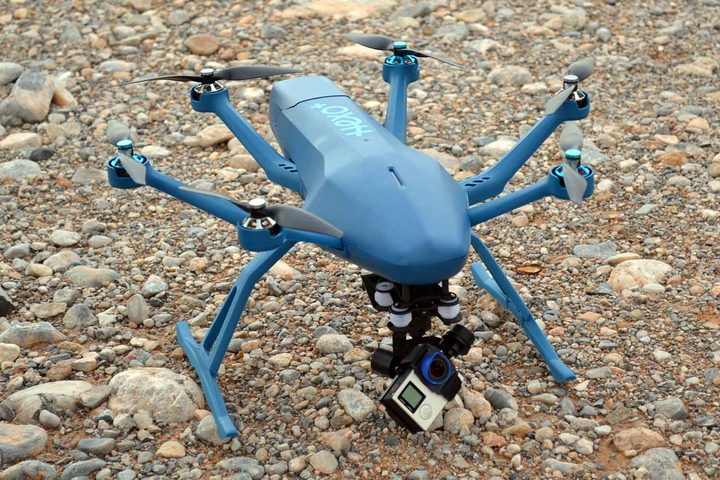
Though autonomous, Hexo's Hexo+ drone requires registration
Though autonomous, Hexo’s Hexo+ drone requires registration Rick Stella/Digital Trends

For those unaware, just last month, the FAA instituted a new registration requirement on December 21, 2015, making registration of any small UAV weighing over 0.55 lbs. mandatory for any recreational or hobby drone users. Additionally, first-time drone owners must register their new aircraft before taking it on its maiden voyage while owners of UAVs prior to the FAA’s registration announcement have until February 19, 2016 — and may continue flying their drone without registration in the meantime. Currently, the online system is only open to those who consider themselves hobbyists and who pilot their aircraft recreationally, though the FAA says it plans to include commercial registration by March.

Recommended Videos

“The registration numbers we’re seeing so far are very encouraging,” says FAA Administrator Michael Huerta. “We’re working hard to build on this early momentum and ensure everyone understands the registration requirement.”

While the 300,000 registered pilots is no doubt a win for the FAA, it’s worth noting the agency is simply registering pilots and not the drone’s themselves — despite an aircraft weight restriction being tied to the actual process itself. According to the FAA’s original statement last December, each person registering their aircraft simply provide their name, home address, and email address before receiving a Certificate of Aircraft Registration/Proof of Ownership. This official paperwork comes with a unique ID number pilots are then required to affix to the aircraft they fly. Moreover, just one registration application is required regardless of the size of one’s drone fleet and lasts for a total of three years.

Rick Stella
Former Associate Editor, Outdoor
Rick became enamored with technology the moment his parents got him an original NES for Christmas in 1991. And as they say…
Anker just exposed a big problem with portable power stations
Appliance, Device, Electrical Device

When you're shopping for a portable power station, there's one number that's almost impossible to ignore: battery capacity. A 2 kWh battery should give you roughly 2 kWh of usable power, right? Unfortunately, things aren't quite that simple. Anker SOLIX has published new efficiency data for its S Series portable power stations, and it's putting the spotlight on something that doesn't get nearly as much attention as capacity: how much of the energy stored inside the battery actually makes it to your devices.

According to Anker, portable power stations are commonly advertised with efficiency figures measured under relatively heavy loads, where they can reach roughly 89% to 92% efficiency. But that's not necessarily how most people use one during an outage. Think about what you'd actually plug in. A Wi-Fi router might sip power continuously, a refrigerator switches its compressor on and off throughout the day, and a CPAP machine could run overnight. Together, those devices may draw just a fraction of what a large power station is capable of supplying. And that's where efficiency can start slipping.

Read more
OpenAI’s first gadget sounds like a tiny expressive AI companion
The device will have a doughnut-shaped body, built-in cameras, and moving parts
OpenAI press image

For months, reports have suggested that OpenAI’s first hardware product would be a screen-free smart speaker designed to act more like an AI companion. We already knew it could understand its surroundings, be carried around the home, and proactively help users. A new Bloomberg report now gives us a clearer picture of what the device may actually look like.

As per the report, OpenAI’s first gadget will be shaped like a doughnut and measure about the same size as a hockey puck. You will be able to carry it between rooms or leave it nearby on whatever surface is convenient. The device is expected to be on the expensive side, as the company has pondered pricing it around $300 to $400. A release is currently planned for 2027.

Read more
Google Antigravity just built an AI translator that works without the internet
Electrical Device, Switch, Robot

Google has shown off a new AI project that could make language barriers a little less intimidating, and it doesn't need an internet connection to do it. The company has introduced the Gemma Translator, a compact prototype built in collaboration with Antigravity. Unlike most AI translation tools that rely on cloud processing, this device runs entirely offline using Gemma 4 E2B, Google's lightweight open model. Everything happens locally on the device, making it both portable and independent of an internet connection. The prototype is powered by a Raspberry Pi 5 and includes a microphone and speaker inside a custom 3D-printed enclosure, creating a self-contained translator you can carry almost anywhere.

AI translation, without the cloud

Read more