1. Home
  2. Emerging Tech
  3. Computing
  4. News

This algorithm can hide secret messages in regular-looking text

FontCode: Embedding Information in Text Documents using Glyph Perturbation

Whether it’s hiding messages under the stamps on letters or writing in invisible ink, people have always found ingenious ways of using whatever technology they have available to write secret messages. A new project carried out by researchers at Columbia University continues this tradition by using some deep learning technology to embed encrypted messages in otherwise ordinary looking text.

Recommended Videos

Fontcode” works by making incredibly subtle modifications to everyday fonts like Times New Roman and Helvetica, embedding coded messages inside them. These changes are so subtle that the average person viewing the text would be incredibly unlikely to notice them. They include such alterations as slightly sharper curves or a minutely thicker stem on a particular letter. Each letter has 52 different variations, which makes it possible to encode both lowercase and capital letters within every letter of the alphabet, along with punctuation marks and numbers, too.

The researchers then trained a deep learning neural network to recognize these letters and to match them back to the coded letters in the secret message. With the right smartphone app and just a short period of time for processing the data, it’s possible to decode a secret message from the document it’s embedded in. Simply aim your device at the text and, as if by magic, the real message can be extracted.

Would such a technique ever be applied in the real world? Almost certainly not in everyday conversations, where the idea of having to send one another false text documents to embed a short hidden message sounds like way too much work. However, that doesn’t mean that this is relegated to being an impractical, albeit impressive, demo. It could certainly have applications in the security field, as well as potentially as an invisible watermark. Heck, you could even use it as a to- secret QR code to link to a web address.

A paper describing the project, titled “FontCode: Embedding Information in Text Documents using Glyph Perturbation,” will be presented later this year at the Special Interest Group on Computer Graphics and Interactive Techniques (SIGGRAPH) 2018 conference.

Someone should probably forward this research on to the James Bond producers before then, though. We can totally imagine Daniel Craig using the “Fontcode” algorithm in the next 007 movie!

Luke Dormehl
I'm a UK-based tech writer covering Cool Tech at Digital Trends. I've also written for Fast Company, Wired, the Guardian…
Too lazy to shower? This human washing machine can clean your body in 15 minutes
Everyday bathing with a spa-like experience inside a futuristic pod
human-washing-machine

What’s happened? If you have ever wished your shower could do the hard work for you, a company from Japan has finally delivered the gadget of your dreams. A new human washing machine, now officially on sale, promises a full-body wash while you basically lie there and let the machine pamper you.

A hands-free wash cycle that cleans and rinses you automatically in 15 minutes.

Read more
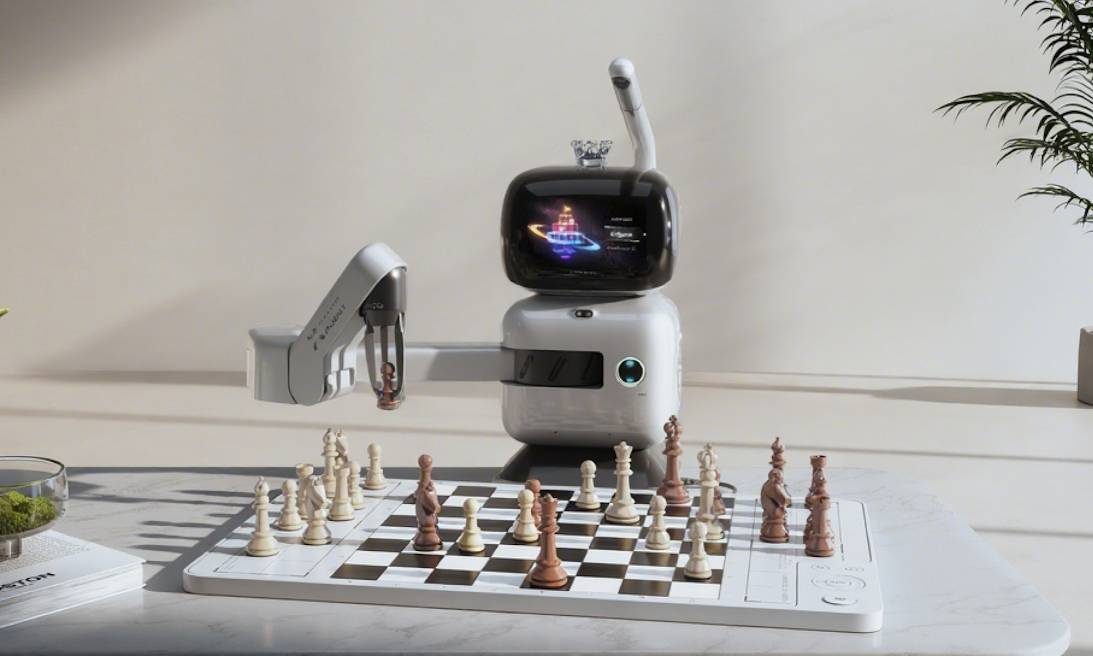
Save on the SenseRobot Chess — the AI chess master everyone wants
SenseRobot Chess

This post is brought to you in paid partnership with SenseRobot

The holidays are almost upon us, and one deal is standing out for tech enthusiasts, chess lovers, and shoppers. The SenseRobot Chess, the world’s first mass-produced AI chess robot arm designed for home use, is now available at its Christmas holiday special price of $699.98, with an additional $35 off at Amazon when using the code CHESS2025. This limited-time 26% off offer brings intelligent robotics and interactive learning within reach.

Read more
Google’s virtual try-on app now helps you discover and shop outfits tailored to you
Doppl just made it easier to discover, try, and buy your next favorite look.
Illustration showcasing Doppl's new shoppable discovery feed.

Google introduced a virtual try-on app called Doppl earlier this year that uses AI to help users visualize how different outfits look on them. The company has now added a shoppable discovery feed to the app that offers outfit recommendations with direct links to merchants.

In a recent blog post, Google said that the idea behind this new feed is to help users "discover new favorites," try them on a virtual avatar of themselves, and purchase them right within Doppl. This discovery feed works like a personalized style stream, surfacing outfit recommendations based on user-specified preferences and past interactions.

Read more