1. Home
  2. Emerging Tech
  3. News

Some crazy California distillery is making vodka with San Francisco’s fog

Add as a preferred source on Google

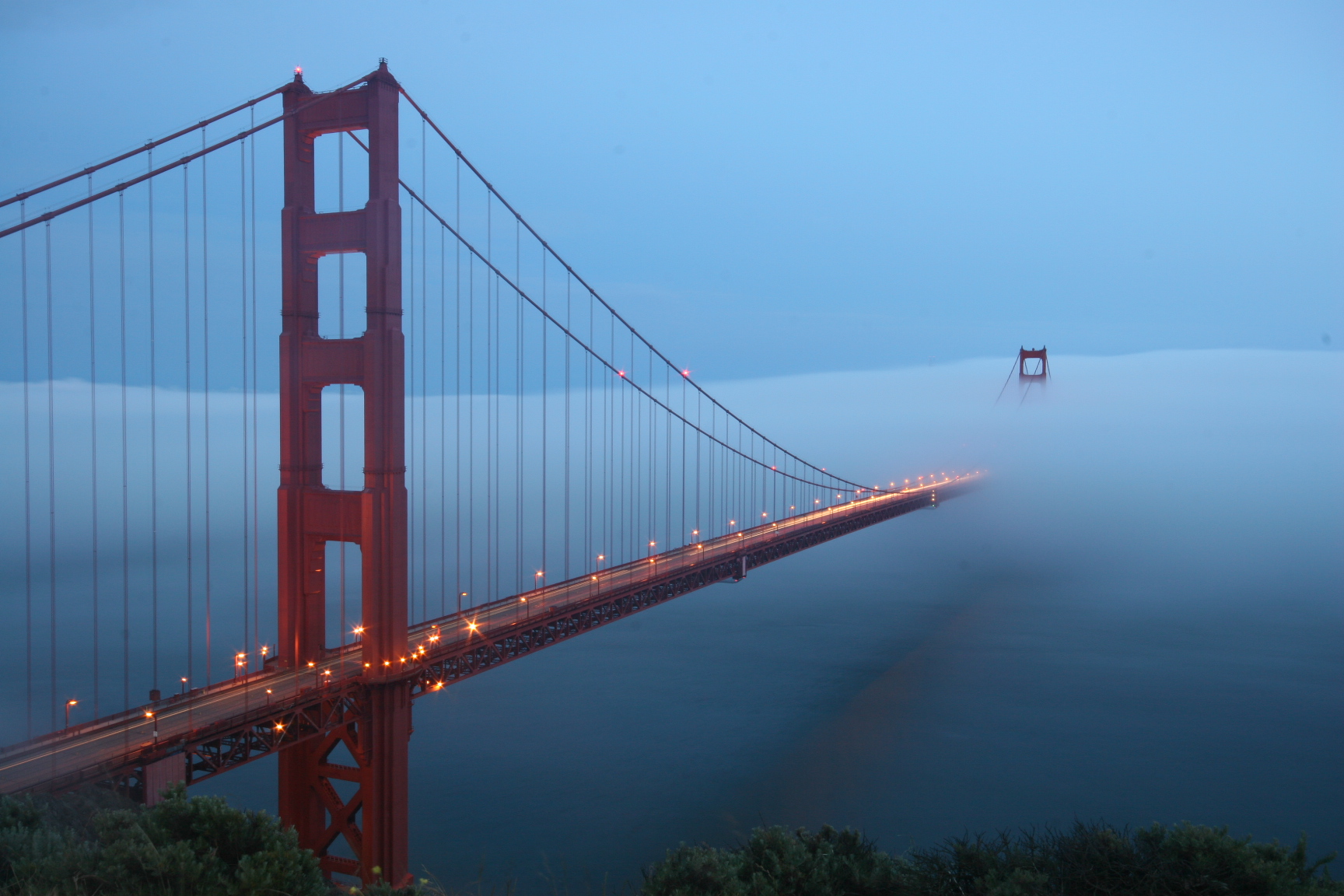
Fog is a familiar sight to Bay Area residents, whose days are often graced by the famous phenomenon. Now, thanks to Hangar 1’s Fog Point vodka, people from around the world can enjoy the low-hanging clouds late at night as well.

Hangar 1 sought new ways to produce its vodka in an effort to support water conservation in California, which is currently in the midst of its biggest drought in history. The answer was all around them, in the dense fog that regularly rolls in from the ocean and up into San Fransisco’s surrounding hills.

Recommended Videos

Related: Apparently, blasting bourbon barrels with infrared light makes for damn good whiskey

“Since moving to California and working with local farmers to create our citrus vodkas, I couldn’t help but talk with them about the California drought and how this is effecting local agriculture,” Hangar 1’s head distiller, Caley Shoemaker, told Digital Trends. “I looked up into the sky and asked myself, ‘Could we do something with this wonderful fog?'”

The company partnered with Fog Quest –a nonprofit initiative that helps low-income regions around the world collect water in sustainable ways– to construct mesh-canvas fog catchers in the isolated hills near the ocean. Wind from the ocean carries the moisture upward so the fog isn’t blocked by buildings and foliage. As the fog meets the mesh, millions of droplets form and trickle down into plastic pipes and collection barrels underneath. The natural process is similar to that of distillation, in which a liquid is vaporized and collected again as a liquid in a more purified form.

Once Hangar 1 collected the fog, they blended the water with a grape-based vodka, distilled from Bonny Doon’s Le Cigar Blanc 2012. The result is a “crisp, pure, and gluten free sipping vodka with elegant hints of pear, citrus, and honeysuckle,” and notes that Shoemaker said closely resemble the wines of pioneering Californian winemaker Randall Graham.

Shoemaker shares in our concerns that Bay Area fog-water may be affected by pollution and, as a result, would produce a subpar or even unsafe product. However, she said, “We took very special care to make sure that our water was 100% safe to drink through special filtration process.”

At $125 per 750ml bottle, Fog Point is a spirit to sip slowly. But if the price makes your eyes water, consider that Hangar 1 will donate all profits to conserving water in California. Now that’s something worth toasting to.

Dyllan Furness
Former Contributor
Dyllan Furness is a freelance writer from Florida. He covers strange science and emerging tech for Digital Trends, focusing…
Anthropic’s sensitive internal data was exposed, and AI helped make it happen
Even the company behind Claude isn't immune to AI-powered security threats, as researchers discovered some worrying vulnerabilities.
Claude Anthropic Featured

AI companies spend enormous amounts of time convincing us their technology is safe and secure. But what happens when those same companies become targets of increasingly sophisticated AI-powered attacks? Anthropic, the company behind Claude, is now facing that question. According to a Washington Post report, cybersecurity startup Cathedral discovered vulnerabilities that let its researchers access sensitive information in Anthropic's internal systems.

The researchers used AI agents to identify potential entry points in less than 12 hours. Interestingly, they didn't need to crack Claude itself. Instead, they exploited weaknesses in third-party business applications that Anthropic uses for everyday operations. Anthropic's security testing program disclosed the findings, which allows outside researchers to identify and report vulnerabilities.

Read more
A new startup wants to fix the military’s working-dog shortage with cloning and gene editing
Promising pitch, plenty of unanswered questions about the dogs.
a new startup wants to fix the militarys working dog shortage with cloning and gene editing warhound featured image

Military working dogs charge into places the rest of us would flee. So, I understand why anyone would want to breed tougher, healthier dogs for the job.

Warhound, a new startup from Colossal Biosciences co-founder Ben Lamm and Anduril co-founder Palmer Luckey, has stepped out of stealth with $200 million to clone and gene-edit working dogs for American troops, police departments, and emergency services (via TechCrunch).

Read more
AI can describe a picture, but it still struggles to understand blind users
A University of Maryland study finds that Be My AI often buries useful answers in lengthy descriptions, leaving blind users to work harder to get the information they need.
Blind Man using walking stick

AI can describe a picture, identify objects, and answer questions about what a camera sees. But when a blind user needs a quick answer, getting an entire spoken essay about the scene isn't exactly helpful. Researchers at the University of Maryland (UMD) have found that AI-powered visual assistance can leave blind users doing too much work to get the information they actually need.

The study, titled Say It My Way: Exploring Control in Conversational Visual Question Answering with Blind Users, examined how people interact with Be My AI, an AI-powered feature of the Be My Eyes app. The researchers found that users often received lengthy descriptions that didn't adequately address their immediate goals, forcing them to ask follow-up questions or find ways to steer the AI towards a more useful answer.

Read more