  1. Home
  2. Emerging Tech
  3. News

This University of Miami lab recreates category 5 hurricanes in a 30,000 gallon tank

Add as a preferred source on Google

Think most people die in hurricanes due to wind? Think again. You’re much more likely to die as a result of storm surge, and that’s what researchers are studying in a new $45 million dollar lab at the University of Miami.

Called SUSTAIN, short for SUrge-STructure-Atmosphere INteraction, the lab aims to understand both the ocean’s effect on the atmosphere itself as well as on-land infrastructure. This research is vital: not only will better understanding of storm surges lead to more flood-resistant structures, but will improve forecasting of this often overlooked danger.

HURRICANE STRONG: STORM SURGE BRYAN NORCROSS, THE WEATHER CHANNEL

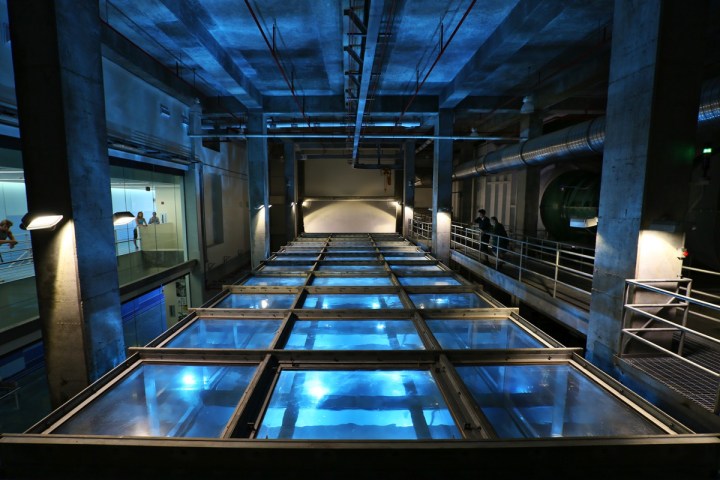
SUSTAIN’s hurricane in a tank is colossal. The tank itself measures 75 feet long by 6.5 feet high and holds some 30,000 gallons of water, roughly six times larger than any hurricane simulator ever built. It also produces the severest of conditions: top winds peak out at over 200 miles per hour — stronger than almost any hurricane on record.

Recommended Videos

Tank operators carry out research by recreating conditions from previous storms and then study their effects on the water. How the waves form and move could be vital to understanding how best to forecast surge movement and intensity, while the spray created from the high winds might be important to understand how storms get their strength.

Why would sea spray matter? There’s at least two possible reasons. As spray is picked up, it evaporates and transfers heat to the atmosphere. Sea water also includes an important compound — sodium chloride — which is known by meteorologists to be an extremely efficient substance to form the heart of clouds and raindrops, or “cloud condensation nuclei.”

Meteorologists have a good handle on these processes on land, but over water it’s a different story. There are theories on how this air-sea interaction may alter hurricane intensity, but frankly there is little in the way of concrete evidence that there’s any link. If everything goes as planned, SUSTAIN will help scientists fill that knowledge gap.
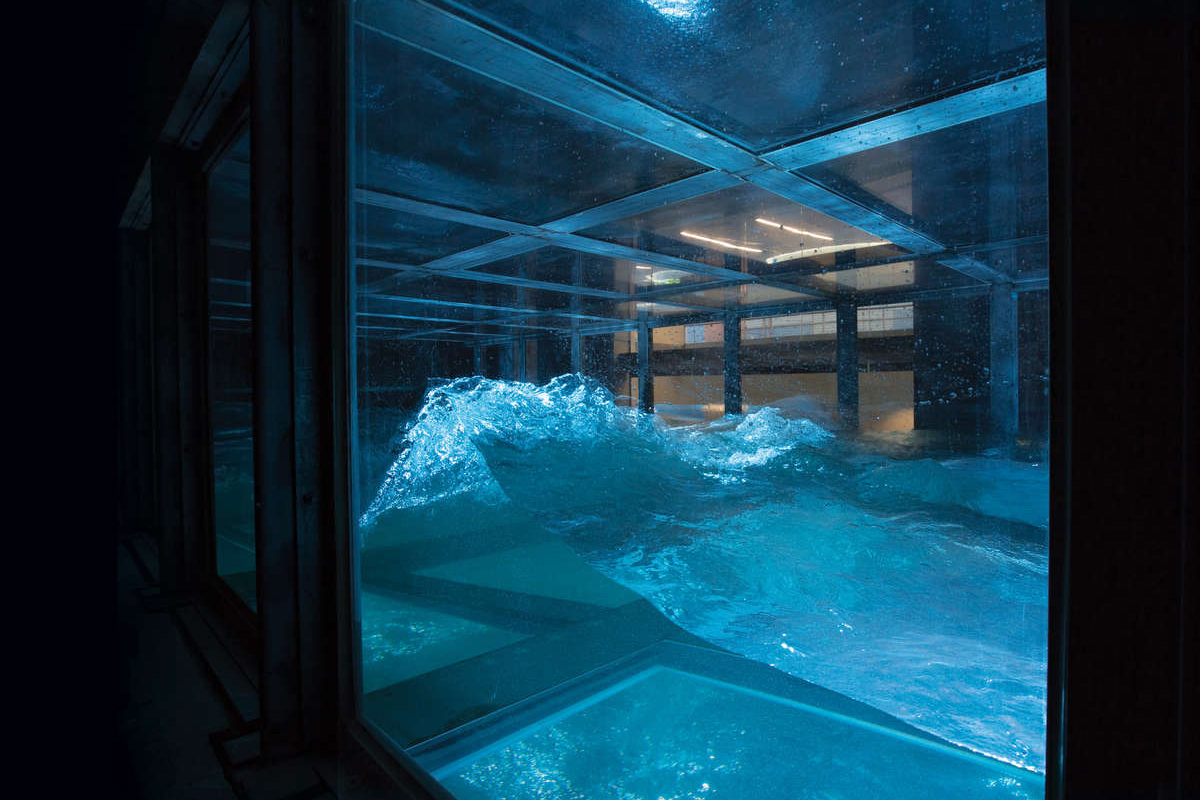
Another side to SUSTAIN’s research is effects of storm surge on infrastructure. Researchers plan to test wave effects on various structure and bridge design in order to gauge its durability and improve construction. While we may never be able to create a “surge-proof” building, SUSTAIN’s research may at least be able to mitigate some of the damage.

Other planned work for the team includes studies to improve satellite imaging of the world’s oceans, development of better sea-based instrumentation, and effects of waves, winds, and currents on ocean biology.


Ed Oswald
For fifteen years, Ed has written about the latest and greatest in gadgets and technology trends. At Digital Trends, he's…
Your holiday photos could help scammers figure out exactly where you are
AI can extract surprisingly precise location clues from innocent-looking Instagram and Facebook posts, making phishing scams much more convincing.
Photo on a holiday during sunset

That innocent holiday snap might be doing more than showing everyone how good the weather is. A new scam highlighted by The Guardian shows how criminals can use AI to analyse photos posted on Instagram and Facebook, work out where they were taken, and then use that information to make phishing messages look frighteningly legitimate.

The trick is surprisingly simple. Imagine posting a few family photos from Porto without mentioning the city anywhere. A few days later, a text arrives claiming that your bank detected unusual card activity while you were travelling in Porto and asking you to verify your details through a link. Because the message contains a detail that only someone who knows about the trip should know, it suddenly feels much more convincing. Except the scammer may never have known about the trip at all. The photo told them.

Read more
Meta and Google just got beaten by an AI giant you might not expect
Alibaba's Qwen AI model running on an Android phone.

The AI race usually revolves around familiar names like OpenAI, Google, Meta, and Anthropic. But when it comes to models developers can actually download and build upon, another company has raced to the front — and by quite some distance. Alibaba says its Qwen family of open-weight AI models has crossed 3 billion downloads globally over the past six months. That puts Qwen ahead of some of the biggest names in AI, including models from Meta and Google.

The difference is especially striking in Hugging Face data for 2026. Google’s open models have recorded around 418 million downloads, while Meta sits at roughly 227 million, according to Hugging Face’s latest State of Open Models report. Qwen, meanwhile, is becoming much more than one popular model. Alibaba has released more than 460 Qwen models, and developers have created over 300,000 derivative models from them.

Read more
Meta promised to stop creepy AI glasses videos, but they’re still all over Instagram
Instagram app

Smart glasses can be genuinely useful, whether you’re taking a hands-free photo, listening to music, or asking an AI assistant about whatever is in front of you. Unfortunately, putting a camera on someone’s face also opens the door to some much less pleasant uses. That’s becoming a problem for Meta.

Instagram head Adam Mosseri said in July that the platform was working to remove videos in which people use Meta glasses to film and harass others secretly. However, a new Business Insider investigation suggests the cleanup isn’t going quite as smoothly as Meta might have hoped. The publication found dozens of pickup and prank videos still available on Instagram weeks after Mosseri’s comments. Some came from popular or verified creators, and several showed women being approached and recorded in public through Meta glasses.

Read more