1. Home
  2. Emerging Tech
  3. News

You can finally buy the Impossible Burger at grocery stores

Add as a preferred source on Google
Image used with permission by copyright holder

You’ll soon be able to cook an Impossible Burger in your kitchen once the popular plant-based meat substitute reaches certain California grocery store shelves on Friday. 

The brand will only be available at gourmet grocer Gelson’s Markets in California, but a nationwide rollout will follow. Later this month, the East Coast will join California, and the rest of the country can expect to find Impossible Foods products in their grocery stores throughout the end of this year and the beginning of 2020, according to an official statement from Impossible Foods released Thursday.

Recommended Videos

Impossible Foods will be joining its plant-based competitor, Beyond Meat, in the meat section of the grocery stores.

“We can’t wait for home cooks to experience the magic — whether using Impossible Burger in their family favorites or inventing new recipes that go viral,” said Impossible Foods’ CEO and founder Dr. Patrick O. Brown, in the company’s statement.

Up until now, the Impossible Burger was only available at restaurants. Burger King serves up the Impossible Whopper, White Castle offers an Impossible Slider, and Red Robin is the largest restaurant chain in the country to carry the Impossible Burger. 

Other restaurants have jumped on the plant-based bandwagon by carrying Beyond Meat options. Subway offers a Beyond Meat Meatball sub sandwich, and Carl’s Jr. and Dunkin Donuts also serve a form of the plant-based meat substitute. Even KFC got in on the trend with Beyond Fried Chicken at select stores. 

While there are many other meat substitute brands on the market, by and large, Impossible Foods and Beyond Meat reign in terms of popularity. Though, in a taste test, Digital Trends is partial to the Impossible Burger. 

At the Consumer Electronics Show (CES) earlier this year, Digital Trends gave the Impossible Burger our Top Tech of CES award. Plant-based burgers like the Impossible Burger or Beyond Burger strive to look, smell, and taste like meat, but are made from plant-derived compounds.

The Impossible Burger has 19 grams of protein, with a majority of that coming from soy. Other ingredients include potato protein, heme (which Impossible Foods says is what makes “meat” taste like meat), as well as coconut and sunflower oils, which make it “sizzle” on the grill like a meat burger would. 

Consumers are increasingly turning to plant-based substitutes to replace meat as a more eco-friendly option. According to research conducted by Midan Marketing, 70% of meat-eaters substituted a non-meat protein in a meal at least once a week.

Allison Matyus
Former Digital Trends Contributor
Allison Matyus is a general news reporter at Digital Trends. She covers any and all tech news, including issues around social…
Bacteria could be the secret sauce to keeping your computers cool
Scientists find bacteria can grow thermal materials that outperform current cooling tech.
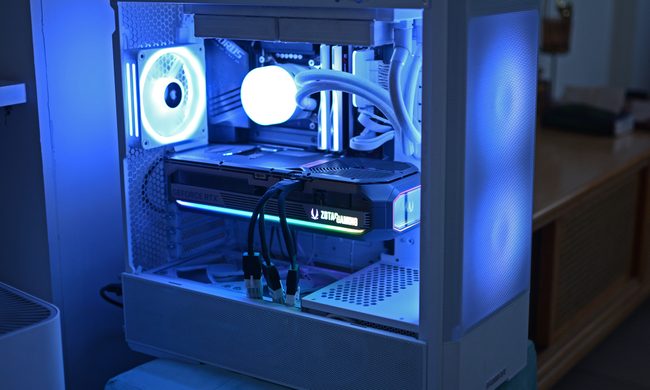
The Zotac RTX 5070 Ti Amp Extreme Infinity plugged into a white gaming PC

Your PC and laptop runs hotter every year, especially now that AI tools and heavy software push it harder than ever. Heat is a real bottleneck for performance, which is why people have gone to wild lengths to solve it, like strapping an actual ice machine to an RTX GPU. A new study points to a far less extreme fix for this problem, and it involves bacteria (via TechXplore).

Researchers have developed a new way to grow thermal interface materials, the substances that sit between a chip and its cooling system to help heat escape faster. The process involves feeding bacteria sugar and metal ions, letting the microbes build the material naturally instead of relying on traditional chemical manufacturing.

Read more
Bored of reading papers? This AI tool turns them into TikTok-like videos
PaperTok brings academic papers to people with short attention spans
Head, Person, Face

Academic papers aren't what you'd consider a fun read. For the average person, the dense, long, and field-specific language-filled papers can be quite intimidating to get into. These are usually packaged as PDFs that look like they were designed to test your willpower. A group of University of Washington researchers thinks there may be a better way to get that work in front of regular people. They are turning the papers into short-form videos.

The tool is called PaperTok, and it uses AI to help researchers convert academic papers into short, social-friendly videos. Think TikTok, except the idea is to explain research instead of sharing brain-rotting content. The best part? PaperTok is building a platform around scientists and researchers who are involved in the process, rather than simply using AI to summarize these papers.

Read more
As AI voices get harder to spot, ElevenLabs adopts Google’s SynthID to help you sniff the fakes
Artificial Intelligence

There was a time when spotting AI-generated content was almost a game. Images came with extra fingers, chatbots wrote like overly enthusiastic interns, and synthetic voices had an unmistakable robotic edge. Those days are disappearing fast.

Today, AI voices can laugh, whisper, pause naturally, and even sound emotional enough to fool many listeners. That’s exciting for creators, but it’s also creating a growing trust problem. If you can’t tell whether a clip is real or AI-generated, how do you know what to believe?

Read more