  1. Home
  2. Emerging Tech
  3. News

Nike rolls out the first post-career Kobe Bryant sneaker

Add as a preferred source on Google

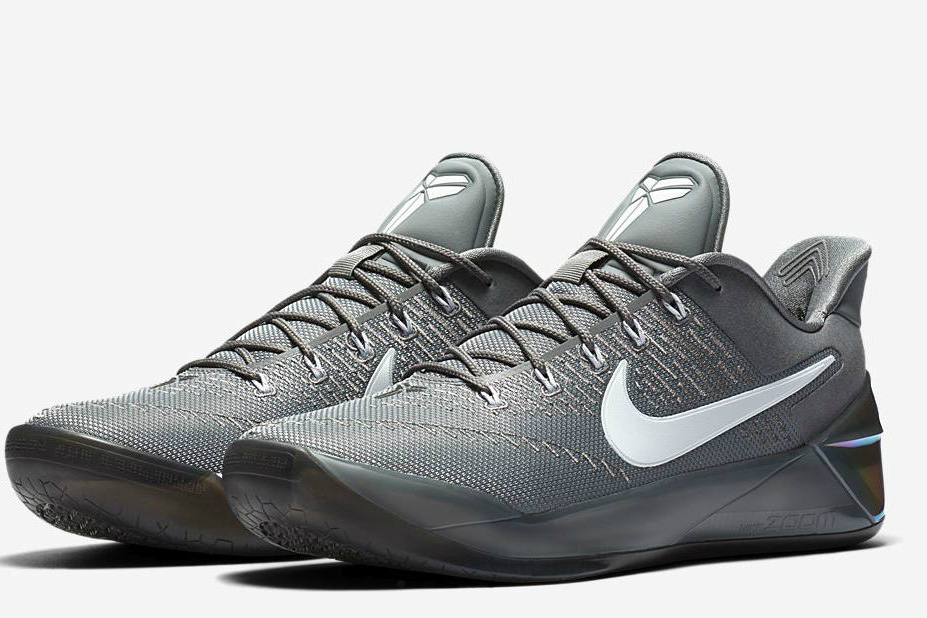
Michael Jordan set the bar pretty high on the basketball court, and set it equally high at retail stores with his massively popular post-career Jordan brand shoe line. Jordans command close to 60 percent of the U.S. basketball shoe retail market under the Nike umbrella, according to Yahoo. And now Nike is launching footwear that could potentially take retired star Kobe Bryant down the same path, with the release of the new Nike Kobe A.D. shoe, as reported by Sneaker News.

Recommended Videos

While not a stand-alone sub brand, as Jordan is with Nike, the new Kobe A.D. represents the first edition of his signature line after his retirement following the end of the 2015-2016 season.

As Nike itself admits on its site, “We’ve officially reached life after Kobe. A life where new talent will pick up right where he left off on the hardwood.” That’s corporate-speak for, “we still think there’s life in the Kobe franchise, so let’s keep the band together.” And while Kobe has long been a Nike star with his first shoe released in 2005, prior to that he wore the three stripes of Adidas. No doubt the design process for sneakers must be exhaustive, given the production and marketing logistics, but there are some designs that may leave you scratching your head.
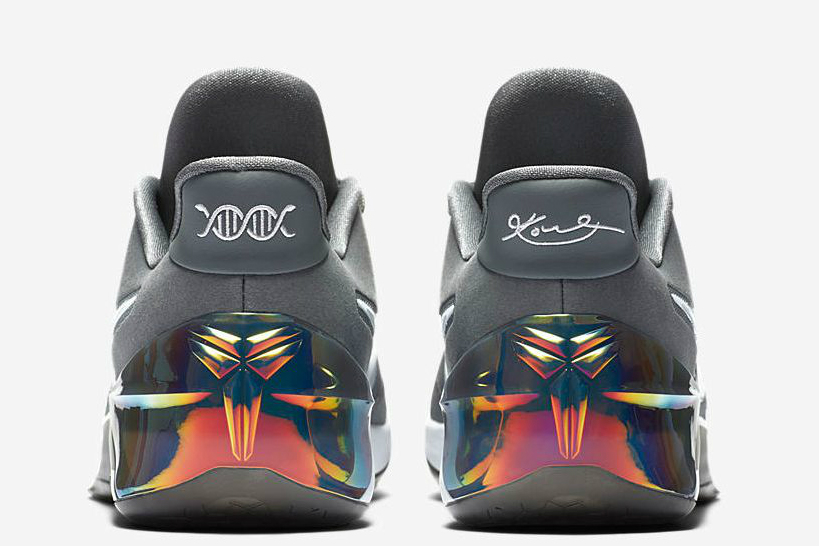
The decidedly sleeker, low profile Kobe A.D. includes an upper with Dynamic Flywire cables and a Lunarlon midsole with Zoom Air units in the heel. It’s been long known that Bryant, unlike other world class players, prefers low-tops as opposed to conventional high-tops. The heel tabs look like a snake on the left (owing to his “Black Mamba” nickname), with his signature on the right.

This spiffy new Kobe A.D. edition will be available just in time for holiday gift giving, too: November 22 at 10 a.m. EST. Nike lists it at $160 dollars.

Brinke Guthrie
Former Contributor
Brinke’s favorite toys include his Samsung Galaxy Tab S, Toshiba Chromebook 2, Motorola Moto G4, and two Kindles. A…
Your future AR glasses might finally stop making the real world look weird
Researchers have developed a new display technique that keeps virtual objects realistic without dimming the real world.
Samsung AR Glasses

One of the biggest promises of augmented reality is blending digital objects seamlessly into the real world. Ironically, today's AR glasses often make the real world harder to see. Researchers at the Shibaura Institute of Technology (SIT) in Japan, led by Assistant Professor Xiaodan Hu in collaboration with Dr. Yan Zhang and Professor Xubo Yang from Shanghai Jiao Tong University in China, and Professor Kiyoshi Kiyokawa from Japan's Nara Institute of Science and Technology, have developed a new AR display technique that aims to make virtual objects look realistic without reducing visibility of the real world. The study was published in IEEE Transactions on Visualization and Computer Graphics.

The biggest AR problem isn't virtual objects; it's everything around them

Read more
Anti-surveillance clothing is getting cheaper, but don’t expect an invisibility cloak
Affordable shirts now claim to confuse facial recognition, although their protection depends heavily on the camera and software watching you
Chart, Plot, Adult

Anti-surveillance clothing is starting to look less like an art-school experiment and more like something you could actually wear outside. Shirts designed to confuse facial recognition systems now cost about as much as ordinary streetwear, although buying one won’t make you disappear.

The Guardian reports that designers are using face-like prints, unusual cuts and infrared lights to interfere with computer vision. These techniques target specific weaknesses, so their success depends on what happens to be watching you.

Read more
This spinning drone hides in plain sight using a visual illusion
This drone doesn't turn invisible. It tricks your brain into thinking it has.
Phantom Twist

For decades, engineers have chased the dream of an invisible drone. The usual approaches have involved transparent materials, camouflage coatings, or complex optical systems that bend light around an object. Researchers at Northwestern University decided to take a completely different route. Instead of hiding the drone itself, they chose to fool the human eye.

The result is Phantom Twist, an experimental drone that spins so rapidly it almost disappears into the background. It's not technically invisible, but to anyone watching, it looks more like a faint blur than a flying machine.

Read more