

As predicted last week week, Barnes & Noble has brought color to the otherwise drab monochromatic world of e-books with the first color e-book reader in the U.S., the Nook Color. What the company calls “the ultimate reading experience” was unveiled at a grandiose event at the company’s Union Square bookstore in New York City.
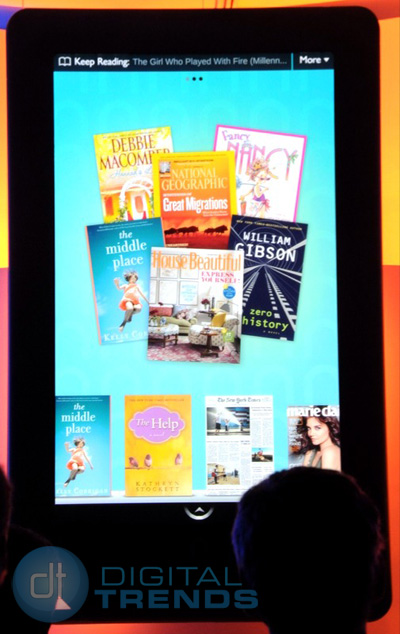 The Nook Color eschews the standard E-Ink screen for a 7-inch, 1024 x 600 color LCD showing 16 million colors, and running a version of the Android smartphone OS. The Wi-Fi-only Nook Color includes 8GB of internal memory, enough to hold 6,000 books, plus a microsSD card slot for additional memory. It’ll go on sale on Nov. 19 for $249, but pre-orders are now being accepted.
B&N claims the Nook Color screen is covered by a proprietary lamination to maximize readability and minimize glare. In addition to books, the Nook Color also has a full Web browser, plays videos from within books and magazines, but is not Flash compatible. It weighs less than a pound, and is less than an inch thick.
Also included is Nook Friends, enabling “social reading” with access to Facebook, Twitter and Google for readers to discuss, share, recommend and borrow books, often with a single click. You’ll be able to copy and paste individual lines from books and post them with comments.
B&N claims it can get you a book in 12 seconds, and the battery lasts for eight hours of continual reading. This battery life compares unfavorably with both the iPad and the Kindle, perhaps Nook Color’s biggest drawback. The iPad gets 10 hours with a larger screen and even showing video, while the Kindle need not be recharged for weeks. The Nook Color becomes yet another device that needs to be plugged in every night, and will run out of reading juice on long international flights.
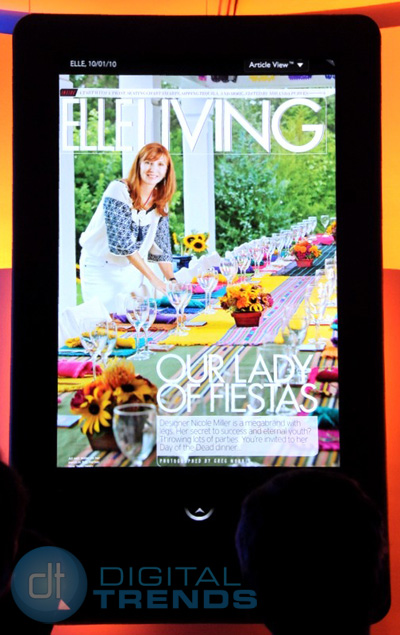
Conde Nast and Hearst are B&N’s primary magazine partners. Within a magazine, you can tap on an individual article to go full screen.
 Extras also include Sudoku, chess and crossword puzzles, plus a digital music player Pandora, and B&N has invited developers to create reading-centric apps with a Nook developer program.
B&N claims it will offer more color content than any other e-reader platform, with access to two million books, as well as dozens of newspapers and magazines such as USA Today, US Weekly, Elle, and The NY Times, viewable in landscape or portrait.
The reader also caters to children with Nook Kids, which will offer hundreds of picture books with more coming soon, many with interactive animations, video and text-to-speech read back capability.
While it is unlikely Apple will be worried – the Nook is purely a read-only device – Amazon and its suddenly so-last-week, black-and-white Kindle may feel threatened. A few hours before the Barnes & Noble event, Amazon sent out a press release extolling Kindle sales.


