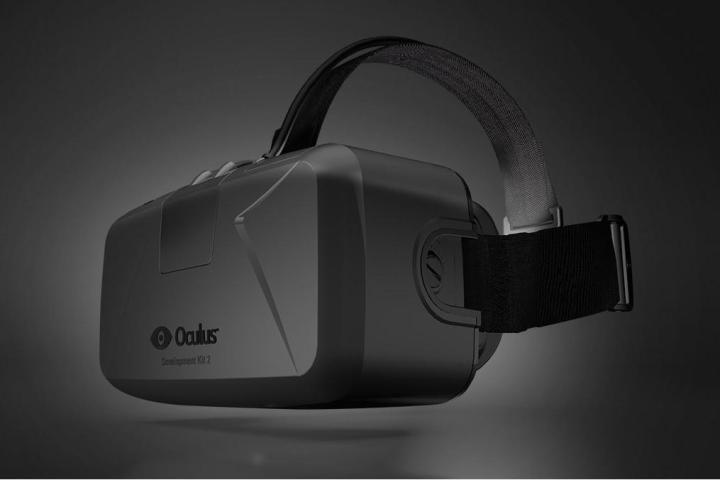
Forget birthday parties at Chuck E. Cheese’s – Oculus Rift has bigger fish to fry. Well, at least that’s what the Defense Advanced Research Projects Agency (DARPA) appears to think. On Wednesday, the military-technology agency offered a glimpse at how it hopes to use Oculus Rift as a tool to give the wearer an immersive view of data, part of its wonderfully named cyberwarfare program, “Plan X.” In other words, “It’s like you’re swimming in the Internet,” according to Frank Pound, Plan X program manager, in an interview with Wired.
The fantastical demo, which took place at the Pentagon, shows a user (“KingSlayer96”) navigating through a number of missions, each represented by an interactive, three-dimensional Death Star-like sphere. There are rotating icons, animated lines and dots, a countdown clock, and an end-of-mission pop-up window summarizing the mission (in this case, KingSlayer96 failed).
If it looks like a video game, it’s partly by design. The demo was a proof-of-concept generated by San Francisco-based design firm Frog Design and Austin-based simulation software company Intific. But make no mistake: The aspirations DARPA has for the use of the virtual-reality headset are serious.
While the technology is years from actual implementation, Pound left the door open to the possibility of using it for offensive hacking, defense and reconnaissance.
Pound also noted that this approach is tailored to Plan X’s staffing needs. “The genre of people that Cyber Command are working to recruit are fresh out of high school and college,” he said. “They’re going to grow up with Oculus on their head. We want to adapt to provide that kind of interface.”
Hear that, students? The next time Mom scolds you for playing that Oculus Rift-compatible first-person shooter, tell her it’s an investment in a military career.
Editors' Recommendations
- Best video game deals: PlayStation 5, Xbox S and X, Nintendo Switch
- Here’s what we’re playing on National Video Game Day
- A gaming Tesla? New Model S to use same GPU as PlayStation 5 and Xbox Series X
- MLB stars are using video games to hone their skills during lockdown
- U.S. video game industry sets sales record in 1st quarter as players stay home