Apple CEO Tim Cook recently sat for an interview with Wired and dished on Apple’s focus in the foreseeable future. Health and wellness stood out as a recurring element. AirPods, which recently landed a hearing assistance facility, are visibly at the center of those ambitions. Now, Bloomberg reports that the earbuds will soon add cameras and health sensors to their arsenal.
At one point in time, Apple was reportedly working on integrating cameras into the wireless earbuds, but the project was put on ice. It seems that the recent explosion of AI-based workflows across nearly every product category inspired Apple to revive the endeavor.
“With the company rallying around AI and its Apple Intelligence platform, the project was brought back to life,” notes the Bloomberg report. Notably, Apple has tasked teams to work on it as a priority project, though it might take a couple of years to materialize.
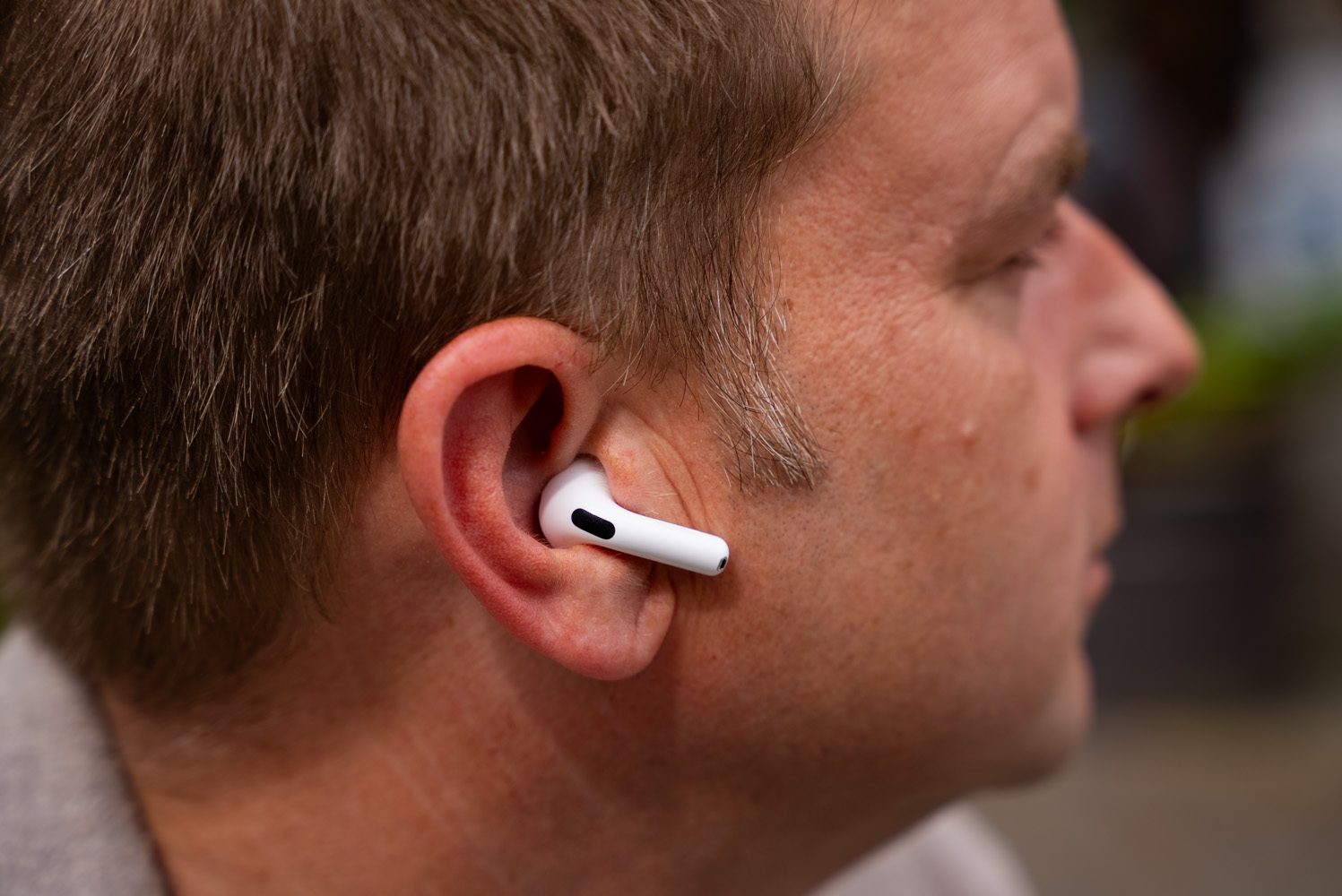
Even though it sounds like yet another “first” from Apple, the idea of cameras on audio gear is not exactly a novel concept. Moreover, Apple won’t be the only player in the game and might even lose the race to fellow wearable and AI enthusiast Meta.
According to The Information, Meta is also working on earbuds with onboard cameras. Meta’s implementation, which is reportedly in development under the CameraBuds codename, will embrace generative AI chops for facilities like language translation and object identification.
There is already plenty of precedent for such facilities. Earlier this month, the Meta Ray-Ban smart glasses received an update that introduced capabilities like Live AI, translation, and Shazam-powered music identification. Live AI is particularly impressive, as it relies on AI to make sense of the world as it appears within the onboard camera views.

Apple already has such facilities ready for deployment in its software-hardware ecosystem. Take, for example, Visual Intelligence, which only requires users to point their camera and perform tasks such as translation, extracting text information, looking up details about businesses, and even launching a Google Search.
Health sensing is the next avenue for AirPods
In addition to putting a camera on the AirPods, Apple is reportedly working on adding biosensors into the mix. The priority is to somehow fit a heart rate sensor on the earbuds, but down the road, the company is hoping the earbuds can also measure temperature levels and keep an eye on physical activity patterns.
Once again, those ideas are not wildly ambitious. Far from it, actually. The Sennheiser Momentum Sport and Anker Soundcore Liberty 4 earbuds can already measure heart rate, though their accuracy has been up for debate.
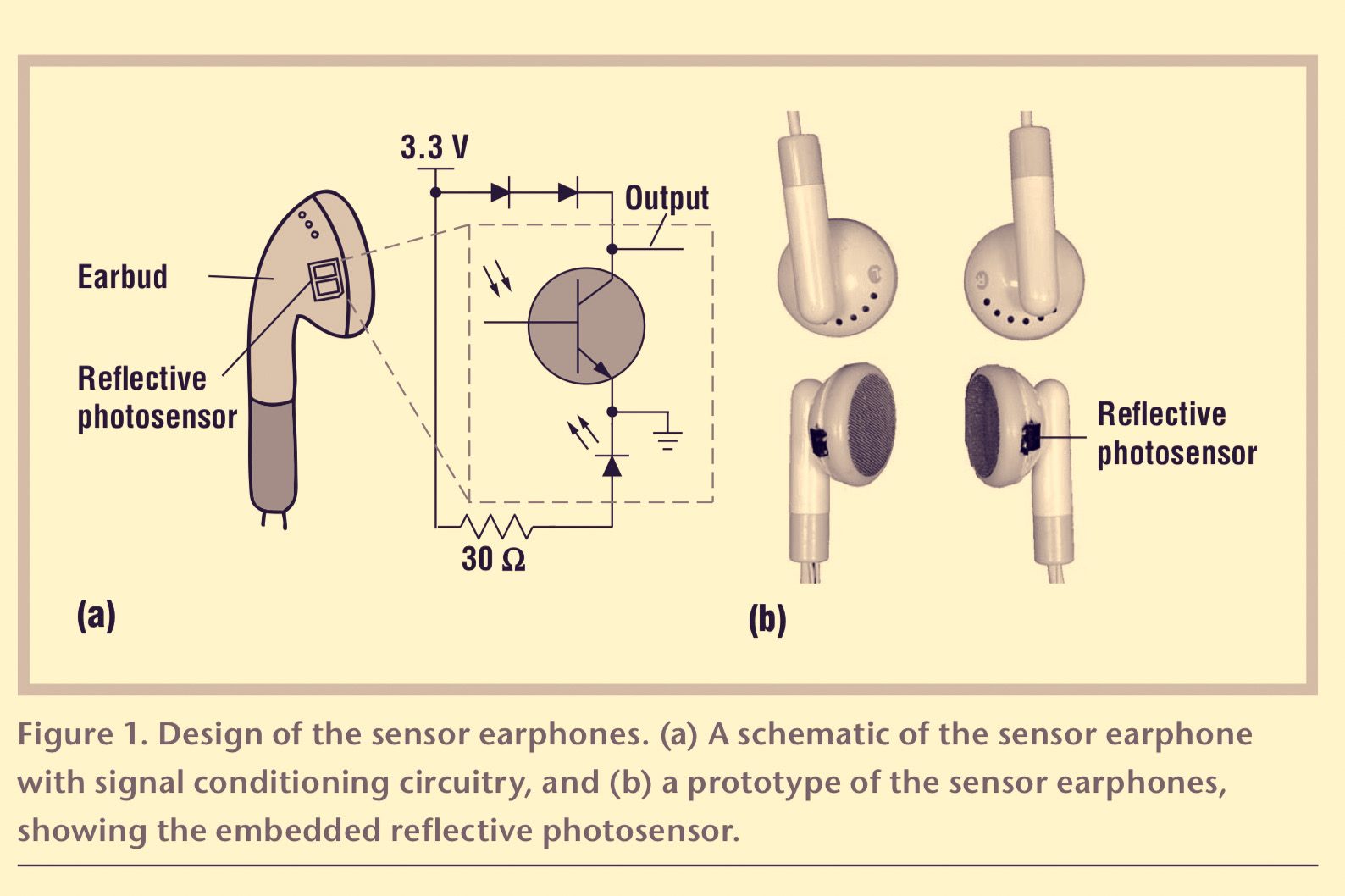
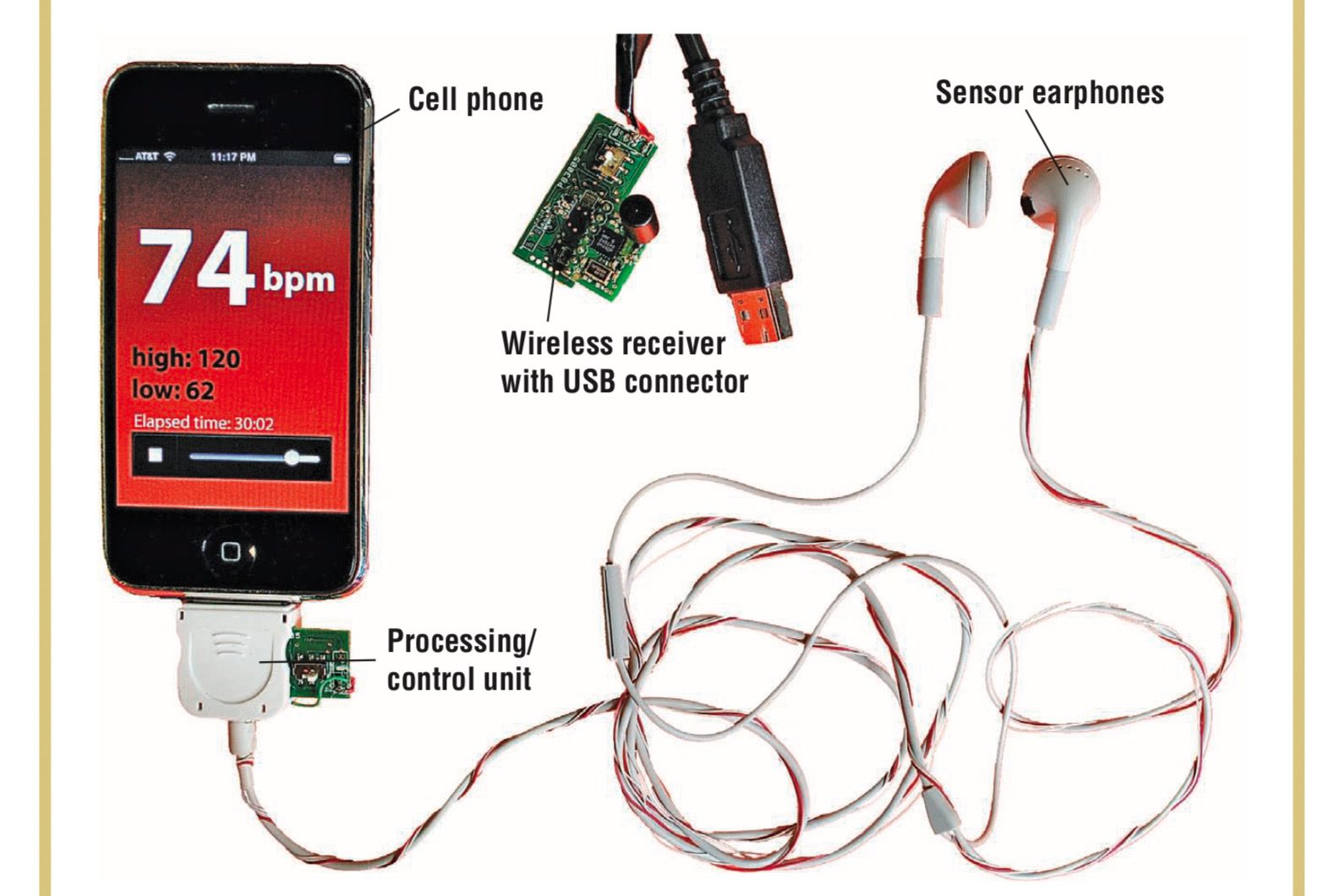
The scientific community, however, seems pretty bullish on the whole idea. In a paper presented at the 2009 International Symposium on Wearable Computers, experts from the Harvard-MIT Division of Health Sciences and Technology detailed a “heartphone” prototype that integrated a photoplethysmography (PPG) sensor in the earbuds.
The device was rated as highly reliable and only resulted in an error rate of 0.63% during tests. A separate research note from the MIT Media Lab described a system that measures bilateral blood volume pulse (BVP). “The system fits inside ordinary earbuds to provide measurements such as heart rate and beat-to-beat changes in heart rate variability (HRV),” says the paper.
Another paper describes how EarPPG can actually be used for identity verification as well. “[It’s] a new biometric modality that takes advantage of the unique in-ear photoplethysmography (PPG) signals, altered by a user’s unique speaking behaviors,” says the research paper.
Apple is considered one of the world’s wearable health pioneers, and the company certainly has the engineering acumen to pull off heart rate tracking (and camera vision) on the AirPods. It’s only a matter of time before the company perfects the formula, but the ambition is definitely there, right at the summit, even.
“It’s clear to me that if you zoom out way into the future, and you look back and ask what Apple’s biggest contribution was, it will be in the health area,” Apple chief Cook told Wired veteran Steven Levy in the interview. “That’s what I really believe.”
We just might have to wait a couple of years, or even more, for the aforementioned health and camera capabilities to appear in AirPods.