Sony’s latest tablet is now, check out our full review of the Sony Xperia Tablet S.
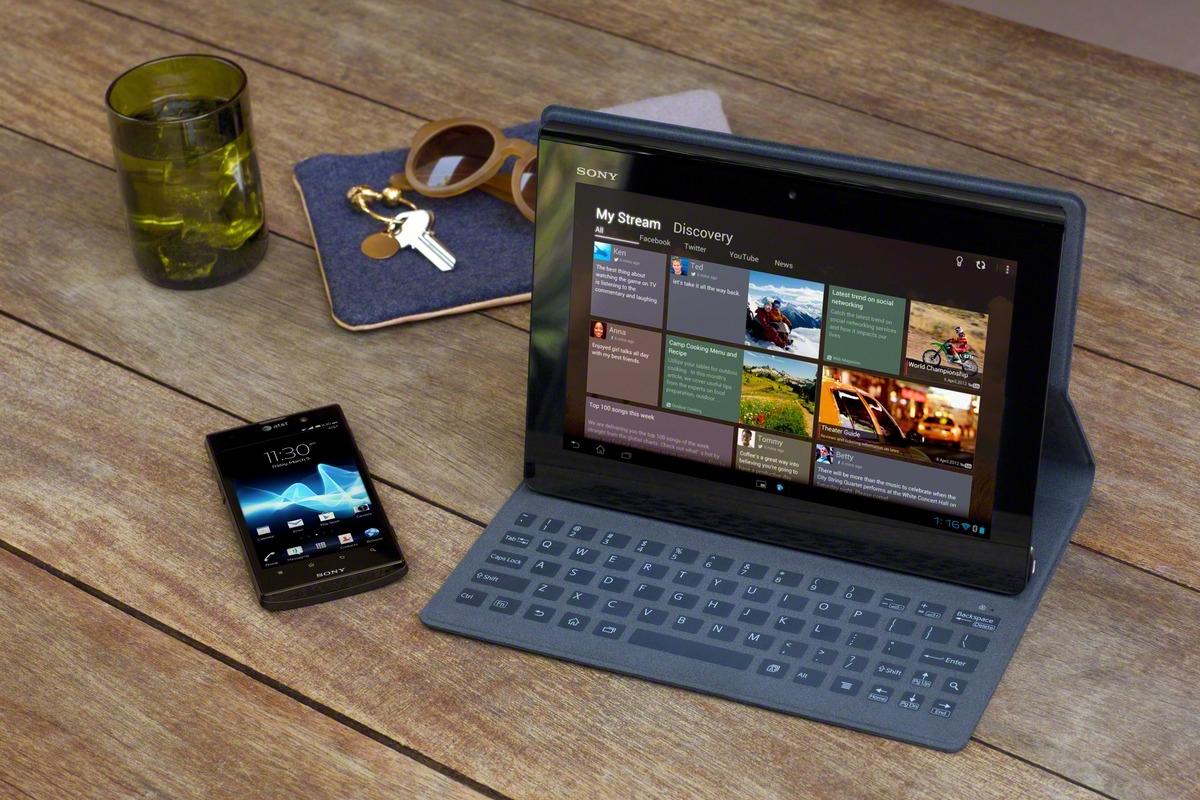
If at first you don’t succeed, try, try again. This is the motto at Sony, whose representatives described the tablet market as a learning experience when they showed me their second stab at a full-size iPad competitor, the Xperia Tablet S (SGPT121US). The new tablet retains much of the charm and design of last year’s Tablet S, with a few key enhancements. This time around, Sony is pushing new features like a universal remote, a Watch Now app that recommends shows on TV, child content controls, and new small apps, which enable limited multitasking on the Android tablet.
A refined design
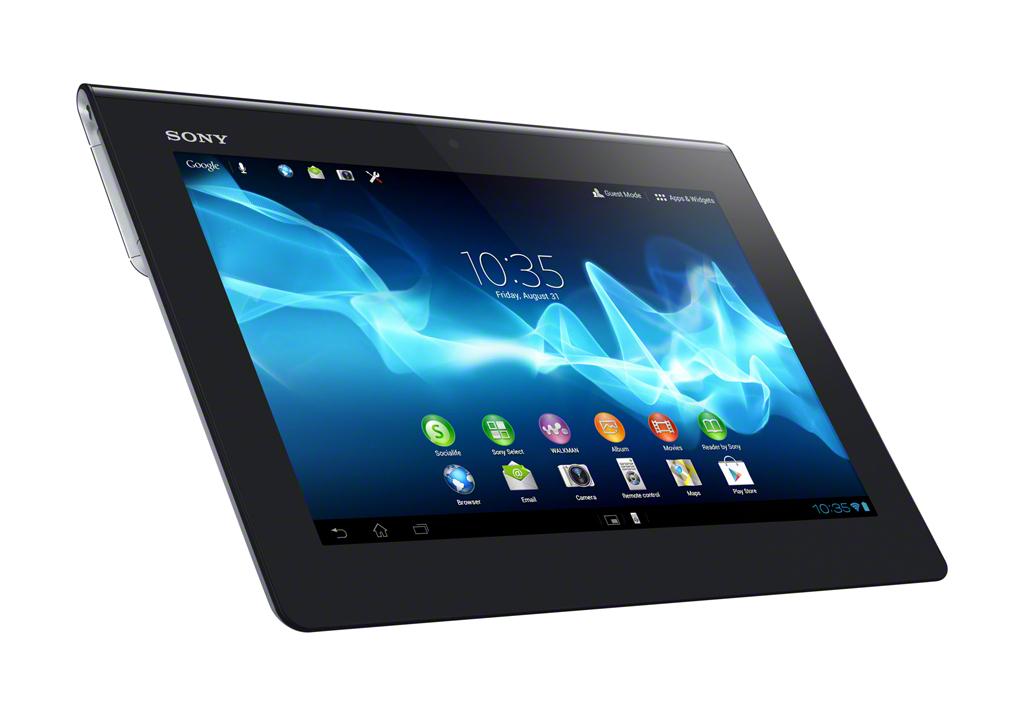 Naturally, the first thing I noticed when I got to hold the new Xperia Tablet S a few weeks ago, was how much of an improvement it is over the original. While the first Tablet S was one of the only unique looking tablets on the market, it was also a bit thick. This new design retains the odd folded-back look of its predecessor, but thins everything out, making it both memorable and more convenient to use. It’s still a fully plastic tablet, but outside of the iPad, few tablets are made of metal.
The UI of the tablet is mostly the same, though it’s running on Android 4.0 (Ice Cream Sandwich) this go round, which is a subtle improvement over Android 3.2 (Honeycomb). The UI is similar to Sony phones, with blues, whites, and blacks dominating the color palette, but it’s certainly an improvement over the purple look that the last Sony tablets had.
The screen size is, again, 9.4 inches, which is a really unique size for an Android tablet. I never got much hands-on time with the first Sony tablet, but I’m a fan of tablets in the 8-9 inch range and the Sony tablet is almost there, measuring smaller than the 10.1-inch usual screen size for an iPad competitor. (The iPad itself measures 9.7-inches diagonally.) I will have to test out more apps on it, but the Sony apps, of course, ran quite well on this screen size, and it was comfortable to hold. And hey, they tell me it’s “Splash Proof” as well, which is neat, right?
Small apps & kid control
Like Samsung, Sony is trying to help Android do more, and that means multitasking. The Xperia Tablet S has several “small apps” built into it, like a calculator, Web browser, voice recorder, timer, and infrared remote. These apps are pretty much interactive widgets that can work alongside already running applications, much like Samsung has done. I wish I had a picture to show you, but we were not allowed to photograph at the event and Sony has not revealed any pictures yet. Supposedly, any widget you install can be used as a Small App, though details on this feature are still a bit fuzzy.
Android still requires a single Google login, but Sony has devised a system where you can lock access to certain apps for kids or friends who might want to use your tablet, essentially making secondary profiles for up to 10 other users. This “Guest Mode” is a cool idea that hasn’t been explored much. You definitely might not want your kid messing around inside your Mint.com app, for example.
TV control
Though I am a cord cutter, Sony executives said that one of the most popular features of the first Tablet S was its infrared sensor, which allowed it to act as a universal remote. This feature is back and improved. The new Xperia can control Sony products as well as TVs by other manufacturers, if you’re not a die-hard Sonyist.
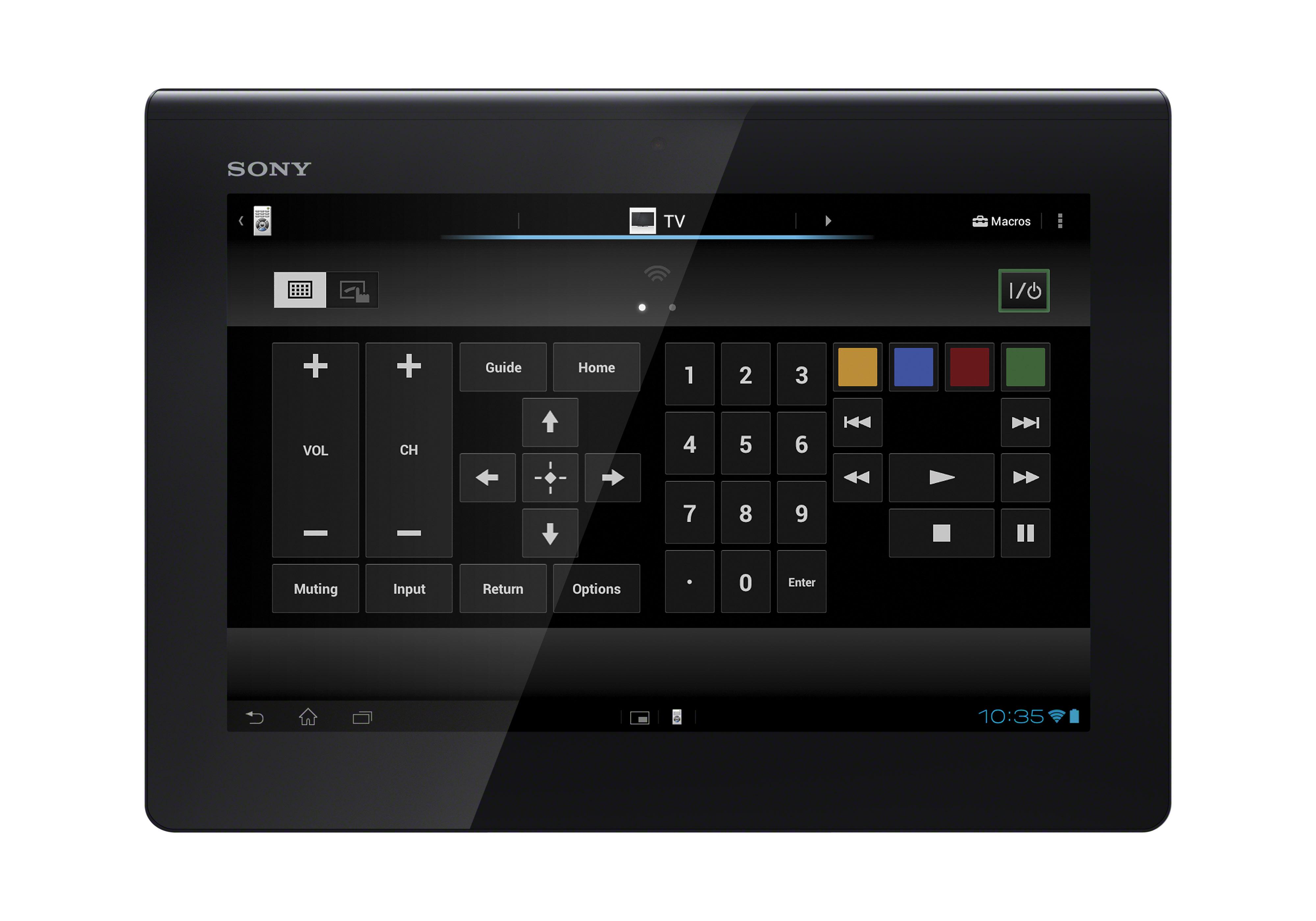
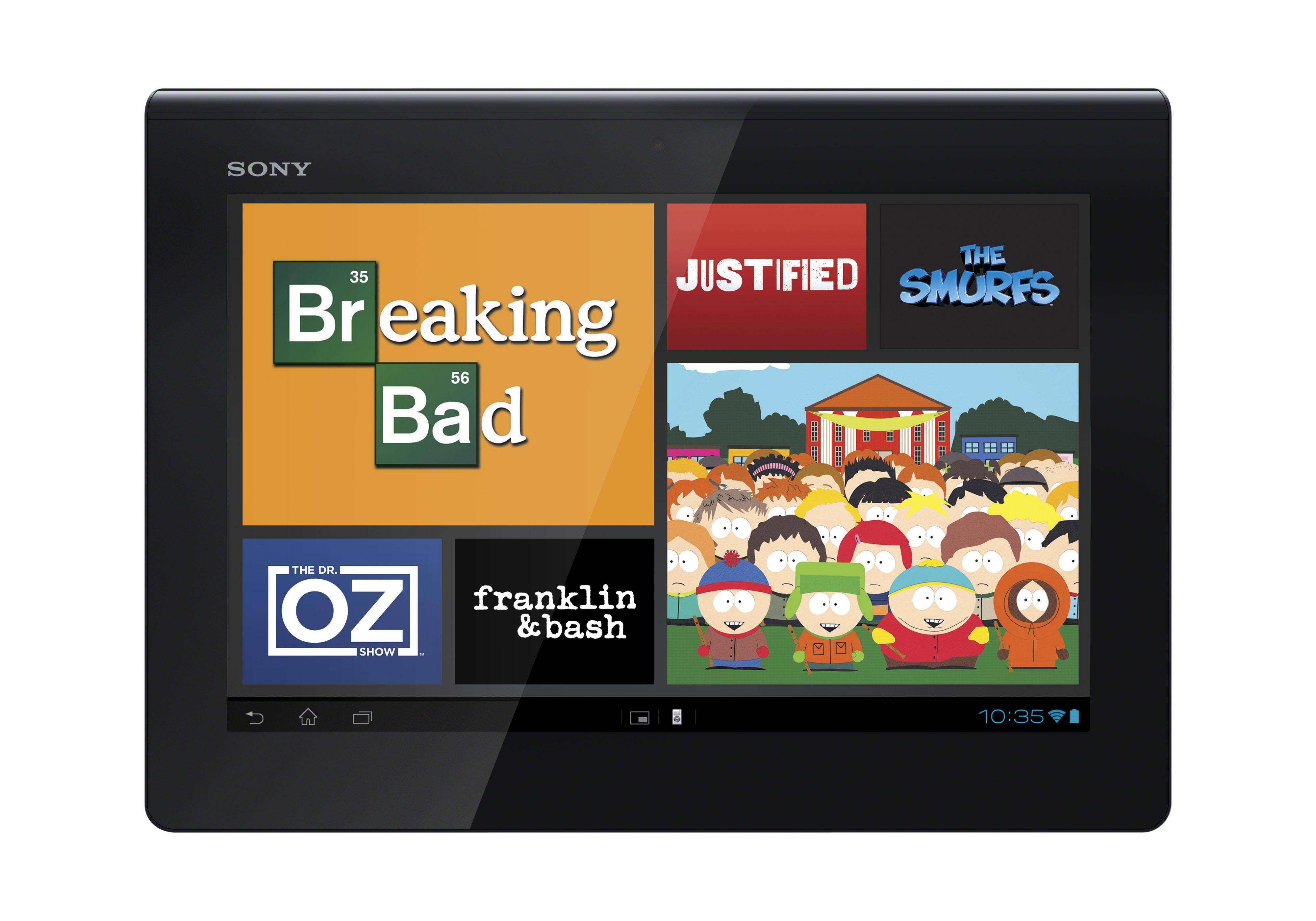
Sony has also upped the ante, and now has a “Watch Now” app. I don’t believe this app works outside of Sony TVs, but reps weren’t sure. In any case, it attempts to recommend shows that are on TV now that you might like, slowly learning your preferences as you use it. The interface had a Windows 8 quality to it, as does Sony’s new Social feed reader app. Squares and grids are in.
Keyboard and iMac-like stand
 I usually don’t commend on accessories, but Sony has some interesting add-ons for the Xperia Tablet. The first is a screen cover that doubles as a keyboard, much like the one that Microsoft wowed us all with on its new Surface tablet. I haven’t been able to use Microsoft’s version of this keyboard, but I found Sony’s to be awkward and too flat. Perhaps after using it more, I’d get used to it, but it didn’t give off a great first impression, especially at a $100 price tag. The other big accessory was a stand that turns the Tablet S into an old swiveling iMac you might have seen on store shelves half a decade ago. It’s a unique way to use a tablet and it will be interesting to see if anyone bites.
Good tablet, but expensive
The big downside to the Xperia Tablet S, like many Android tablets these days, is that Sony has decided to stick to a $500 initial price point — the same price as the iPad. By pricing it in Apple’s range, Sony is telling us that it wants to go toe to toe with the iPad and that’s a tough proposition. Not only because the iPad’s app library is richer than Android’s, but also because Sony hasn’t been able to match the Retina screen resolution of the iPad, instead opting for a typical 1280 x 800 pixel screen (though it looks nice). A Tegra 3 quad-core processor, 16GB of internal flash memory, and 1GB of RAM round out the specs, which aren’t bad, but are also roughly equal to the $250 Nexus 7 tablet by Google.
Sony’s new Xperia Tablet S goes on sale on September 7, but pre-orders start today.