If you had to guess which mobile phone manufacturer had recently been called the, “Fastest growing smartphone vendor in the U.S.” which would you choose? Samsung? Maybe Sony, flush from its success with the Xperia Z? How about LG? Its phones have always been popular with American buyers, and it’s consistently in the top five for market share. Amazingly, it’s none of the above. According to analysts at Strategy Analytics, ZTE is the fastest growing mobile manufacturer in the U.S., having achieved 85.7 percent growth during the first quarter of 2013 over the same period last year. This growth has propelled ZTE to third or fourth place in the U.S. smartphone market share charts, depending on which research company you believe, putting it behind Samsung and Apple, but ahead of some very big names indeed.
Yes, the company accused of being a threat to national security has beaten all but two of its rivals during the first three months of 2013, and has done so without any major smartphone releases in the United States. Just what is ZTE’s secret? How did it manage to become so big, so quickly?
It’s not because of high-end hardware
If the U.S. figures are correct, ZTE is beating HTC, LG, Sony, and plenty of others. All of these are companies have announced major new smartphones this year. You can go out and buy an HTC One or a Sony Xperia Z right now, and the Optimus G Pro isn’t far behind. If none of those take your fancy, each manufacturer has a tempting line-up of other devices, like the Optimus G and Xperia ZL. Not only that, but each one of those phones has gained a considerable amount of press coverage, and are most likely to come to mind when it’s time to buy a new phone.
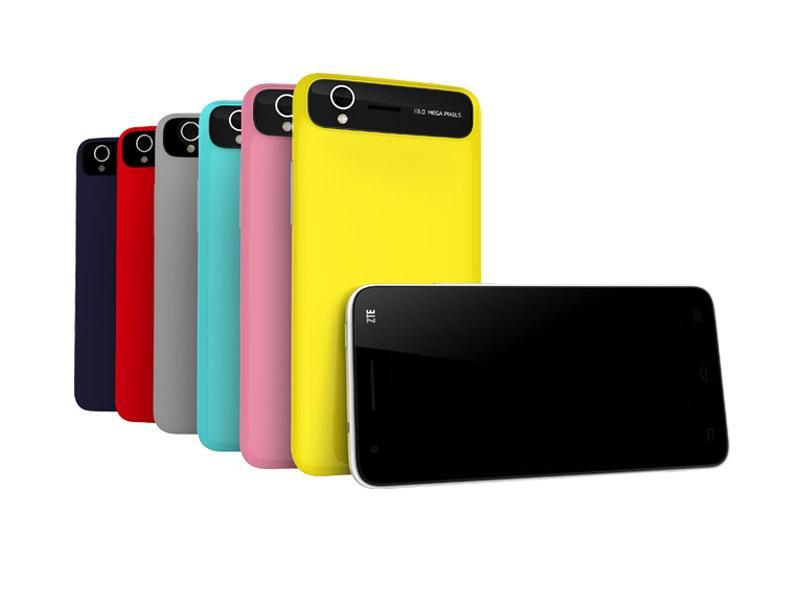
What has ZTE announced this year? Well, at CES 2013 we saw the Grand S, which sports an impressive 5-inch, 1080p screen, 13-megapixel camera, quad-core Snapdragon chip, and 6.9mm thin body shell (though the overall package did not impress us). Then, at Mobile World Congress, the Grand Memo was announced. This massive 5.7-inch smartphone/tablet hybrid also has a quad-core processor and a 13-megapixel camera. Both phones run Android 4.1 Jelly Bean, and both have 4G LTE connectivity. The Grand X2 has also made its debut, a notable release as it’s powered by a new Intel Atom processor.
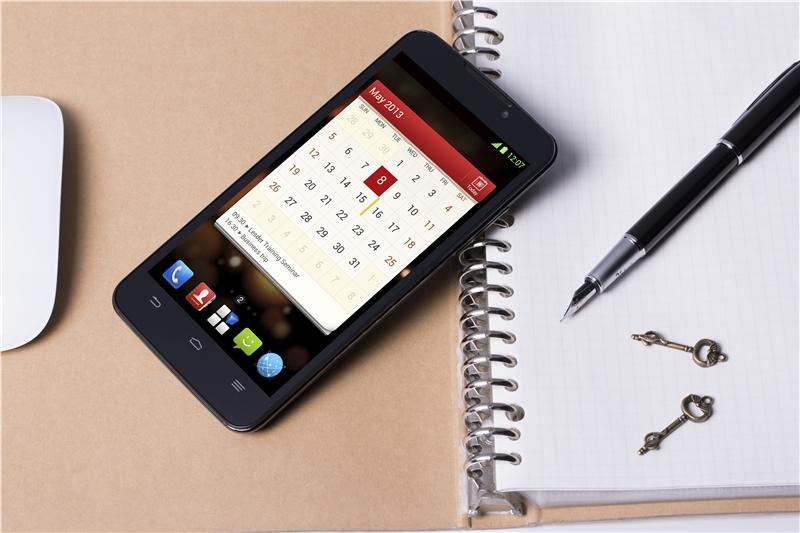
So, mystery solved? With hardware like that, ZTE is sure to take off, right? Wrong. The Grand S, the Grand X2, and the Grand Memo are not sold in North America. In fact, let’s take a quick look at the ZTE smartphones which are available with a contract through the big four U.S. networks. There’s only one, the ZTE Fury (in all it’s 3.5-inch, single core chip glory) through Sprint.
18 phones, 17 percent share of the pre-paid market
With this in mind, it’s surprising to learn ZTE has released and still sells 18 different phones in total in the United States, but almost all have gone to the no-contract carriers such as Boost, MetroPCS, and Cricket. So massive is ZTE’s presence, ITG Research estimates it controls 17 percent of the no-contract market in the U.S.
Why has ZTE seen such success here? Sprint’s barrel-scraping Fury is available for free with a two-year contract, and not worth bothering about, but head over to MetroPCS and you’ll find some of the reasons. The 4G LTE ZTE Anthem – which has a 4.3-inch screen, a 5-megapixel camera, and a 1.2GHz dual-core processor – is just $150, as is the ZTE Score. Over at Boost, the 4G Boost Force (which is the same as the ZTE Score) is $170, while the basic ZTE Warp is just $115. Remember, all of these are available without a contract, and aren’t subject to activation fees. Head over to BestBuy.com and you’ll find eight ZTE phones on sale, priced from $30 to $280, including pre-paid offerings from AT&T and T-Mobile.
It’s not just in the U.S. where ZTE is surging either. It’s also seeing excellent performance globally and in its home country of China.
Strategy Analytics Director, Neil Mawston, told us, “ZTE’s rise to the third spot in the market has been achieved through growing distribution at second-tier carriers and a reputation for operator customized, budget conscious models.” Mawston singled out Cricket’s $130 ZTE Engage, which has a 4-inch screen, Android 4.0, and an 8-megapixel camera as a great example of what it’s doing right.
No-contract phones expected to increase in popularity
America is late to the pre-paid party. A recent study by Nielson shows just 15 percent of U.S. smartphone buyers chose a no-contract plan. In China, that figure rises to 51 percent, but even this is beaten by the whopping 84 percent in India. Even feature phone buyers in the U.S. are behind the curve, with only 30 percent making the cost-sensible decision to chose a pre-paid phone. In the UK, 17 percent of smartphone buyers chose Pay As You Go, while 55 percent of feature phone owners do the same. ZTE is rapidly becoming master of a growth market.
 It’s not just in the U.S. where ZTE is surging either. It’s also seeing excellent performance globally and in its home country of China. According to ABI Research, ZTE sits fourth with 4.2 percent of the global market, putting it ahead of LG, BlackBerry, Sony, HTC and rival Chinese firm Huawei. At the end of 2012, Canalys had ZTE as fifth in the world, behind Huawei, marking the pair’s first appearance in the global top five. Gartner ranks it as fifth in worldwide smartphone (and regular phone) sales in early 2013 as well. In China, Strategy Analytics puts ZTE fifth, this time behind Samsung, Huawei, Lenovo, and Coolpad respectively. That’s right, ZTE beat Apple – which placed sixth – in China. It has big things planned for this year, too. It has announced a major push into the Indian market this year, with five phones expected to go on sale by October.
ZTE needs high-end phones to change customer perception
Back in the U.S., its growth in the pre-paid market will have increased ZTE’s brand awareness, but it won’t have done much to change the perception of the company as one which specializes in mid-range, low-cost hardware. To do this, it needs to bring the Grand S, the Grand X2, and the Grand Memo out on a contract plan with a major carrier. Strategy Analytics’ Neil Mawston agrees, saying ZTE’s strategy for the coming year will be to attract more affluent customers with a range of high-end phones. However, he warns that it won’t be easy for ZTE to make the change, and that, “in the competitive U.S. market, the process is likely to take several years.” In an interview with Engadget, Lixin Cheng, the CEO of ZTE USA, said the firm is still romancing the big name carriers, but added he expected to be able to share some good news soon.
However, with such a strong showing in a growing segment of the mobile market, and some hot hardware waiting in the wings, Verizon and the big carriers surely won’t be able to ignore ZTE for much longer.