1. Home
  2. Phones
  3. Mobile
  4. News

BlackBerry lays off 200 employees in Canada and Florida

Add as a preferred source on Google

BlackBerry recently laid off about 200 of its employees in Canada and Florida as part of its efforts to drive “efficiencies” across its workforce. The company clarified the figure after reports initially pegged the layoffs at around 1,000 employees.

The company laid off 75 manufacturing workers at its Sunrise, Florida, office between February 4 and February 26, according to a notice filed with the State of Florida. The remaining layoffs occurred at BlackBerry’s headquarters in Waterloo, Canada.

Recommended Videos

“As BlackBerry continues to execute its turnaround plan, we remain focused on driving efficiencies across our global workforce,” reads a related company statement. “As a result, approximately 200 employees have been impacted in Canada and Florida.”

Initial reports from MobileSyrup said that BlackBerry laid off about 1,000 employees.

Gary Klassen, creator of BlackBerry Messenger, has also left the company, though it’s unclear whether he was part of this round of downsizing. Klassen was with the company for nearly 16 years.

While this announcement clarifies the status of the firm’s workforce, BlackBerry has left the status of its own BlackBerry 10 operating system in the air. Although CEO John Chen recently said the company would not abandon the OS, there’s no clear answer about BlackBerry’s plans for continuing to manufacture BB10 devices. A shift toward Android is certain, however, as Chen confirmed that a follow-up to the Android-based Priv is in the works.

“The Priv device is essentially our transition to Android ecosystem,” said Damian Tay, senior director, APAC product management at BlackBerry, late last month. “As we secure Android, over a period of time, we would not have two platforms, and may have only Android as a platform [for smartphones].”

Tay said two new Android phones are expected this year, but he said nothing about a new BB10 smartphone.

Jason Hahn
Former Contributor
Jason Hahn is a part-time freelance writer based in New Jersey. He earned his master's degree in journalism at Northwestern…
OnePlus is gone, and Android phones just became more boring in the US
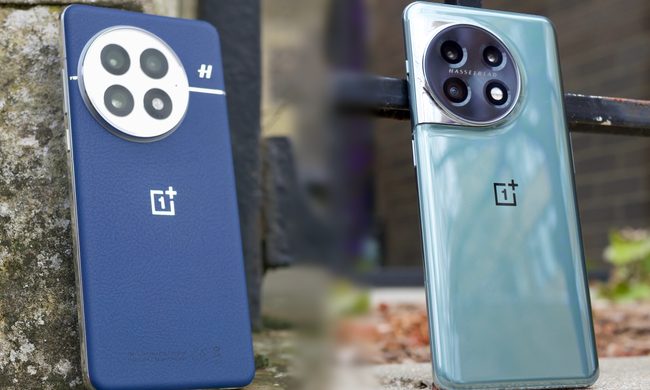
OnePlus 13 vs OnePlus 11.

I wasn't expecting a smartphone brand's exit to hit me this hard, but OnePlus leaving the US and Europe genuinely did. The company has already confirmed that it will no longer launch new products in either market, although existing customers will continue receiving software updates and after-sales support. So while OnePlus isn’t disappearing altogether, it is walking away from two of the biggest smartphone markets in the world.

To be honest, the Android market in the US already feels limited. If you’re shopping for a flagship, your realistic choices almost always begin with Samsung and end with Google. OnePlus was one of the very few brands sitting in between, offering something that didn’t quite look or feel like everything else. And that’s exactly what I’m going to miss.

Read more
A niche iPhone browser quietly fixes my biggest problem with Google Search
Quiche Browser open on iPhone

If there's a new browser, email app, or note-taking app to try, chances are I've already installed it. Like every other productivity nerd, I'm always chasing the perfect setup. That's how I stumbled upon Quiche Browser. It was already close to replacing the Arc Search for me on the iPhone, but its latest update finally pushed it over the edge, earning it a spot as my default browser.

What makes Quiche so good

Read more
Google has to play fair with AI rivals on Android, and that could be good news for your wallet
A new ruling strips Gemini of its exclusive access to deep Android integration, opening the door for cheaper AI models to offer similar functionality for less.
A person using Google Gemini on the Google Pixel 9a.

After forcing Google to open up Android to third-party app stores, the EU is back with a new target, and this time it's Gemini's home-field advantage. The European Commission ordered Google on July 16 to give rival AI apps the same deep access to Android that's currently exclusive to Gemini. The order falls under the EU's Digital Markets Act (DMA), and it directs Google to stop treating its own assistant as a first-class citizen on a platform it controls.

What Google now has to hand over

Read more